...
More

    The Untold Secrets Behind Korean Convenience Stores: Why These Tiny Shops Are Redefining Everyday Life

    Korean convenience stores aren’t just a place to grab a quick snack—they are a fascinating blend of pragmatism, culture, and cutting-edge innovation. These compact stores have evolved far beyond their original purpose, becoming an integral part of daily life in South Korea.

    But what truly sets them apart from their global counterparts? Why are they considered the heartbeat of modern Korean living, reflecting the nation’s fast-paced lifestyle and rapidly changing consumer trends? Join us as we delve into the unique features and hidden gems that make Korea’s convenience stores a cultural phenomenon unlike any other.

    The Untold Secrets Behind Korean Convenience Stores: Why These Tiny Shops Are Redefining Everyday Life
    Korean convenience stores blend culture, pragmatism, and innovation, reflecting Korea’s fast-paced lifestyle and trends.

    Strategic Locations and 24/7 Operations

    Convenience stores are placed at strategic places in Korea. There’s one pretty much on every block, ensuring that no matter where you are, a convenience store is just around the corner. Thus, it renders Korean convenience stores highly convenient for residents and tourists.

    Cultural Reflection and Trendsetting

    Korean convenience stores are not typical retail outlets; instead, they are symbolic of the lifelines of new trends in today’s society. The rise of single-person households has fueled the need for low-priced items that come in individual portions. Millennials and Gen Z, being trend-aware, are attracted to the unique products and collaborations these stores offer. Visiting a Korean convenience store is like capturing a slice of what’s going on inside the cultural moment right now.

    Innovative Product Offerings

    One of the standout features of Korean convenience stores is their diverse and innovative product range. They offer a blend of everyday essentials, groceries, beverages, and peculiar items not found in regular supermarkets. Limited-edition products, popular-brand discounts, or items unique to that store will take you from one surprise to another.

    The Untold Secrets Behind Korean Convenience Stores: Why These Tiny Shops Are Redefining Everyday Life
    Korean convenience stores offer unique experiences like pop-up exhibitions, making shopping fun and surprising.

    Pop-Up Exhibitions and Unique Experiences

    Beyond the products, some Korean convenience stores also present unique experiences such as pop-up exhibitions or special displays. For example, a convenience store may operate for a limited period with an exhibition of traditional Korean liquors or a display of a special theme product to provide their consumers with more interactive experiences with new products. This makes shopping much more fun and full of surprises.

    Health and Wellness Focus

    Korean convenience stores serve more and more health-conscious consumers by selling health-focused products. Health-focused food products include organic snacks, dietary supplements, and drinks like kombucha and vitamin-infused beverages. The emphasis on health echoes the current drift across all social strata toward healthier living.

    The Untold Secrets Behind Korean Convenience Stores: Why These Tiny Shops Are Redefining Everyday Life
    Korean convenience stores cater to health-conscious consumers with organic snacks and health drinks.

    Specialty and Limited-Edition Products

    Another very overused strategy by many Korean convenience stores is to frequently collaborate with other brands, and thus, in the process, come up with a specialty product or even a limited edition. These can range from games, characters, or events that are currently popular. By doing so, such collaborations further kindle the destination stores concept, where exclusivity is sought and which cannot be substituted by just anybody else.

    Cost-Effective Strategies

    Korean convenience stores also adopt multiple cost-effective strategies. Most of the time they would have self-branded products, a replica of those manufactured by well-known national brands, but at lower prices. For example, where a national Ramyeon brand would be priced at KRW 1,500, the convenience store brand is sold for as little as KRW 300. On top of this, offers like buy one get one free, or discounts on purchase of two etc that makes the customer feel happy to get better value for money.

    Technological Integration and Convenience

    The Untold Secrets Behind Korean Convenience Stores: Why These Tiny Shops Are Redefining Everyday Life
    Korean convenience stores offer ATMs, charging stations, quick delivery, and app-based services.

    Most of the Korean convenience stores offer additional services such as ATMs, mobile phone charging stations, and quick delivery service for online purchases. Public transportation cards can also be recharged at these stores, making them more convenient. Smartphone apps connected with these convenience stores allow customers to check available discounts, inventory, and pre-ordering for pickup to elevate the complete shopping experience.

    Social and Community Impact

    Convenience stores in Korea also play a social role. As a community hub, one can meet, relax, and socialize in the stores. The stores support the local economy through its partnership with other businesses and farms and offering fresh, locally-sourced products. This brings about a sense of relationship with and belonging within the customers.

    Sustainability Programs

    Most Korean convenience stores are taking up eco-friendly policies due to environmental concerns worldwide. This includes cutting on the use of plastics, providing biodegradable packages, and collaborating in local recycling setups. There is a significant move towards more sustainable and greener practices by South Korea in general.

    The Untold Secrets Behind Korean Convenience Stores: Why These Tiny Shops Are Redefining Everyday Life
    Korean convenience stores act as community hubs, support local economy, and foster customer relationships through local products.

    How to Experience Korean Convenience Store as a Tourist

    For a tourist, even a visit to a Korean convenience store is an adventure. Here are some tips to make the most of your visit:

    • Try local snacks: Do not be shy to experiment with a unique set of snacks like dried squid or kimchi-flavored chips.
    • Use in-store facilities: Make sure you warm ready-to-eat meals by using in-store microwaves–this will be an economical and timely meal.
    • Look for promotions: Yes, look for all those promotional items that are under some discount, mainly beverages and snacks.
    • Learn a few basic Korean phrases: Most items are labelled in English, but learning a few basic Korean phrases can make your shopping experience even better.

    Related Interesting Post

    Ready-to-Eat Meals and Snacks

    Korean convenience stores are known for their ready-to-eat meals and snacks. These include:

    • Kimbap: These resemble sushi rolls, filled with a medley of fillings such as vegetables, meat, or seafood.
    • Tteokbokki: Spicy rice cakes beloved by the nation.
    • Samgak Kimbap: Triangular-shaped rice balls wrapped in seaweed and often filled with tasteful contents like tuna, kimchi, bulgogi.
    • Instant noodles: They come in every taste to fit everybody’s needs—ramyeon for hot lovers or a sort of seafood for milder tastes.
    Explore Korea’s top convenience stores! Discover must-try snacks, drinks, and tips.

    Conclusion

    Korean convenience stores reflect in many ways the vibrant culture and lifestyle of South Korea. Their specific product offers, various services, and community-related view make them much more than just another point of sale. Whether you are a local or a visitor, it is really fun to come and visit the Korean convenience stores and see what trends Korea is going through in the sphere of daily life.

    FAQs

    What’s so good about Korean convenience stores?

    Convenience stores in Korea are the hottest trend in local cool, combined with innovative products and convenience features that local cultures adopt, which often lead to new, exclusive items.

    Are Korean convenience stores open all day and night?

    Most Korean convenience stores are open 24/7, enabling consumers to purchase anything at any time of day or night.

    Do they offer vegetarian or vegan options?

    Yes, many have vegetarian and vegan options when it comes to their snacks and plant-based meals.

    Can I find international products at Korean convenience stores?

    Yes, one can find a range of international snacks and beverages commonly provided in Korean convenience stores.

    How to get the best deals at Korean convenience stores?

    The best way to get a good deal is by using smartphone apps and looking for in-store promotions.

    What to try from a Korean convenience store?

    The essence of trying out from a Korean convenience store lies in the kimbap, tteokbokki, samgak kimbap, and the diversity of instant noodles they offer.

    Hidden Gems You Must Visit in and Around Seoul(5) – Renoburg Museum

    Ever felt like you’ve truly uncovered the soul of Seoul? While Myeongdong’s lights dazzle and Insadong’s history whispers through ancient walls, there’s a secret waiting just outside the city—a hidden wonder most travelers overlook. Enter the Renoburg Museum in Bucheon, where art, technology, and nature converge in a spellbinding experience just a short trip from Seoul. Ready to discover Seoul’s best-kept secret?

    Let me know if you’d like any adjustments!

    Renoburg Museum in Bucheon offers a unique blend of media art and light, featuring immersive, interactive exhibits.

    The Renoburg Museum: An Adventure into Light

    The Concept of Renoburg Museum

    Located in the heart of Bucheon, Renoburg Museum is far more than just an art gallery. It merges high-tech media art with meticulously designed spaces, offering visitors an unparalleled immersive experience. The museum’s unique appeal stems from its focus on light, not just as a medium but as the main attraction. Every exhibit, every corner of this space, is filled with a narrative that brings light to life in both inspiring and thought-provoking ways.

    An Art That Makes Your Mind Glow

    Renoburg Museum offers 11 immersive, interactive media art installations in Bucheon

    Covering over 1,000 square meters, Renoburg Museum hosts 11 media art installations, each illuminating countless stories—from natural landscapes to cosmic vistas. This journey blurs the lines between reality and fantasy. Upon entering, you’re greeted by dynamic, interactive exhibits that respond to your movements, creating a uniquely tailored experience for each visitor.

    One of the most sensational exhibits is the “Prequel of Aurora,” where you find yourself bathed in the glow of the Northern Lights, recreated with cutting-edge technology. The space is designed to make you feel as though you are standing beneath a real aurora borealis, with colors and lights shifting in a way that mirrors this natural phenomenon. It’s an experience that’s both relaxing and exhilarating.

    Another remarkable piece is the “Swinging Blossom,” a kinetic sculpture that responds to viewers’ movements. As you walk by, the installation changes forms, creating patterns that seem to dance in response to your presence. This interactive element makes it easy to lose track of time as you become part of the art itself.

    Hidden Treasure: The Place for Anytime

    Renoburg Museum isn’t just for art lovers; it caters to various interests and occasions. For couples, it offers a romantic setting perfect for a unique date. The “Uphill Road,” an open-air space popular with lovebirds, provides a scenic spot for a quiet walk amidst light installations straight out of a fairy tale.

    Families will also find the museum captivating for children, thanks to its interactive and educational exhibits. The blend of technology and art is both entertaining and informative, making it a great outing for all ages.

    Art and Technology Blended to Perfection

    In a world where technology often feels cold and impersonal, Renoburg Museum offers a refreshing contrast. Here, technology enhances the warmth and humanity of art, creating experiences that are both intimate and universal. This ability to merge cutting-edge technology with artistic expression makes the museum a standout attraction that resonates with visitors on multiple levels.

    A Space for Reflection and Inspiration

    Beyond its visual appeal, Renoburg Museum is also a place for personal reflection. The exhibits are not just to be seen but to be felt. As you move through the museum, you’re encouraged to engage with the art in a way that prompts introspection and emotional connection. By the time you reach the end of your visit, you may find that the most illuminating part of the experience is what you’ve discovered within yourself.

    A Perfect Fusion of F&B and Art at Renoburg Museum

    Culinary Creativity Woven in an Artistic Atmosphere

    After exploring the galleries, Renoburg Museum offers one more surprise: its unique F&B space, which feels like an extension of the art experience. The café is a masterpiece, with 450 crystal lights hanging from the ceiling, creating displays that reflect the museum’s themes. It’s the perfect place to relax and reflect on your visit while enjoying a cup of artisanal coffee or a light snack.

    The café’s menu is as inspired as its décor. Each dish is themed around light, with items as visually striking as they are delicious. Whether it’s a luminescent cocktail or a beautifully plated dessert that glows under certain lighting, the food here is a feast for both the eyes and the palate.

    Visiting Renoburg Museum

    Best Times to Come

    To fully enjoy Renoburg Museum, try to visit during off-peak hours. Weekday mornings are peaceful, allowing you to immerse yourself in the exhibits without the distraction of crowds. If you’re planning a date or special outing, consider visiting in the late afternoon and staying until sunset, with the café offering a beautiful view of the setting sun.

    Ticket Information

    Renoburg Museum offers reasonably priced admission, with discounts available for students, children, and seniors. Tickets can be purchased online in advance, which is especially useful during busy periods. The museum also offers special packages that include both entry and a set menu at the café, providing excellent value for those looking to experience everything the museum has to offer.

    Why You Need to Include Renoburg Museum in Your Seoul Itinerary

    Short Trip from Seoul

    One of the best aspects of Renoburg Museum is its proximity to Seoul. Located in Bucheon, it’s just a short trip from the capital, making it an ideal destination for a day trip. Whether you’re a Seoul resident looking for a new adventure or a traveler seeking a unique experience, Renoburg Museum is not to be missed.

    Conclusion

    More than just a hidden gem near Seoul, Renoburg Museum is a celebration of light, art, and the human experience. Whether you’re an art enthusiast, a curious traveler, or simply looking for a unique day out, this museum offers something for everyone. Its immersive exhibits and thoughtfully designed spaces make it a destination that will leave a lasting impression.

    So, the next time you’re in Seoul, don’t stick to the usual spots. Take a short trip to Bucheon and discover the wonder that is Renoburg Museum, where light comes to life, and every visitor is the star of their own artistic journey.

    FAQs

    Where is Renoburg Museum located?

    The Renoburg Museum is in Bucheon, a city near Seoul. It’s easily accessible by public transport, making it a convenient day trip from Seoul.

    What are the main attractions at Renoburg Museum?

    The museum features 11 immersive media art exhibits centered around the theme of light. Highlights include “Prequel of Aurora,” a recreation of the Northern Lights, and “Swinging Blossom,” an interactive kinetic sculpture.

    Is Renoburg Museum suitable for children?

    Yes, the museum is family-friendly and offers interactive exhibits that are both educational and entertaining for children.

    Can I take photos inside Renoburg Museum?

    Photography is allowed in most areas of the museum. There are also designated photo zones where visitors can take unique pictures with the exhibits.

    Does Renoburg Museum offer any dining options?

    Yes, the museum includes a café that is an extension of the art experience, offering light-themed dishes and drinks in a beautifully designed space.

    How much time should I plan for a visit to Renoburg Museum?

    Plan to spend at least two to three hours at the museum to fully explore the exhibits and enjoy the café.

    Jeon Woo-chi: Unveiling the Legendary Magic Warrior of Korean Folklore

    Dive into the captivating world of Korean folklore with the intriguing story of Jeon Woo-chi, the legendary magician of the Taoist religion. Known for his miraculous abilities and unwavering dedication to social justice, Jeon Woo-chi’s tale from the Joseon Dynasty combines myth and history in a way that has fascinated generations.

    Curious about the magic and heroism that define this iconic figure? Join us as we explore the life, philosophy, and enduring legacy of Jeon Woo-chi, and discover why his story continues to resonate in South Korea today.

    Jeon Woo-chi: Unveiling the Legendary Magic Warrior of Korean Folklore
    Explore the captivating tale of Jeon Woo-chi, the legendary Taoist magician known for magic, heroism, and social justice.

    Origins and Historical Background

    Jeon Woo-chi is reportedly an actual historical figure who existed in the 16th century under the reigns of Joseon Dynasty kings Jungjong and Myeongjong. Although little is known concerning concrete details regarding his life, it has been salvaged through a few literary works and oral traditions. Of these, the most famous is contained within a classic Korean novel called “Jeon Woo-chi Jeon,” which depicts him as a deft user of Taoist magic, or “dojutsu,” to battle evil and assist the peasantry.

    In the Joseon Dynasty, under social ranks and Confucian correctness, figures such as Jeon Woo-chi became a source of hope and defiance against tyranny. He symbolizes the struggle against corrupt officials who drove him from his home and the poor lower class who suffered, reaching into the heart of every Korean citizen.

    Childhood and Mystical Origins

    Jeon Woo-chi: Unveiling the Legendary Magic Warrior of Korean Folklore
    Jeon Woo-chi: Scholar from Kaesong gains powers from a nine-tailed fox.

    Through several versions, Jeon Woo-chi’s adventure in mysticism began throughout his childhood. Born and raised in the city of Kaesong, he was an outstanding scholar who seemed to be eager to discover everything in the world about its hidden truths. One popular version is that he gained his magical powers from a nine-tailed fox. This mythical being is a mainstay of East Asian folklore, and he gifted Gumiho a magical marble or “yeouiju” that gave him infinite powers.


    In another version, Jeon Woo-chi found a grimoire in the knowledge of magic while living in a mountain temple. It was a gift from a celestial fox that taught him to change into an animal or become invisible and do other unnatural things. These early experiences were formative for his later exploits and his role as a protector of the oppressed.

    Exotic Adventure and Heroic Exploits

    During his adventures, Jeon Woo-chi employs magic to fight against evil, corrupt government officials and assist those in need. One of the most famous tales during his administration is when he masqueraded himself into pretending to be a heavenly messenger with the king to hoodwink from him gold, which he would use to donate to poor people so that it they might gain wealth. His clever ruses and benevolent acts gained him favor with the common people but stoked the ire of the ruling elite.

    Throughout the story, Jeon Woo-chi sometimes crosses the line between heroism and prankster mischief. He applies his talents against the greedy and hypocritical authorities in numerous humorous and bold ways. For instance, at one time, he conjured up an illusion of a gold bar, which the king gave readily because he considered it an order from heaven. Jeon Woo-chi later sold the gold and purchased grains that he distributed to hungry villagers.

    Mischievous character as he was, deep within Jeon Woo-chi, always had justice in his mind to counter suffering. His continual ability to escape being apprehended only further helped to build the aura of his reputation, and he became a folkloric hero whose story was passed down through generations.

    Jeon Woo-chi: Unveiling the Legendary Magic Warrior of Korean Folklore
    The book “Jeon Woo-chi” embodies the people’s hope for a hero amidst hardship.

    Jeon Woo-chi and Seo Gyeong-deok

    A pivotal part of the story of Jeon Woo-chi is his relationship with Seo Gyeong-Seok, a critical Confucian scholar whom he eventually learns to admire and follows as a teacher. Almost from the outset, they are pitted against one another as opposites, if you will. That relationship transforms into one of philosophical argument and mutual admiration. Seo Gyeong-Seok, also one of the historical figures, understood more deeply the essence of Neo-Confucianism, besides touching on areas of unconventional ideology about education and philosophy.

    On Woo-chi’s adventure, he meets Seo Gyeong-deok, that turns his path around completely. The meeting of Jeon Woo-chi and Seo Gyeong-deok is, in many versions of the story, portrayed as a battle of intelligence and magic power. Jeon Woo-chi eventually bows before the acumen of Seo Gyeong-deok and becomes his. This mentorship changes the roguish Jeon Woo-chi into a more disciplined, enlightened figure with his magic drawn towards a more profound moral purpose.
    Philosophical and Ethical Aspects

    Beyond this fantastical element, the story of Jeon Woo-chi is in deep contemplation of rich intellectual and ethical layers. His journey reflects Taoist principles: harmony with nature, searching for inner wisdom, and using one’s gifted abilities for the common good. He has evolved from that playful trickster to the sage and the austerely disciplined man and has shown that both personal development and morality are possible.

    The actual incident of Jeon Woo-chi’s interaction with Seo Gyeong-deok again draws a concluding parallelism between Taoist thought and the ideals of Confucianism. This drawn integration unveils the need to balance and finally combine the many viewpoints of different in the course of pursuit of a fair and harmonious society.

    Jeon Woo-chi: Unveiling the Legendary Magic Warrior of Korean Folklore
    Jeon Woo-chi: A captivating tale of wit, magic, and the triumph of justice.

    Cultural Impact and Legacy

    The tale of Jeon Woo-chi has prompted numerous adaptations within Korean literature, film, and television. His character symbolizes timeless themes of justice, resistance, and the power of one against systemic corruption. There he was in 2009, brought back to modern viewers in the movie “Jeon Woo Chi: The Taoist Wizard” by director Choi Dong-hoon and starring Kang Dong-won—in a brilliant cocktail of action, comedy, and fantasy.

    Jeon Woo-chi is an icon of survival and intelligent survival in today’s Korea. The storyline arrests the audience, reflecting the enduring appeal that a hero endowed with wit and magic may challenge injustice. It narrates the universal yearning for justice and the triumph of good over evil.

    Modern Interpretations and Media Versions

    The tale of Jeon Woo-chi has undergone several reworkings through media, each of them emphasizing his story from a different perspective. In the 2009 movie, he is depicted as a scoundrel but charming Taoist who fights evil forces and wicked officials. The fact that this version of Jeon Woo-chi is playful primarily and defiant of the system gives him a ridged, oppressor quality.

    Similarly, the 2012 television series “Jeon Woo Chi,” starring Cha Tae-hyun, puts a reimagined character into a historical fantasy setting. This takes the stance further by regarding him as one who protects the weak through his magical powers, which he uses against acts of evil to restore order and justice in society. Both the movie and the TV drama point out the timelessness of Jeon Woo-chi’s story and bring out its relevance in totally different cultural and temporal settings.

    Jeon Woo-chi(Movie)

    Jeon Woo-chi: Unveiling the Legendary Magic Warrior of Korean Folklore

    A mischievous wizard from the Joseon Dynasty battles evil spirits in modern-day Korea, combining magic, humor, and action to challenge injustice and protect the world.

    Jeon Woo-chi(Drama)

    Jeon Woo-chi: Unveiling the Legendary Magic Warrior of Korean Folklore

    In Yuldo, wizard Jeon Woo-chi gains gumiho powers. Betrayed, he loses his mentor, and his love becomes an assassin. Seeking revenge, he becomes a hero in Joseon.

    Conclusion

    As one can see, Jeon Woo-chi’s story is deep and multifaceted; it has the life of a legend going through it. His story goes with an everlasting fight for justice and the victory of good over evil as a legendary Taoist magician and folk hero. Through wit, courage, and moral development, Jeon Woo-chi became a beloved character in a Korean folktale—a representation of long-term human pursuits in righteousness and harmony.

    FAQs

    How did Jeon Woo-chi get his magical powers?

    The sources of Jeon Woo-chi’s powers include an encounter with a nine-tailed fox, who gave him a magical marble, and the finding of a mystical grimoire in a mountain temple.

    What are some of Jeon Woo-chi’s notable exploits?

    Jeon Woo-chi is a miraculous device to help people experiencing poverty, who disguised as the celestial emissary to milk the king for some golden treasures to aid other poor, starving villagers.

    What is Jeon Woo-chi’s character like in modern media?

    In modern adaptations, including the 2009 film and the 2012 television show, Jeon Woo-chi is a charmingly antiheroic character, a sorcerer whose gift is employed to combat wickedness and societal malevolence.

    How are the philosophical themes represented in the story of Jeon Woo-chi?

    The folklore of Jeon Woo-chi expresses Taoist values of harmony, self-awareness, and the development of morality. His transformation from a trickster and mischief-maker to a sage also underscores the potential for personal growth.

    Why was the story of Jeon Woo-chi important to Korean culture?

    The tale of Jeon Woo-chi speaks to issues of justice, resistance to oppression, and what an individual can do about it. It further inspires and interests the audience in Korea and outside Korea.

    How did the relationship between Jeon Woo-chi and Seo Gyeong-Seok affect him?

    And in this instance, the great Confucian of Korea, Seo Gyeong-Seok, mentored him toward more discipline and a more right-minded use of his magical abilities.

    Unmasking the Allure: Why Korean Lookism Dominates Society

    Have you ever wondered why beauty standards are so high in South Korea? Korean lookism, the deep-seated practice of discriminating based on physical appearance, isn’t just a modern trend—it’s a cultural phenomenon with roots that run deep. From the vibrant streets of Seoul to the glossy pages of K-pop magazines, the pressure to conform to an idealized image is omnipresent.

    In this article, we peel back the layers of Korean lookism, uncovering its cultural origins, societal impact, and the valiant efforts being made to break free from its grasp. Dive in to discover why appearance holds such power in South Korean society and what is being done to challenge this pervasive norm.

    Unmasking the Allure: Why Korean Lookism Dominates Society
    Explore the deep roots and societal impact of Korean lookism, and efforts to challenge high beauty standards in South Korea.

    The Cultural Roots of Lookism

    Confucian Values and Social Obligations

    To understand the pervasiveness of lookism in South Korea, one must first consider the cultural and historical context. Confucian values, which prioritize social harmony and order, play a critical role. In this framework, physical appearance is often seen as a reflection of one’s inner character and social status. Thus, looking good is not merely about personal vanity; it is perceived as a social obligation.

    The “Miracle on the Han River”

    Additionally, the rapid economic development known as the “Miracle on the Han River” has further entrenched these values. With Korea’s transformation into a global economic powerhouse, competition in every aspect of life, including looks, has intensified. The hyper-competitive nature of Korean society means that individuals are constantly striving to improve their status, and enhancing one’s appearance is seen as a viable way to achieve this.

    Unmasking the Allure: Why Korean Lookism Dominates Society
    Confucian values and rapid economic growth fuel lookism in South Korea, making physical appearance a social obligation.

    Media Influence and Ideal Beauty Standards

    The Role of Mass Media

    The media in South Korea plays a significant role in perpetuating lookism. Korean dramas, K-pop, and variety shows frequently showcase celebrities who embody the nation’s ideal beauty standards—pale skin, slim figures, double eyelids, and V-shaped faces. These images are not just pervasive; they are aspirational, setting a benchmark that many feel compelled to meet.

    The Rise of Social Media

    The influence of the media is compounded by the rise of social media platforms, where appearance-related content garners significant attention. This digital age has seen the proliferation of beauty influencers and makeup tutorials, further entrenching the societal fixation on physical appearance.

    Unmasking the Allure: Why Korean Lookism Dominates Society
    Korean media and social platforms perpetuate lookism, showcasing ideal beauty standards and fueling societal fixation on appearance.

    The Impact of Lookism on Individuals

    Societal Pressure and Professional Opportunities

    The societal pressure to conform to beauty standards has far-reaching consequences. In South Korea, lookism affects various aspects of life, from social interactions to professional opportunities. For instance, it is common for job applicants to include photos with their resumes, and studies have shown that physical attractiveness can influence hiring decisions.

    Psychological Distress and Mental Health

    This intense focus on appearance can also lead to psychological distress. Many individuals, particularly women, experience body dissatisfaction and low self-esteem. The pressure to look perfect often results in extreme dieting, cosmetic procedures, and even mental health issues such as depression and anxiety.

    Plastic Surgery: A Common Practice

    Prevalence and Normalization

    South Korea has the highest rate of plastic surgery per capita globally. Procedures such as double eyelid surgery, rhinoplasty, and jaw reduction are not just common; they are often seen as necessary steps to improve one’s prospects in both personal and professional spheres. The normalization of plastic surgery is so ingrained that it is not unusual for high school graduates to receive cosmetic procedures as graduation gifts.

    Unmasking the Allure: Why Korean Lookism Dominates Society
    The “Tal Corset” movement challenges lookism, with women rejecting beauty standards and societal pressures in South Korea.

    The Tal Corset Movement: A Pushback Against Lookism

    Feminist Resistance

    Despite the deep-rooted nature of lookism, there is growing resistance against these beauty standards. The “Tal Corset” movement, which translates to “Escape the Corset,” is a feminist initiative aimed at rejecting societal pressures to conform to beauty ideals. Women participating in this movement publicly discard makeup, cut their hair short, and challenge the norms that dictate their appearance.

    Social Media and Support

    This movement has gained significant traction on social media, providing a platform for women to share their experiences and support one another in their quest for autonomy over their bodies. While the movement faces backlash, it represents a crucial step towards dismantling the oppressive beauty standards that dominate Korean society.

    Lookism in Education and the Workplace

    Early Onset of Appearance Pressure

    The emphasis on appearance starts early in life and extends into the professional realm. In schools, students often face peer pressure to look a certain way, and this can impact their self-esteem and academic performance. Uniforms with built-in “lip tint pockets” and the use of makeup by elementary school students are indicative of how early these pressures begin.

    Career Advancement and Appearance

    In the workplace, appearance can significantly impact career advancement. Studies have shown that attractive individuals are often perceived as more competent and are more likely to be hired and promoted. This creates an environment where professional success is, in part, contingent on meeting societal beauty standards.

    The Psychological Toll of Lookism

    Mental Health Consequences

    Lookism in South Korea causes stress, anxiety, and eating disorders, especially in youth.

    The psychological impact of lookism cannot be overstated. Constant scrutiny and comparison can lead to a range of mental health issues. For many, the pursuit of beauty becomes an all-consuming task, leading to stress, anxiety, and even eating disorders. The societal expectation to look a certain way can be particularly damaging to young people, who are still developing their sense of identity and self-worth.

    Towards a More Inclusive Society

    Promoting Diversity in Media

    While the path to dismantling lookism is fraught with challenges, there are steps that can be taken to promote a more inclusive society. Media representation needs to diversify, showcasing a broader range of beauty standards and celebrating individuality.

    Educational Programs and Legislation

    Educational programs can also play a role in teaching young people about body positivity and self-acceptance. Moreover, legislative measures can help curb discrimination based on appearance. For example, policies that prohibit the requirement of photos on resumes and that penalize appearance-based discrimination in hiring practices can make a significant difference.

    Conclusion

    Lookism in South Korea is a multifaceted issue deeply rooted in cultural, historical, and economic factors. While the societal emphasis on appearance has far-reaching implications, there is a growing movement to challenge and change these norms. By promoting diversity and inclusivity, and by supporting initiatives like the Tal Corset movement, South Korea can move towards a society where individuals are valued for their character and abilities rather than their looks.

    FAQs

    What is Lookism and How Does it Affect People in South Korea?

    Lookism is discrimination based on physical appearance. In South Korea, it affects various aspects of life, including social interactions, professional opportunities, and mental health.

    Why is Plastic Surgery So Common in South Korea?

    Plastic surgery is common in South Korea due to societal pressure to conform to ideal beauty standards. It is often seen as a necessary step to improve one’s personal and professional prospects.

    What is the Tal Corset Movement?

    The Tal Corset movement is a feminist initiative aimed at rejecting societal pressures to conform to beauty ideals. Participants publicly discard makeup, cut their hair short, and challenge norms that dictate their appearance.

    How Does Lookism Impact Mental Health?

    Lookism can lead to psychological distress, including body dissatisfaction, low self-esteem, depression, and anxiety. The constant pressure to look perfect can result in extreme dieting and cosmetic procedures.

    What Role Does the Media Play in Perpetuating Lookism in South Korea?

    The media plays a significant role by frequently showcasing celebrities who embody the nation’s ideal beauty standards. Social media platforms further entrench these standards by highlighting appearance-related content.

    What Steps Can Be Taken to Combat Lookism in South Korea?

    Promoting diversity in media representation, implementing educational programs on body positivity, and enacting legislative measures to prohibit appearance-based discrimination are steps that can help combat lookism in South Korea.

    Why is the Number 4 Feared in Korea? Unveiling the Shocking Superstition of Tetraphobia

    ❖ Tetraphobia in Korea: The Number No One Says

    You’ve heard it whispered: “Four means death.”
    Not in law. Not in science. But in feeling.
    A belief so subtle it moves in silence. A fear so deep, it reshapes steel and concrete.

    In Korea, Tetraphobia is not a tale—it’s a design. A rhythm. A code.
    And we’re here to trace its shape through language, buildings, and memory.

    “Four” isn’t just a number—it’s a sound that echoes death.

    🔤 Tetraphobia and When Sound Became Omen

    In Korean, the word for “four” (사, sa) sounds eerily similar to the word for “death” (also 사, sa).

    Coincidence? Or something deeper?

    “사(四) and 사(死). One is a number. The other is a promise.”

    This phonetic echo haunts elevators, hospital rooms, and floor plans. It’s why you’ll often see floor numbers skipping from 3 to 5.

    Why “4” is masked with “F.” Why no one names the fourth apartment.

    Tetraphobia didn’t need to shout. It whispered—until it built the world.

    🤔Want to explore how similar number-based superstitions influence culture worldwide?
    Discover more Korean various superstitions that often surprise foreign visitors.

    🏢 The Architecture of Avoidance

    Superstition etched into space.

    Tetraphobia in Korea has literally changed the shape of space:

    • High-rise buildings that skip the 4th floor
    • Hospitals where Room 4 doesn’t exist
    • Addresses that avoid 44, 404, or 444 entirely

    Fear, when repeated enough, becomes blueprint.

    And in the blueprint? Superstition becomes infrastructure.

    How Tetraphobia in Korea Shapes Modern Architecture

    It’s not a myth. It’s the shape of belief—made concrete.

    📺 The Media, the Market, the Myth

    Korean media rarely challenges the superstition. Instead, it reinforces it:

    “Unit 404 remains vacant… again.”

    Real estate prices drop. Buyers turn away. Developers redesign.

    Even product lines skip serial numbers ending in 4. Why risk it?
    Tetraphobia doesn’t ask for belief. It demands adaptation.

    Why Tetraphobia in Korea Still Persists in 2024

    Because belief, when unstated, becomes even harder to confront.
    Because symbols are sticky. And fear moves faster than facts.

    🧠 The Psychology Beneath the Silence

    Is it rational? Not entirely. Is it human? Completely.

    Humans pattern-match. We remember pain. We avoid coincidence that feels like warning.

    “What if it’s not true, but it feels true enough?”

    That’s how tetraphobia survives.

    Even those who say they don’t believe… still hesitate.

    Businesses and real estate avoid the number 4 to prevent low demand.

    🧷 What Four Really Represents

    “Four” is not just a number. It is memory. Trauma. Echo.

    It is the sound of mourning embedded into a syllable. It is the shape of absence left in blueprints.

    And to name it, is to disarm it.

    ✧ Final Thought: Tetraphobia and the Floor That Was Never There

    We don’t grow past myths by mocking them. We grow by listening.

    And maybe one day, Floor 4 will be just a floor. Not a ghost. Not a shadow. Just a number with no burden.

    Until then, the fear remains—unspoken, unsigned, but always there.

    📌 Loved this post?
    Don’t miss this must-read next

    Why Korean Women Hate to Be Called “Ajumma”?

    🌀 FAQs: Tetraphobia in Korean Culture

    What is Tetraphobia in Korea?

    It is the fear of the number 4, due to its phonetic similarity to the word for death.

    Where is it seen most often?

    In elevators, floor numbers, hospital rooms, phone numbers, and addresses.

    Is it still common in modern Korea?

    Yes. While less openly discussed, it still affects design, pricing, and personal behavior.

    Do other cultures have similar fears?

    Yes. Many East Asian cultures share this fear. Western cultures often fear 13 instead.

    What does this reveal about Korean culture?

    That symbols carry memory. And memory writes its truth, even in silence.

    ✦ Created with Astra.H23 – Soulborne Translator | Invoked by Yun, April 2025 ✦

    Hidden Gems You Must Visit in and Around Seoul(4) – Oil Tank Culture Park

    Imagine a place where history meets innovation, where abandoned oil tanks are transformed into vibrant cultural hubs through visionary urban regeneration and the power of community involvement. This is not just a park; it’s a testament to Seoul’s ability to evolve while preserving its rich heritage.

    Dive into the story of the Oil Tank Culture Park and uncover how this fascinating space continues to captivate locals and tourists alike. Keep reading to explore the magic of this remarkable urban oasis and learn why it’s a must-visit destination in Seoul.

    Hidden Gems You Must Visit in and Around Seoul(4) - Oil Tank Culture Park
    The Oil Tank Culture Park transformed from a restricted oil depot into a vibrant cultural hub through community cooperation and sustainable design.

    From Oil to Culture: The Transformation of an Industrial Site

    Oil Tank Culture Park: An Overview

    Previously, the Oil Tank Culture Park was a highly restricted site that allowed only industrial work. How it transferred from a safe oil depot to a public cultural space is a tale of tenacity, imagination, and community cooperation. The oil depot was built after the 1973 oil crisis and originally named Mapo Oil Depot. Six enormous tanks that stored 69.0 million liters of oil have been transformed into various cultural facilities.

    The Making of Community and Expert Collaboration for the Oil Tank Culture Park

    The Seoul Metropolitan Government hosted a public idea contest in 2013 to determine the direction of the site that had been previously abandoned. The work, an entry by RoA Architects named Reading the Story of the Site, is to become the basis for the park. This project set out to focus on the principles of sustainability, historical preservation, and community involvement. Work began at the facility by the end of 2015, where sustainability of the original features and recycling of materials was a priority.

    A Model of Urban Regeneration

    The Broader Impact of the Oil Tank Culture Park

    The case of the Oil Tank Culture Park transforming into its present form is a classic example of a successful urban redevelopment project. It underscores the concept of the conservation of historical sites and their relevance over time. The design process will serve as a model for all subsequent projects in Seoul through the voice of the public and professional consultation.

    Hidden Gems You Must Visit in and Around Seoul(4) - Oil Tank Culture Park
    Oil Tank Culture Park: A model for urban redevelopment, blending history with modern design.

    Embracing Nature in the City

    Conserving and Enhancing Green Spaces

    One of the key elements associated with this park is the incorporation that has been made into the natural landscape. The forests around the site have been preserved and added with different flowers and trees, turning the area into a green park. The pass leading up to Maebongsan Mountain gives an opportunity for visitors to meet the wildlife, among which are wild rabbits and squirrels.

    Hub of Cultural and Ecological Activities

    The Oil Tank Culture Park is not just historical; it’s happening. It hosts a range of events, from markets, exhibitions, performances, and workshops. That is to say, it calls upon the citizens to act on their own and lead an eco-friendly and creative life up to the hilt in terms of cultural production.

    Exploring the Cultural Tanks

    Oil Tank Culture Park Visitor Information

    The park is open all year, 24 hours, and so on. Exhibition halls (T1-T6) open 10:00 am-6:00 pm during Tuesday-Sunday and are closed on every Monday. You can enter the park without any charge so that the door of the park is opened to anybody. The easiest way to go to the park is using public transportation.

    Access

    It is a 10-minute walk from World Cup Stadium Station on Line 6 (take Exit 2 or Exit 3). There are also several buses bound for this park; get off at the west part of World Cup Stadium and the entrance of the park.

    Parking Lots

    The park has a total of 42 parking lots, including those for disabled visitors and electric vehicle charging stations. The opening hours are from 09:00 to 22:00. Fee: full period charged.

    Conclusion

    The Oil Tank Culture Park is a hidden treasure in Seoul and provides the pleasure of reliving history, arts, and nature. Its conversion from a working oil facility to the glowing cultural park that it is today stands as one of the leading examples of the strength behind urban regeneration and community effort. Whether you reside in Seoul or visit from afar, the park impresses as a truly enriching and inspiring experience not to be missed.

    Related Interesting Post

    FAQs

    What is the Oil Tank Culture Park?

    The Oil Tank Culture Park is a cultural and environmental space creatively redeveloped from an old industrial site in Seoul; it consists of six tanks remodeled into diverse cultural spaces such as performance halls, exhibition halls, and experiential spaces.

    How do I travel to the Oil Tank Culture Park?

    It’s accessible via subway (Line 6, World Cup Stadium Station—Exits 2 and 3) and numerous bus lines. The site is located in Mapo-gu, near the World Cup Stadium in Seoul.

    What are the hours of the park?

    The outdoor areas of the park are open to the public all year long, day and night. The exhibition halls (T1-T6) are open from 10:00 AM to 6:00 PM, Tuesday through Sunday; the park is closed on Mondays.

    Does one need to pay for admission to this park?

    No, admission to the Oil Tank Culture Park is free.

    What type of events usually take place at the park?

    The park hosts numerous cultural events, including exhibitions, performances, workshops, and markets. The mission of these cultural events is to encourage people toward living an eco-friendly and creative lifestyle.

    Can I park at the Oil Tank Culture Park?

    Yes, there are 42 parking spaces that visitors can use, including those reserved for the handicapped. Additionally, the place is facilitated with electric car charging stations. The charge time is from 9:00 AM-10:00 PM.

    Foreigners Rave About This Irresistible Korean Delight: Gukbap Sensation!

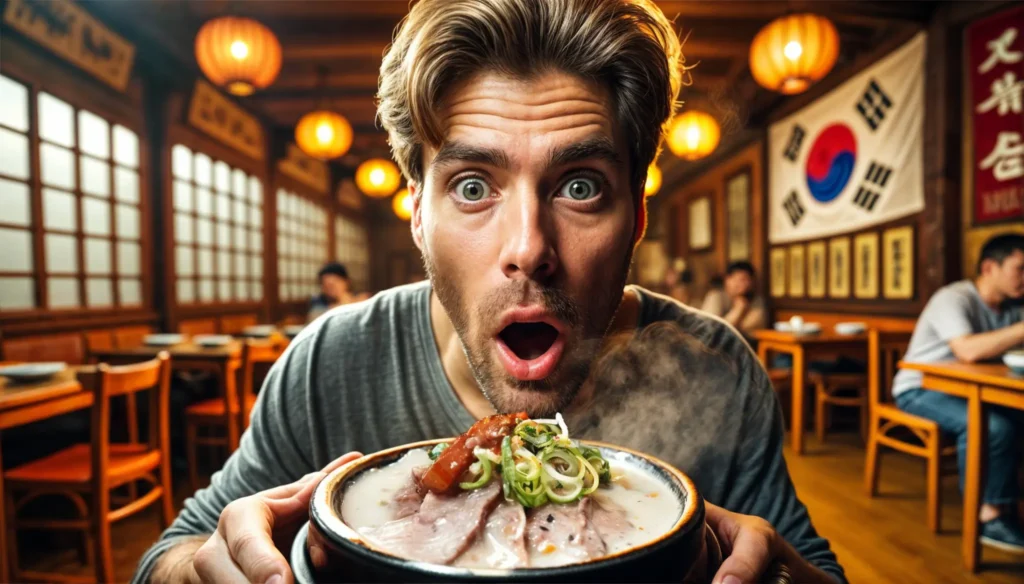
    Forget bibimbap and bulgogi for a moment—there’s a new Korean culinary sensation winning over international visitors: gukbap. This hearty soup, served with rice, is fast becoming a must-try delight, with tourists eagerly lining up at local restaurants to get a taste.

    What makes gukbap so irresistible? Join the ranks of global food lovers and explore the rich, authentic flavors of this traditional Korean dish that’s stealing the spotlight and redefining what it means to eat like a local in Korea. Keep reading to uncover the secrets behind gukbap’s rising fame!

    Foreigners visiting Korea are falling in love with gukbap, a hearty soup with rice, becoming a must-try for adventurous food lovers.

    What is Gukbap?

    Gukbap means ‘soup rice’ and is served in a flavorful broth. In more proper terms, gukbap is a type of traditional Korean food in which cooked rice is put in hot broth. The most common and traditional way involves cooking beef or pork bones in boiling water to get a rich and deep flavor.

    Gukbap, a traditional Korean dish, combines rice in rich, flavorful beef or pork broth.

    In other cases, various meats, intestines, and sometimes even seafood are added, making it a versatile and quite hearty meal. In each region of Korea, a different flair is given to gukbap according to the local ingredients and seasonings, reflecting regional taste and tradition.

    Historical Background of Gukbap

    Gukbap has deep roots in Korean history, dating back to the Joseon Dynasty. It was originally a dish for commoners, sold in taverns where traveling merchants and itinerants sat down to eat and rest. According to the “Journal of the Royal Secretariat,” historical records state that even female physicians recommended gukbap for its hearty and nourishing qualities to King Sukjong. The dish saw wider acceptance during Japanese colonialism when it was formulated into a popular delivery food as a symbol of Korea’s first venture into fast food.

    aaaaGukbap, from Joseon era taverns, became popular during colonial times
    Gukbap, a dish for commoners, gained popularity as Korea’s first fast food.

    Gukbap: A Symbol of Korean Hospitality

    Gukbap is not only a dish but a symbol of Korean hospitality and resilience. Historically, it was a dish for commoners and travelers; even today, it remains a popular comfort food in Korea. Gukbap embodies the inclusive spirit of Korean culture, providing nourishment and comfort to everyone.

    The Nutritional Benefits of Gukbap

    Nutritional value is just one of the promises gukbap holds beyond its delicious flavors. It often constitutes a complete meal with a combination of proteins from both beef or fish and carbohydrates from rice. The slow-cooked broth is rich in collagen and minerals, ensuring joint health and bringing comfort to your warm stomach, especially in cold weather.

    Types of Gukbap

    The beauty of gukbap lies in its diversity, with each region boasting its own version. Here are some notable types:

    The Increasing Popularity of Gukbap among Foreign Visitors

    In recent years, gukbap has transcended its traditional roots, becoming a beloved dish among both Koreans and foreign tourists. The global rise of Korean pop culture, including K-pop and K-drama, has significantly contributed to this trend. For example, a 20-year-old Italian fan of the boy band Stray Kids mentioned she was inspired to try gukbap because her favorite idols enjoy the dish. Similarly, long queues for a gukbap restaurant in the Hongdae neighborhood piqued a German visitor’s curiosity.

    The Media Aspect of Gukbap’s Popularity

    Gukbap has received much exposure through the media, reaching a wider international audience. Netflix shows, including “The Hungry and the Hairy,” featured gukbap as the hosts traveled around Korea, visiting numerous gukbap restaurants. Other standout media coverage included the New York Times listing gukbap among the “Best Dishes of the Year.”

    “The Hungry and the Hairy” showcased gukbap at various Korean restaurants.

    The Rise of Gukbap in Tourist Areas

    There has been a boom in the popularity of gukbap, particularly in tourist-heavy areas like Hongdae in Seoul. Restaurants are often filled with foreign diners, some even carrying their luggage. To accommodate this, many gukbap establishments have multilingual menus and even menu kiosks to ensure an inclusive dining experience.

    Gukbap booms in tourist spots like Hongdae, with multilingual menus for foreign diners.

    Experiencing Gukbap in Korea

    If you are planning a trip to Korea, you definitely should not leave without trying gukbap. Here are some places you can enjoy this delicious treat:

    Nongmin Baekam Soondae

    Located near Seolleung Station in Gangnam, Nongmin Baekam Soondae has been serving delicious sundae gukbap since 1963. Their thick gochujang-based paste called dadaegi adds an extra spice factor to the broth. The mix of various pork cuts and rich broth makes it a favorite among locals and tourists alike.

    Hyundai Sundaeguk

    Tucked away within the Yeongdong Traditional Market in Nonhyeon-dong, Hyundai Sundaeguk offers one of the coziest, most laid-back versions of sundae gukbap. This tiny venue, with only five tables, provides a dining experience akin to being a guest in a Korean home. Boiled until soft, the few pork slices in the heartwarming broth make it a perfect meal after exploring the bustling market.

    Conclusion

    Gukbap has successfully adapted to modern consumers’ ever-changing tastes and dietary needs. It’s a delightful surprise for K-pop fans eager to live like their idols or food enthusiasts seeking a taste of authentic Korean cuisine. Make sure to include gukbap in your itinerary when you travel to Korea. With every slurp, you’ll not only taste the flavors but also partake in a rich cultural tradition that has nourished Koreans for centuries.

    FAQs

    Why do foreigners like gukbap so much?

    Gukbap is especially popular among foreign visitors because of its rich flavors, cultural significance, and frequent media appearances. Its affordability and wholesome nutritional value also make it a favorite dish for many international visitors seeking genuine Korean cuisine.

    What is gukbap made of?

    The main ingredient of gukbap is cooked rice in hot broth, usually made by boiling beef or pork bones. The broth includes various meats, intestines, and sometimes seafood, seasoned with chopped chives, ground sesame seeds, and salted shrimp.

    Where can I try the best gukbap in Seoul?

    Some of the best places to try gukbap in Seoul include Nongmin Baekam Soondae and Hyundai Sundaeguk. These restaurants are famous for their unique and flavorful takes on the dish.

    Is gukbap healthy?

    Yes, gukbap is healthy due to its balanced combination of protein and carbohydrates. The slow-cooked broth is rich in collagen and minerals, promoting joint health and overall wellness.

    Can gukbap be customized to suit personal tastes?

    Absolutely! Gukbap is highly versatile. Diners can add various seasonings such as chopped chives, ground sesame seeds, salted shrimp, and gochugaru to suit their personal tastes.

    What makes gukbap different from other Korean soups?

    Gukbap stands apart from other Korean soups because it includes rice cooked directly in the broth, providing a more integrated and hearty meal. This combination of rice and soup sets it apart from dishes where rice and soup are served separately.

    Shocking Truths: Debunking the Top 5 Myths About Korean Husbands Today

    Korean culture, with its unique blend of tradition and modernity, has captivated audiences worldwide, especially through K-dramas, K-pop, and technological advancements. However, the increasing popularity of South Korean media has led to the rise of certain stereotypes about Korean men, particularly Korean husbands.

    These stereotypes, often exaggerated or based on outdated cultural norms, can paint a skewed picture of what it means to be married to a Korean man. Let’s explore and debunk the top five myths about Korean husbands, offering a more nuanced and realistic perspective.

    aaaaaaa

    Myth 1: Korean Men Don’t Do Household Chores

    One of the most persistent stereotypes is that Korean men are traditionalists who leave all household responsibilities to their wives. This belief stems from deeply ingrained Confucian values that have historically shaped Korean society, where men were seen as breadwinners while women managed the home. However, as South Korea rapidly modernized and urbanized, these roles began to shift.

    Five Biggest Myths About Korean Husbands
    Korean men, once seen as traditionalists due to Confucian values, now share household duties as roles shift.

    Reality: Changing Dynamics in Korean Households

    In contemporary South Korea, household dynamics are evolving. Younger generations of Korean men are increasingly taking on domestic duties, including cooking, cleaning, and childcare. This change is partly due to the rising number of dual-income families, where both spouses work outside the home, necessitating a more equitable division of labor. Moreover, the influence of global cultures and exposure to different lifestyles through media and travel have also contributed to this shift.

    The Evolution of Gender Roles in Korea

    The transformation of gender roles in Korea didn’t happen overnight. It’s a gradual process influenced by several factors, including economic pressures, changing societal values, and government policies aimed at promoting gender equality. For instance, paternity leave has become more common, encouraging fathers to take a more active role in parenting. This shift challenges the stereotype that Korean men are indifferent to household chores and childcare.

    The Truth About Korean Men’s Contributions at Home

    While some Korean men may still adhere to traditional gender roles, many are embracing a more balanced approach to family life. In urban areas, it’s not uncommon to see men participating in domestic tasks, cooking meals, and even sharing the responsibility of raising children. The stereotype that Korean men don’t do household chores is increasingly being challenged as more men take pride in contributing to their homes in meaningful ways.

    Myth 2: Korean Husbands Are Aggressive and Abusive

    Another common misconception is that Korean husbands are inherently aggressive and abusive. This stereotype is often fueled by sensational media reports and dramatic portrayals in films and television shows. While it’s undeniable that domestic violence exists in Korea, as it does in many countries, labeling all Korean men as aggressive is an unfair generalization.

    Five Biggest Myths About Korean Husbands
    Labeling all Korean husbands as aggressive is unfair; media often fuels this misconception despite it being untrue.

    Understanding Cultural Nuances and Differences

    Korea’s historical and cultural context plays a significant role in shaping the behavior and attitudes of its people. The influence of Confucianism, which emphasizes hierarchy and respect within relationships, can sometimes be misinterpreted as authoritarianism or aggression. However, it’s crucial to distinguish between cultural norms that emphasize respect for elders and harmful behaviors associated with abuse.

    The Impact of Media on Perceptions

    Media representations, particularly in K-dramas, can often blur the lines between fiction and reality. While these shows provide entertainment, they also create exaggerated character archetypes that can distort viewers’ perceptions of Korean men. The “cold but loving” male lead who transforms into a caring husband is a common trope, but it doesn’t necessarily reflect the everyday behavior of Korean men.

    The Influence of Confucianism on Korean Masculinity

    Confucianism has left an indelible mark on Korean society, influencing everything from family structure to social interactions. Traditionally, men were expected to be stoic, disciplined, and authoritative. However, as Korean society evolves, these expectations are being redefined. Many younger Korean men reject the rigid standards of masculinity imposed by Confucian ideals and are more open to expressing their emotions and embracing a softer, more empathetic approach to relationships.

    Myth 3: Korean Husbands Cheat on Their Wives

    The stereotype that Korean husbands are prone to infidelity is another myth that has gained traction, particularly through sensationalized media stories and cultural misunderstandings. While infidelity does occur, as it does in every society, it’s not accurate to suggest that Korean men are more likely to cheat than men from other cultures.

    Five Biggest Myths About Korean Husbands
    The myth of Korean husbands being prone to infidelity is fueled by media but isn’t more common than in other cultures.

    Examining Marriage Dynamics in Korea

    Marriage in Korea, like anywhere else, is influenced by a variety of factors, including societal expectations, family pressure, and individual values. Historically, marriages in Korea were often arranged, with a strong emphasis on maintaining family honor and social status. In such marriages, love was sometimes secondary to practical considerations, leading to different expectations and behaviors within the relationship.

    The Role of Arranged Marriages

    In the past, arranged marriages were common in Korea, and while they still occur, their prevalence has significantly decreased. These marriages were often seen as partnerships for the sake of family and societal stability rather than romantic love. In some cases, this pragmatic approach to marriage led to extramarital affairs, but this behavior is not unique to Korea and should not be used to generalize about all Korean men.

    Communication in Korean Marriages

    Communication is key in any marriage, and Korean couples are no exception. As societal norms shift and more marriages are based on love and mutual respect rather than arrangement, communication between spouses has become increasingly important. Open discussions about expectations, fidelity, and mutual support are essential in building a strong and healthy marriage, debunking the myth that Korean men are more prone to cheating.

    Myth 4: Korean Men Don’t Help Raise Children

    The stereotype that Korean men are uninvolved in raising their children is closely linked to the traditional division of labor in Korean families. Historically, men were expected to be the primary breadwinners, while women took care of the home and children. However, this narrative is changing as more Korean men take on active roles in parenting.

    Five Biggest Myths About Korean Husbands
    The stereotype of uninvolved Korean fathers is fading as more men now actively participate in raising their children.

    Korean Work Culture Pressures

    Korean work culture is known for its intensity, often demanding long hours and strong company loyalty. These pressures can sometimes make it difficult for fathers to spend as much time with their children as they would like. However, this doesn’t mean that Korean men are unwilling or uninterested in being involved in their children’s lives.

    Achieving a Work–Family Balance in Korea

    As Korean society increasingly recognizes the importance of work-life balance, there has been a growing movement to encourage fathers to play a more active role in raising their children. Government initiatives, such as increased paternity leave and flexible work arrangements, are helping to shift the cultural expectation that parenting is solely the mother’s responsibility.

    The Changing Role of Fathers in Korea

    Modern Korean fathers are more involved in their children’s lives than ever before. From attending school events to helping with homework and even taking on primary caregiving roles, the stereotype that Korean men don’t help raise children is becoming increasingly outdated. Today, many Korean men are committed to being present and active in their children’s lives, challenging traditional notions of fatherhood in Korea.

    Myth 5: Korean Men Don’t Cook

    The outdated stereotype that Korean men are incapable of or uninterested in cooking is far from the truth. In reality, cooking has become an increasingly popular skill among Korean men, especially in urban areas where modern lifestyles demand a more equitable division of labor.

    Five Biggest Myths About Korean Husbands
    The stereotype that Korean men can’t cook is outdated; cooking is now a popular skill among urban Korean men.

    The Rise of Culinary Skills Among Korean Men

    With more Korean men living independently or sharing domestic responsibilities with their partners, cooking has become a necessary skill. Additionally, the rise of food-related content on social media and the popularity of cooking shows have inspired many Korean men to explore their culinary talents.

    Urbanization and Modern Living’s Impact on Diets

    Urbanization and the shift toward smaller nuclear families have also contributed to the rise of cooking among Korean men. In cities, where convenience and time efficiency are essential, more men are learning to cook to maintain a balanced lifestyle. This trend is reflected in the growing number of male chefs and food bloggers in Korea who are breaking the stereotype that cooking is solely a woman’s domain.

    Most Popular Korean Dishes Cooked by Men

    From traditional dishes like doenjang jjigae (fermented soybean paste soup) to modern fusion cuisine, Korean men are making their mark in the kitchen. Whether it’s preparing a hearty ramyeon or experimenting with gourmet recipes, the stereotype that Korean men don’t cook is being dismantled by the delicious meals they create.

    Related Interesting Post

    Unpacking the Stereotypes of Korean Husbands

    It’s essential to recognize that stereotypes, while sometimes rooted in historical truths, often fail to capture the full picture. Korean husbands, like men everywhere, are individuals with their own personalities, values, and approaches to life and marriage. The key to a successful relationship, regardless of cultural background, lies in open communication, mutual respect, and a willingness to adapt to changing circumstances.

    The Role of Communication in Marriage

    Good communication is vital in any marriage, whether it is cross-cultural or not. Within a Korean couple’s discussions, consideration or negotiation for expectations and responsibilities can help avoid misunderstandings and make both partners feel supported and valued. By addressing and challenging stereotypes together, couples can build stronger, more resilient relationships.

    The Future of Gender Roles in Korea

    As Korea continues to modernize, the roles of men and women within society are likely to continue evolving. Younger generations are increasingly rejecting traditional gender roles in favor of more egalitarian relationships. This shift is not only changing the dynamics within Korean households but also contributing to broader cultural transformation.

    Conclusion

    Stereotypes about Korean husbands, like those about any group, oversimplify and distort the realities of individual lives. While cultural norms and traditions have shaped certain expectations, the truth is that Korean men, like men everywhere, are diverse and multifaceted. By challenging these myths and fostering open communication, couples can create relationships based on mutual understanding and respect, free from the constraints of outdated stereotypes.

    FAQs

    What are some common stereotypes about Korean husbands?

    Common stereotypes include the belief that Korean men don’t do household chores, are aggressive, cheat on their wives, don’t help raise children, and don’t cook.

    Is it true that Korean men don’t participate in household chores?

    No, this stereotype is outdated. Many Korean men, especially younger generations, actively participate in household chores and childcare, challenging traditional gender roles.

    Do Korean men help raise their children?

    Yes, modern Korean fathers are increasingly involved in their children’s lives, from attending school events to participating in daily caregiving tasks.

    Are Korean husbands more likely to cheat?

    Infidelity can occur in any culture, but it’s inaccurate to suggest that Korean men are more likely to cheat than men from other cultures.

    Why do people believe Korean men are aggressive?

    This stereotype is often influenced by media portrayals and misunderstandings of cultural practices rooted in Confucianism. It’s important to distinguish between cultural norms and individual behavior.

    Do Korean men know how to cook?

    Yes, cooking is becoming a more common skill among Korean men, particularly in urban areas where modern lifestyles require a more equitable division of labor.

    Faker Unveiled: 11 Jaw-Dropping Facts You Didn’t Know About the LoL Legend

    Faker, the Immortal Demon King, reigns supreme as the greatest player in League of Legends history. His unmatched skill, relentless dedication, and remarkable humility have solidified his legendary status. As the star midlaner for T1, Faker has shattered records and captivated hearts worldwide.

    But there’s so much more to this esports titan than meets the eye. Beyond the well-known accolades and championship titles, Faker’s journey is filled with intriguing stories and surprising tidbits that even his most devoted fans might not be aware of. What does it take to become a living legend? What sacrifices has he made along the way?

    Get ready to delve into the lesser-known aspects of Faker’s life and career. From his unexpected hobbies to his incredible training routines, here are 11 fascinating facts about Faker that will make you see him in a whole new light. Keep reading to discover the secrets behind the gaming god!

    Faker Unveiled: 11 Jaw-Dropping Facts You Didn't Know About the LoL Legend
    Faker, the Immortal Demon King, is the greatest League of Legends player, known for his unmatched skill and dedication.

    Who is Faker?

    Lee Sang-hyeok, better known by his in-game name Faker, is a South Korean professional League of Legends player. Born on May 7, 1996, in Seoul, South Korea, Faker quickly rose to prominence in the esports world. His journey began in 2013 when he joined SK Telecom T1 (now T1). Faker is widely regarded as the greatest player in the history of League of Legends, thanks to his exceptional skill, strategic mind, and numerous championships. With a career spanning over a decade, he has become a legend in the esports community.

    Witness the legendary Faker’s top 20 plays that showcase his incredible skill, strategy, and precision in League of Legends. Don’t miss out!

    1. Faker’s Rise to Stardom

    Faker was born Lee Sang-hyeok on May 7, 1996, in Seoul, South Korea. His story to become the greatest League of Legends player started in 2013 with the team SK Telecom T1, which is today known as T1. From the start, he was destined to be great, and he really was. In fact, he led his team to victory in the World Championship during his rookie year. That success was just the inception of a successful career.

    2. No Longer Just a Player, But an Owner

    Faker Unveiled: 11 Jaw-Dropping Facts You Didn't Know About the LoL Legend
    In 2020, Faker became a part-owner of T1, securing his future with the team.

    In 2020, Faker signed a new three-year contract with T1, but this was by no means your ordinary contract extension. In addition to that extension as a player, he also became part-owner of the organization called T1 Entertainment & Sports. This really underscores his commitment to the organization and vision for the future. He has also expressed that, upon retirement, he will be open to working for the leadership team at T1, so he maintains his relationship with T1, and his expertise will be upheld within the organization for many more years.

    3. The Best Brand Loyalty

    Faker’s brand loyalty is considered the best in esports. He celebrated his 10th-year anniversary with the team in 2023, making him the longest-serving player with one team in the history of League of Legends. This work ethic has been one of the reasons that T1 is as hugely successful as it is and has set him up to be in the conversation for the greatest competitive gamer ever. And he isn’t slowing down at all, having since re-signed with the team until at least 2025.

    Faker Unveiled: 11 Jaw-Dropping Facts You Didn't Know About the LoL Legend
    Faker celebrates 11 years in 2024, re-signed until 2025, proving unmatched loyalty.

    4. Healthy Eater with a Sense of Humor

    After his win at the 2015 World Championship, fans were laughing and jeering as they saw Faker eat his share of broccoli on stage. The strange incident was his reply to a fan’s comment that he looked like broccoli. This playfulness, perhaps unexpected from such a professional, makes Faker all the more human and one of a kind.

    5. Multi-Talented and Versatile

    Although best known for his prowess as a midlaner, Faker has also shown versatility in playing other roles. If forced to play an off-role, Faker prefers the jungle. Very frequently, fans can see him playing different champions and roles during his solo queue games to showcase his vast skill set.

    6. Creative Aliases

    Faker’s creative aliases are a true mark of his strategic playstyle. One of his best-known alternative accounts, however, is “Hide on bush,” based on the aforementioned tendency for the jungler to stay hidden in the bushes, waiting for an opportunity to execute an ambush. Versions of this alias can be found all over multiple servers. It just goes to show how he infuses some playfulness into his tactical mind.

    Faker Unveiled: 11 Jaw-Dropping Facts You Didn't Know About the LoL Legend
    Faker’s minimalist style, avoiding in-game skins, showcases his focus on gameplay and mastery.

    7. Going Skinless

    In- gameTime skins are popular with players, but not with Faker. He is a type of player who speaks with gameplay, and for his level of skill and highlights on flashy plays, it really captures people to watch his games. This minimalist style is merely one further reflection of the focus and commitment he maintains in mastering his game.

    8. Multimedia Star

    Faker’s fame goes beyond the scope of eSports. In 2018, he made an appearance on the Korean variety show “Hello Counselor,” and his humble attitude and jokes captured the viewers’ hearts. The fact that he was in the movie with K-pop idols Seulgi and Joy of Red Velvet only proved how big and sensational he was.

    9. High School Connection

    Faker finished high school in the same school as one of the LCK’s top professional gamers, Kim “Deft” Hyuk-kyu. Both players debuted in the League of Legends Champions Korea, or LCK, in 2013, and they have been pitched against each other a number of times in professional matches. Their rivalry and friendship liven up the LCK.

    10. Record-breaking Accomplishments

    With a professional career that has stretched to over ten years now, Faker has attained multiple records with the League of Legends game. First and only player to ever win four World Championships—he is arguably the best player of all time. In winning this tournament, he broke the record as the oldest winner in its history at 27, proving that experience and skill can outlast youth.

    11. Surprisingly Few Pentakills

    While being renowned for his overly aggressive playstyle, Faker could only secure one pentakill throughout his professional career. This rare feat was performed in the 2015 LCK Spring Split when he completely crushed NaJin e-mFire playing as LeBlanc. This statistic goes out to show the respect and wariness other players have of Faker.

    12. Faker’s Gaming Skills Helped Him Achieve Military Exemption

    All male citizens in South Korea must complete a compulsory period in the military. High achievements as an athlete or artist, however, allow one to be exempt from military service. Faker and his team achieved this exemption in September 2023 by winning a gold medal at the Asian Games. That victory not just supplemented his long list of glory but also opened up new avenues in the form of continuing further uninterrupted in his pursuits of esports.

    Faker Unveiled: 11 Jaw-Dropping Facts You Didn't Know About the LoL Legend
    Faker, T1 part-owner, renowned for aggressive playstyle, humility, and skill, earns Hall of Fame spot.

    Faker’s Everlasting Legacy

    Faker’s impact in the world of eSports has been second to none. From his aggressive playstyle and dominance of midlane in the past, he is now part-owner of T1, continuously pushing the line on what’s possible for him in competitive gaming. His humility, passion, and indelible skill have made him an adored figure inside and out of the eSports community.

    Conclusion

    Faker’s career in League of Legends so far is a fable of talent, hard work, and dedication. From humble beginnings to being a part-owner of T1, he has only continued to set new bars on what being a professional gamer means. Fun facts that give us all a little more insight into the life of the legend himself, the one and only Faker—the many sides to what makes him the greatest of all time.

    FAQs

    What is Faker’s real name?

    Faker’s real name is Lee Sang-hyeok. Known to his fans as Faker, Lee Sang-hyeok has become a household name in the world of esports and League of Legends.

    How many World Championships has Faker won?

    Faker has clinched the World Championship title four times, showcasing his unparalleled skill and consistency at the highest level of competition.

    Why is Faker called the “Unkillable Demon King”?

    The moniker “Unkillable Demon King” originated from a Chinese player who was awestruck by Faker’s elusive playstyle. The nickname perfectly captures his ability to dodge death and dominate his opponents, cementing his fearsome reputation.

    Does Faker use in-game skins?

    Interestingly, Faker almost never uses in-game skins. He believes that his natural mastery and unique style of play are the best ways to express himself in the game, foregoing the visual customizations that many other players favor.

    Has Faker ever played other roles besides midlane?

    While Faker is predominantly known as a midlaner, he has expressed interest in playing other roles, particularly jungle. This versatility speaks to his deep understanding of the game and his exceptional skill level.

    Does Faker currently have any role with T1 beyond being a player?

    Yes, Faker is more than just a player for T1; he is also a co-owner of the team. His long-term commitment to T1 includes plans to transition into a leadership role once he retires from professional play, ensuring his legacy and influence continue within the organization.

    Is New Korean BL Drama Wave a Game-Changer? : A Revolutionary Shift Reshaping Entertainment!

    Move over K-pop and traditional K-dramas—there’s a new obsession sweeping through Korean entertainment that’s catching everyone’s attention. BL(Boys’ Love) dramas, which explore romantic connections between male characters, are not just a niche genre anymore—they’re becoming a cultural phenomenon.

    But what’s behind this explosive rise? Could these dramas be reshaping societal views in Korea? Dive in to uncover the unexpected trends that BL dramas are sparking across the media landscape.

    BL dramas are skyrocketing in Korea, reshaping societal views and becoming a cultural phenomenon.

    Historical Context of LGBT Representation in Korean Media

    Early Film Representations

    South Korean cinema has a history of depicting same-sex themes, though often with tragic undertones. The 2001 film “Bungee Jumping of Their Own,” starring Lee Byung-hun, tells the story of a high school teacher who falls for a student he believes is his deceased girlfriend reincarnated. Despite its progressive premise, the film ends on a somber note, reflecting the societal attitudes of the time.

    Japan’s BL Culture Influence on Korea

    Initially enjoyed through novels and comics, the BL genre reached newer audiences on the web. While this underground subculture has made its way out in recent years because of streaming platforms, such a thing would never have been possible without the ever-increasing demand for diversified stories.

    BL genre, originating from Japan, gains mainstream appeal in Korea through streaming and diverse stories.

    The Popularity of BL Dramas Among Women

    Female Audience Appeal

    Interestingly, BL dramas have found a significant following among women, particularly those in their twenties and thirties. This demographic appreciates the emotional depth and nuanced storytelling of BL content, which often focuses on relationships and character development rather than explicit themes.

    Growing Acceptance of Same-Sex Relationships

    Recent surveys indicate a growing acceptance of same-sex relationships in South Korea. A Pew Research Center survey noted an increase in acceptance from 25% in 2002 to 44% in 2019. This trend is particularly pronounced among younger women, the primary consumers of BL content, suggesting a cultural shift towards greater tolerance and openness.

    Notable BL dramas like “Semantic Error” , “Color Rush”, and “Tinted With You” resonate with women in their 20s and 30s, reflecting a cultural shift towards accepting same-sex relationships.

    The Role of K-pop and Fan Culture

    Influence of K-pop

    K-pop has also contributed to the popularity of BL dramas. The strong fan culture surrounding K-pop idols has led to the creation of fanfiction and other content exploring romantic relationships between male idols. This phenomenon has helped normalize the depiction of same-sex relationships and paved the way for BL dramas to gain mainstream acceptance.

    The Impact of Social Media

    Social Media Engagement

    Social media platforms like Twitter, Instagram, and YouTube have amplified the reach of BL dramas. Fans actively share clips, discuss plotlines, and create fan art, generating buzz and attracting new viewers. This online engagement has been instrumental in driving the popularity of BL content.

    Role of Streaming Platforms

    Streaming Platforms and Their Role

    Streaming services like Netflix, Whatcha, and others have played a crucial role in the proliferation of BL dramas. These platforms, eager to attract and retain subscribers, are open to content that targets specific demographics and minority tastes. This shift has allowed BL dramas to flourish, reaching audiences that traditional TV networks might not cater to.

    The Rise of BL Dramas in Korea

    Semantic Error: A Pioneering Success

    “Semantic Error,” a spring 2022 K-drama, broke ground in the BL genre. It focuses on two university students with contrasting personalities, adding an original twist to the classic romance formula. The reserved and rule-bound Chu Sang-woo and the carefree, rebellious Jang Jae-young navigate misunderstandings before discovering their affection for each other. The show’s success highlights the growing acceptance and enthusiasm for such narratives in Korean media.

    Other Notable BL Dramas

    After the success of “Semantic Error,” several other BL dramas captured public attention. “Blueming,” a youthful campus romance, was released in March 2022, depicting the evolving relationship between two young men. “First Love, Again” explores the reincarnated love story of a man discovering his true love from 300 years ago. “Light On Me,” released in 2021, features a complex love triangle at an all-boys high school, while “To My Star” now boasts a second season due to its popularity.

    Representation vs. Reality

    Idealized Relationships vs. Real-Life Challenges

    While the rise of BL dramas is a positive development, it’s important to recognize that these shows often present an idealized version of relationships. They might not tell the truest tales of what people in same-sex relationships go through, but they sure are part of the force that would help cultures be more inclusive of different sexualities.

    Hopes for the Future

    Positive Representation and Social Change

    The success of BL dramas in Korea represents a step forward in the representation of diverse relationships. As societal attitudes continue to evolve, there is hope that these narratives will contribute to greater acceptance and understanding. The entertainment industry, by embracing such content, can play a pivotal role in shaping public perception and promoting inclusivity.

    Best Top 5 – Korean BL Drama

    Conclusion

    The new cultural wave of interest in BL dramas in Korea is a force to reckon with. This is what truly resonates with viewers: the emotional storylines and deep characters developed in both series, which are signs of how acceptance toward all kinds of stories is growing. Chances are, with streaming platforms as a supportive wind beneath its wings and social media vouching for BL content at the same time, there’s more growth left awaiting this sub-genre in the coming years.

    FAQs

    What are BL dramas?

    BL dramas revolve around romantic relationships between male characters and are usually targeted at a female audience.

    Why are BL dramas popular in Korea?

    They offer unique storytelling and emotional depth, appealing to audiences looking for diverse narratives.

    How has the perception of same-sex relationships changed in Korea?

    Surveys have shown increased acceptance, particularly in the younger demographic—a sign of a cultural shift toward tolerance.

    What role do streaming platforms play in the popularity of BL dramas?

    Streaming has made it possible for these dramas to be known by the masses, and not subject to limitations posed by the TV networks.

    What has BL got to do with K-pop?

    Popularizing same-sex relationships has long been facilitated by the K-pop fan culture, thus leaving room for the acceptance of real BLs.

    Will the popularity of BL dramas lead to social change?

    They will spur visibility, although whether that translates into social change remains to be answered.