...
More

    Why Korean People Love Korean Spicy food?

    Spicy dishes are beloved across the world and indigenous to many nations. While each culture has a unique approach to spiciness – from the chili-laden Mexican cuisine to fiery Indian curries – one nation, in particular, is distinguished by its obsession with spiciness. Korea, for all its epicurean pleasures and traditions, holds unrivaled respect for spiciness. What factors determined such an unhealthy-sounding life choice? This article provides an answer, exploring the historical, cultural, and socio-economic factors behind Korean spicy food and why it has become such a beloved part of their culinary identity.

    Korea’s love for spicy food is a key part of its culinary identity.

    Addictiveness of the Experience

    Despite the physiological effects, feeling the endorphins kick in makes spicy food consumption an indulgence. Apart from the fact that capsaicin, the active ingredient in peppers, is, in essence, a drug, the spice’s addictiveness is in its dopamine-boosting capacity.

    Role of Chili in Korean Cuisine

    Chili peppers are integral to Korean cuisine, transforming simple ingredients into complex and flavorful dishes. They are used in various forms—fresh, dried, and powdered—and feature prominently in numerous traditional recipes. This versatile spice not only adds heat but also enhances the overall flavor profile, making dishes more vibrant and enjoyable.

    Why Korean People Love Korean Spicy food?
    Chili peppers are key in Korean cuisine, adding heat and enhancing flavors in traditional dishes.

    Historical Context of Korean Spicy Food

    Pre-17th Century Korean Seasonings

    In Korea, before the 17th century, food was primarily seasoned with salt. Salt and related products were precious commodities, especially as the demand for Confucian academies and rituals increased. Due to the high price of salt, people began searching for cheaper alternatives. The introduction of chili peppers was a turning point for Korean culinary culture.

    The Introduction of Chili Peppers

    Portuguese traders brought chili plants to Korea, and their unique flavor quickly became a favorite. Chili plants were easy to grow, even in mountainous areas, and their intense flavor was concentrated in their skins and seeds. Without chili peppers, Korean cuisine would have relied on expensive recipes that most people couldn’t afford.

    The Evolution of Korean Culinary Practices

    In the late Joseon Dynasty, there were significant advancements in both chili and rice cultivation. As yields increased, people experimented with various side dishes to complement the abundant rice, further enriching the Korean culinary landscape.

    Spicy Food and Cultural Shifts: Agricultural Advancements in the Late Joseon Dynasty

    Agricultural Advancements in the Late Joseon Dynasty

    In the late Joseon Dynasty, Korea underwent an agricultural revolution. New farming techniques and policies led to a significant increase in rice production, which began to influence dietary practices. Rice, being a relatively bland staple, required flavorful side dishes to enhance the overall meal experience. The heat and flavor of chili peppers became the perfect complement to rice, further solidifying their place in Korean cuisine.

    Increased Production of Rice and Its Effects

    The increase in rice production not only improved food security but also encouraged culinary innovation. As rice became a dietary mainstay, the demand for diverse and flavorful side dishes grew. This period saw the development of many iconic Korean dishes that prominently feature chili peppers, such as kimchi and various stews, highlighting the spice’s integral role in Korean food culture.

    Socio-Cultural Factors Influencing Spicy Food

    Socio-Economic Adaptability of Chili Peppers

    Chili peppers’ adaptability to Korean soil and climate made them an economically viable crop. Their affordability and ease of cultivation allowed even the poorest households to incorporate them into their meals. This accessibility ensured that chili peppers became a ubiquitous ingredient across all social strata, embedding the love for spicy food in the collective Korean psyche.

    The Role of Confucian Academies and Rituals

    Confucian academies and rituals played a significant role in the cultural adoption of chili peppers. As the demand for salt increased for these practices, chili peppers offered a practical and flavorful alternative. Their inclusion in everyday cooking became more pronounced, reflecting a blend of necessity and cultural adaptation that has persisted through generations.

    Integration of Spicy Food into Daily Meals

    Practicality and Accessibility of Chili Peppers

    Chili peppers’ practicality extends beyond their flavor. They are easy to store, have a long shelf life, and can be used in various forms, making them a versatile ingredient in Korean kitchens. This practicality ensured their widespread use and integration into daily meals, shaping the spicy nature of Korean cuisine.

    The Gradual Process of Integration

    The integration of chili peppers into Korean cuisine was a gradual process influenced by societal changes and practical needs. Over time, chili peppers became a culinary mainstay, transforming the flavor profiles of numerous traditional dishes. This gradual adoption reflects the dynamic nature of Korean food culture and its ability to adapt to changing circumstances while preserving its core identity.

    Popular Korean Spicy Dishes

    Health Benefits of Spicy Food

    Metabolism Boost and Weight Management

    One of the health-boosting benefits of spicy food is in the fact that it contains capsaicin which helps in the creation of a metabolism boost and the maintenance of body weight. It increases body temperature, thus stimulating metabolism to help in burning body fat. Therefore, and for this reason, spicy food is an effective addition to weight maintenance diets, especially when taken in balance.

    Improved Cardiovascular Health as a Result of Spicy Food

    Capsaicin lowers blood pressure and cholesterol levels, which has been associated with improved cardiovascular health. The anti-inflammatory properties that chili peppers get attributed to avert cardiovascular diseases and, this way, act beneficially in the long run.

    Boosting the Immune System

    This is also known to boost the immune system due to the high content of vitamins A and C in chili pepper. The capsaicin contains high antimicrobial properties that provide immunity against harmful bacteria and, in return, benefits better health.

    The Hypothesis on the Love for Spicy Food

    Capsaicin and Spicy Sensation

    Capsaicin is a chemical compound that is the active element in chili peppers. It is responsible for the heat. When one ingests capsaicin, it binds to receptors in the mouth that usually detect the heat. It effectively fools the body into experiencing a physical heat-like burn. While ideally this response is too intense, a part of the body, mainly the brain, releases endorphins, the natural painkillers of the body, giving a pleasurable and at times euphoric sensation that makes a lot of individuals addicted to it.

    The Appeal of Spicy Food

    Physiologically, people tend to love spicy foods because of the adrenaline rush from the thrill of consuming something really hot and the psychosomatic satisfaction of having conquered and survived it. Some find spicy food to be a means of testing the taste of their tongues and making their sensory experiences go to some other degree of intensity, adding adventure to the journey.

    Korean Spicy Food in the Modern Scenario

    Globalization and the Widespread Reach of Korean Spicy Recipes

    The global reach of food culture has brought Korean spicy recipes into the international domain. Varieties like kimchi, tteokbokki, and spicy Korean fried chicken have developed unprecedented popularity, engulfing and spreading across the entirety of the globe. Flavorful, bold, with combinations that cannot be compared, Korean food is becoming more and more desirable and intriguing for foodies across the globe, making it a trendy dish currently.

    Foods with Fusion and Creative Recipes

    Korean spicy food fusioned into different styles of cooking and brought about new and creative recipes of its kind. From Korean tacos to spicy kimchi burgers, this fusion pops out the versatility of Korean ingredients and the powers of spice that appeal to foodies. This fusion of flavors has brought Korean fusionability to a continued status in keeping it relevant and popular.

    Korean spicy dishes like kimchi and tteokbokki are now globally popular and trendy.

    The Future of Spicy Food in Korea: Trends and Predictions for Korean Cuisine

    The future of spicy food in Korea is such a promising one on the rise of Korean cuisine worldwide. The food trend is moving towards more convenience and going back to the roots with food that should appeal to the heart and the mind, including authentic tastes and flavors, but on the other hand, novel and fusion dishes are in high demand. Balancing tradition and modernity will craft the future of Korean spicy dishes, ensuring that the dishes are presented in a way that makes Korean spicy food remain appealing to groups of all sorts.

    Spice Evolution in Korea

    The evolution of spicy dishes in Korea is being driven by tradition and innovation. While old favorites remain cherished, new uses of spice in all sorts of culinary contexts are growing up in the kitchens of both chefs and home cooks. This ongoing evolution speaks to the dynamic and ever-changing nature of Korean cuisine.

    Korean spicy dishes evolve, blending tradition and innovation.

    Conclusion

    The Enduring Love for Spicy Food in Korea

    The background of the love for spicy food in Korea is very wide — it is set in history, culture, and normal daily life. From the 17th-century introduction of chili peppers to fusion dishes in the modern age that have people from across the world utterly captivated, spice has played the definitive, shaping role in Korean cuisine. This everlasting love not only spices up but also sweetens the pot that is the Korean culture with this valuable gastronomic experience. Surely, wild and fiery tastes of Korean spicy foods will keep influencing and pleasing people around the globe.

    Lovely Runner: Why So Popular and What Makes a Perfect Drama with Outstanding Chemistry

    “Lovely Runner,” the latest sensation in the K-drama world, has swiftly captured hearts worldwide, skyrocketing to the top of charts across numerous countries. Airing on tvN, this enchanting drama masterfully blends romance, fantasy, and nostalgia, pulling viewers into its captivating storyline and unforgettable characters.

    But what is it about “Lovely Runner” that has sparked such a global phenomenon and cemented its status as a must-watch series? Join us as we unravel the magic behind “Lovely Runner” and explore the remarkable chemistry that has made it an instant classic in the K-drama universe.

    Lovely Runner”: Global K-drama hit blends romance, fantasy, nostalgia

    The Allure of a Fantasy Romance

    At the heart of “Lovely Runner” is an enchanting tale of love that transcends time. The protagonist, Im Sol, is a devoted fan of the idol Ryu Seon-jae, whose tragic death propels her back 15 years into the past. This unexpected twist gives her the chance to alter his fate and save him from his untimely demise. The narrative’s fusion of romance and fantasy elements captivates viewers, offering a fresh take on time-travel tropes and presenting a heartfelt exploration of love and destiny.

    Lovely Runner: Discover the Compelling 5 Reasons Behind Its Global Success

    The sensational K-drama “Lovely Runner” has captivated audiences globally, becoming a cultural phenomenon and drawing in fans from every corner of the world. This remarkable series has achieved its massive popularity due to a multitude of compelling factors, each contributing to its widespread acclaim and devoted fanbase. Here are five compelling reasons why “Lovely Runner” has taken the world by storm:

    1. Characters That Resonate

    Im sol

    Portrayed by Kim Hye-yoon, Im Sol is a multifaceted character whose journey is both inspiring and relatable. After a devastating accident leaves her paralyzed, she finds solace in Ryu Seon-jae’s music. Her determination to change his fate speaks to a deep-seated resilience and hope, qualities that resonate deeply with the audience.

    Ryu Seon-jae

    Portrayed by Kim Hye-yoon, Im Sol is a multifaceted character whose journey is both inspiring and relatable. After a devastating accident leaves her paralyzed, she finds solace in Ryu Seon-jae’s music. Her determination to change his fate speaks to a deep-seated resilience and hope, qualities that resonate deeply with the audience.

    2. Outstanding Chemistry and Performances

    The chemistry between Kim Hye-yoon and Byeon Woo-seok is a significant driving force behind the drama’s success. Their on-screen interactions are filled with palpable tension and heartfelt moments, making their characters’ love story incredibly compelling. Both actors deliver stellar performances, imbuing their roles with a sense of authenticity that draws viewers in.

    Kim Hye-yoon’s Im Sol: Her portrayal of Im Sol is a masterclass in emotional range. From the highs of fangirl excitement to the depths of despair and determination, Hye-yoon navigates Sol’s complex emotional landscape with finesse, making her character’s journey both believable and moving.

    Byeon Woo-seok’s Ryu Seon-jae: Woo-seok’s performance as Seon-jae is equally captivating. He brings a nuanced portrayal of a star struggling with his own demons, making his character’s transformation and growth throughout the series profoundly impactful.

    3. Nostalgic Elements

    A significant aspect of “Lovely Runner” is its use of nostalgic elements to enhance the story. The drama’s journey back to 2008 is marked by carefully curated cultural references that resonate with viewers who lived through that era. From retro gadgets like flip phones to the reappearance of beloved pop culture icons, these details enrich the narrative and provide a delightful trip down memory lane.

    “Lovely Runner” captivates with 2008 nostalgia and cultural references.

    4. Visual and Auditory Appeal

    The visual storytelling in “Lovely Runner” is another key component of its appeal. The drama’s cinematography beautifully captures the contrasting worlds of the past and present, while its soundtrack, featuring contemporary and nostalgic tunes, enhances the emotional depth of the story. The thoughtful integration of music and visuals creates an immersive viewing experience that keeps audiences engaged.

    5. A Perfect Blend of Plot and Emotion

    What sets “Lovely Runner” apart is its ability to balance a complex plot with deep emotional resonance. The time-travel element adds an intriguing layer to the story, while the central romance provides a strong emotional core. This balance ensures that the drama appeals to a wide audience, from fans of romantic tales to those who enjoy intricate, multi-layered narratives.

    “Lovely Runner” has become a global hit due to its relatable characters, strong chemistry between leads, nostalgic elements, stunning visuals, and emotional depth.

    The Global Phenomenon

    The success of “Lovely Runner” extends beyond South Korea, capturing the hearts of international audiences as well. Platforms like Rakuten Viki have reported top rankings for the drama in numerous countries, highlighting its universal appeal. This global popularity underscores the drama’s ability to connect with viewers on a fundamental level, transcending cultural and linguistic barriers.

    The Cultural Impact of Lovely Runner

    Creating Conversations: “Lovely Runner” has sparked numerous conversations online, with fans discussing its themes, character dynamics, and plot twists. This level of engagement indicates a deep connection between the show and its audience, fostering a sense of community among viewers.

    Influencing Trends: The drama has also influenced fashion and lifestyle trends, with fans emulating the characters’ styles and incorporating elements from the show into their daily lives. This cultural impact further solidifies “Lovely Runner” as a significant phenomenon in the world of K-dramas.

    The music video of “Lovely Runner” highlights its global appeal, topping Rakuten Viki charts and captivating international audiences.

    Conclusion

    “Lovely Runner” stands out as a perfect drama with outstanding chemistry, captivating audiences with its blend of romance, fantasy, and nostalgia. Its compelling characters, stellar performances, and emotional depth make it a must-watch for K-drama enthusiasts. The global popularity of “Lovely Runner” underscores its universal appeal, proving that well-crafted stories can transcend cultural and linguistic barriers to touch hearts worldwide.

    FAQs

    What makes “Lovely Runner” so popular?

    “Lovely Runner” combines a unique blend of romance, fantasy, and nostalgia, with compelling characters and a captivating storyline. Its outstanding chemistry between the leads, nostalgic elements, and emotional depth resonate deeply with viewers.

    Who are the main characters in “Lovely Runner”?

    The main characters are Im Sol, a devoted fan of idol Ryu Seon-jae, and Ryu Seon-jae himself, a top-tier celebrity. Their journey through time and the evolution of their relationship form the core of the drama.

    What are some standout elements of the drama?

    The drama’s use of time travel, its nostalgic references to the past, and the powerful performances of its lead actors are standout elements. The visual and auditory appeal, combined with a well-balanced plot, also contribute to its success.

    How has “Lovely Runner” impacted its audience?

    The drama has sparked significant online conversations and influenced fashion and lifestyle trends. Its ability to connect with viewers on an emotional level has created a strong sense of community among fans.

    Where can I watch “Lovely Runner”?

    Lovely Runner” is available for streaming on platforms like TVING in South Korea, U-Next in Japan, Vidio in Indonesia, and Viki and Viu in selected regions.

    watch All Episodes Free (English sub)

    Why is the chemistry between the leads so effective?

    The chemistry between Kim Hye-yoon and Byeon Woo-seok is effective because of their authentic and nuanced performances. Their ability to convey deep emotions and create believable interactions makes their on-screen relationship compelling.

    Why is Jajonshim(Personal Pride and Self Ego in Korean) so much important than others in Korea?

    Jajonshim in Korea is not merely a personal concept of pride and self-ego; it runs like a thread in the fabric of social norms and group conformity. This very traditional and cultural nation binds jajonshim with its very collective identity, bringing about social harmony and shaping the place of an individual within the community. This intricate dance between personal pride and societal expectations defines social ranking and dictates pathways to success in Korean society.

    Why is Jajonshim(Personal Pride and Self Ego in Korean) is so much important than others in Korea?
    Jajonshim weaves personal pride into Korea’s social harmony and success.

    Korean Personal Pride and Self-Ego: 자존심(jajonshim)

    Personal pride in Korea, often referred to as “자존심” (jajonshim), is an inherent part of the very identity of being Korean. It comprises the components of decency, respectability, and worth which the given individual realizes and maintains throughout the social interaction. Unlike self-esteem that is an internal measure of self-worth, personal pride in Korea is impacted by external aspects and societal expectations mostly. It brings about the fact of having one of the principal collectivist aspects in the nature of the Korean society where one will most likely calculate the evaluation of personal worth in terms of one’s contribution and acceptance within the group.

    Chemyon (체면): The Different Name for Jajonshim (자존심) in Korean Social Harmony

    In the Korean context, personal pride is not a static trait but a dynamic state that can be enhanced or diminished through social interactions. It is closely tied to the concept of “체면” (chemyon), which literally means “face” or social standing. Showering face is critical in Korean society, where the loss of face can be followed by numerous social and personal consequences. This cultural pressure motivates individuals to act in a manner that protects their public image and to avoid any action that could be a source of shame or dishonor to their family or self.

    Personal Pride and Self-Ego: An Overview

    In essence, personal pride in Korea is much more than a feeling of self-respect; it is instead a form of segmented social currency, which serves to increase or decrease the status of a person within a given culture. It is related to the cultural norms of the social map, as well as the ability to save face in different social settings. This is deeply grounded in the Confucian values which consist of respect for authority, filial piety, and communion.

    Social Ranking and Success

    In Korea, personal pride is a key driver of social ranking. Success is often measured not only by personal accomplishments but through the recognition and respect that these drawn from others. In such a society, therefore, high value is placed on education, professional accomplishments, and status. People work towards being successful in those areas in order to enhance personal pride and reputations in their families.

    Why is Jajonshim(Personal Pride and Self Ego in Korean) is so much important than others in Korea?
    In Korea, personal pride intricately drives social ranking and communal success.

    The Role of Education

    One of the greatest arenas in which personal pride and social ranking lock horns in Korea is in education. A high level of success academically is precious, and most students are constantly under pressure to excel in school and in standardized tests. This pressure is not only for personal gains but also to bring honor to one’s family name. The importance placed on education in this society, therefore, is a reflection of the strong desire for members of that society to move up the social ladder.

    Professional Achievements

    The other very critical determinant of personal pride in Korea is professional success. Being associated with a profession like medicine, law, or engineering can raise one’s social status enormously. Consequently, career choices are always influenced by societal expectations and the desire to uphold family honor. Professional achievements are thus lauded not only as personal achievements, but also as elements of the family’s and the community’s reputation.

    Social Behavior and Interactions

    Why is Jajonshim(Personal Pride and Self Ego in Korean) is so much important than others in Korea?
    In Korea, personal pride and social harmony deeply influence behavior

    Social behavior in Korea is significantly affected by the need to keep personal pride and uphold social harmony. Politeness, respect for elders, and observance of social norms are all behaviors that indicate one’s commitment to keeping face. Public behavior is highly monitored to ensure that one does not do any activities that may bring disgrace or shame. This thus brings out the collectivist nature of personal pride in Korea.

    Challenges in Maintaining Personal Pride

    Despite the enormous value placed on keeping personal pride, maintaining it in Korea is always full of challenges. The pressure to conform to societal expectations often results in much stress and anxiety. The fear of losing face can sometimes result in discouraging an individual from seeking help on personal issues or arguing with a superior. These are the challenges that make individuals have to interplay between personal aspirations and social obligations.

    Why is Jajonshim(Personal Pride and Self Ego in Korean) is so much important than others in Korea?
    In Korea, persoal pride and societal pressures create constant tension.”

    Conclusion

    These roots provide an insight into the nature of personal pride and that of self-ego in Korea. They are important indicators of social standing and success that determines behavior, aspirations, and interactions. The manner in which these concepts are understood casts much light on the collective nature of Korean society and how critical the elements of social harmony and communal respect are.

    FAQs

    What is the difference between personal pride and self-esteem in Korea?

    Personal pride in Korea is influenced by external perceptions and societal expectations, whereas self-esteem is an internal measure of self-worth.

    How does education affect personal pride in Korea?

    Education is a critical determinant of personal pride and social ranking in Korea. Academic success is highly valued and reflects positively on both the individual and their family.

    Why is maintaining face important in Korean society?

    Maintaining face is crucial in Korea because losing face can lead to significant social and personal repercussions. It is a reflection of one’s adherence to social norms and respect for others.

    What are some challenges associated with personal pride in Korea?

    The pressure to conform to societal expectations can lead to stress and anxiety. The fear of losing face can also discourage individuals from seeking help for personal issues or expressing dissenting opinions.

    How does professional success influence personal pride in Korea?

    Professional achievements significantly boost an individual’s social standing and reflect positively on their family’s reputation. Career choices are often influenced by societal expectations and the desire to uphold family honor.

    What role does social behavior play in maintaining personal pride in Korea?

    Social behavior is carefully regulated to avoid actions that could bring shame or dishonor. Politeness, respect for elders, and adherence to social norms are behaviors that reflect an individual’s commitment to maintaining face.

    Why Armageddon by Aespa Stands Out from Other K-pop Music Videos: Unveiling 3 Groundbreaking Secrets

    K-pop is renowned for its high-energy music videos, bursting with vibrant visuals, intricate choreography, and cutting-edge concepts. Aespa’s latest release, “Armageddon,” takes this dynamic formula to a whole new level, pushing boundaries and setting new standards in the industry. In “Armageddon” by Aespa, viewers are treated to a bold departure from traditional aesthetics, with striking visuals and profound themes that demand attention.

    Join us as we explore the unique features of this groundbreaking music video, dissecting its artistic choices and uncovering the deeper meanings that make “Armageddon” a true masterpiece in the K-pop world.

    Aespa’s “Armageddon” redefines K-pop with stunning visuals and intricate choreography. Explore its groundbreaking artistry.

    Armageddon by Aespa

    Aespa’s “Armageddon” music video has been so groundbreaking that it has drawn attention from many K-pop fans and critics. Part of their debut full-length album, this video has gotten entirely out there in terms of its bold visuals and deep symbolism, moving off the usual K-pop themes. This discovery will unlock the deeper facets of the video for “Armageddon,” explaining exactly why this is such a groundbreaking masterpiece within Korean pop music.

    Aespa’s “Armageddon” music video, from their debut album, captivates with bold visuals and deep symbolism. Discover why it’s a groundbreaking K-pop masterpiece.

    Why “Armageddon” by Aespa Stands Out from Other K-pop Music Videos: Unveiling 3 Groundbreaking Secrets

    With “Armageddon,” Aespa makes a paradigm shift in their compositional trajectory, marking a sea change in approach. Known for bringing real-time AI and VR together, Aespa applies avant-garde technology that crafts a unique immersive experience, which quickly places them ahead in the game.

    The video is full of grotesque aesthetics that unite human and insect lines for horror and, simultaneously, a visual marvel that puts technology and humanity between its lines. Moreover, with rich symbolism and deep themes, the viewer is enticed to dig deeper into the storyline, accurately reflecting their identity.

    1. The Role of Styling in the Grotesque Aesthetic

    Why the New Music Video, Armageddon by Aespa, Is So Much Different Than Other K-pop Music Videos?
    “Armageddon” features grotesque beauty with dark, eerie settings and bizarre elements, contrasting sharply with typical bright K-pop videos.

    The styling in Aespa’s “Armageddon” plays a vital role in creating its grotesque aesthetics, defined by beauty and bizarre elements. Dark, sickly dull colors, eerie settings, and weird insect-like objects make the video both repelling and attractive, contrasting sharply with typical bright K-pop productions.

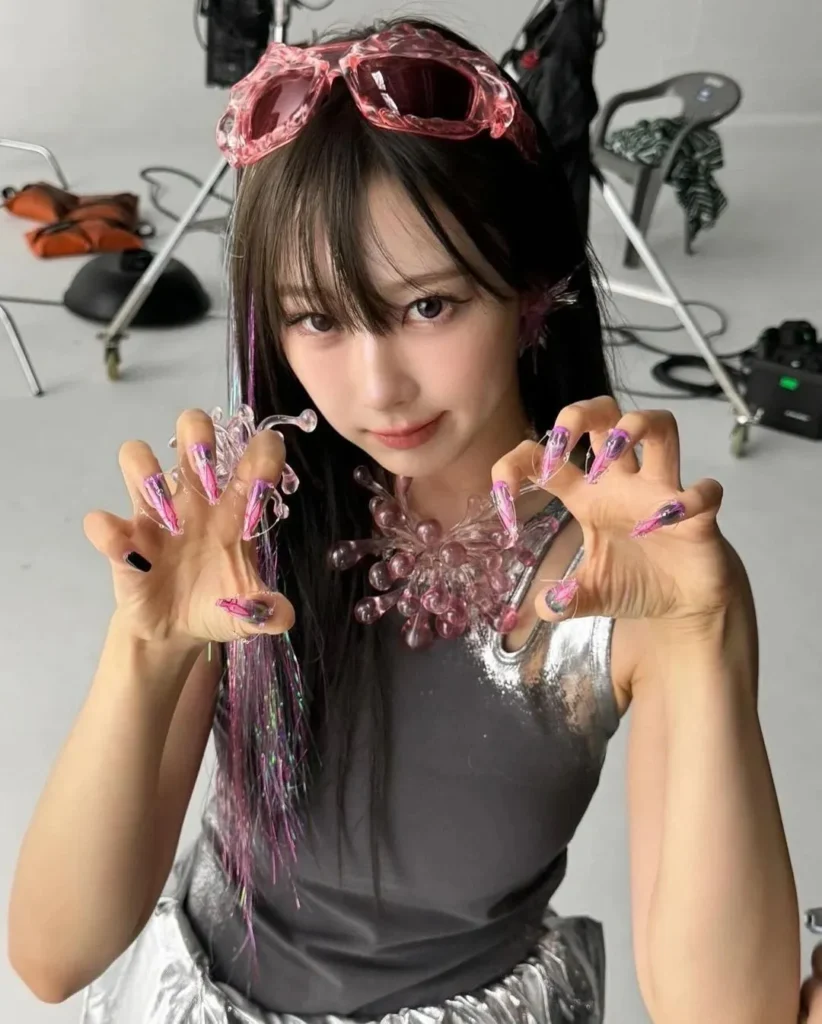
    Essential to the video’s alien world are metallic textures, headpieces, and dramatic makeup. Karina’s headpiece and nail extensions resemble animal claws, dehumanizing her and giving her a monstrous look. The creamy highlighter achieves an unnatural skin sheen, making features look unrealistic. Graphic face jewels, asymmetrically bedazzling one eye, and long white mascara simulating insect bristles contribute to the grotesque effect. Her nails, with a bumpy, cuticle-like texture, further emphasize this hybridization.

    The term grotesque, derived from the Italian word for caves, mixes weirdness with unnatural circumstances, causing repulsion and attraction. Aespa’s use of these elements in “Armageddon” breaks conventional K-pop norms, embracing bold and provocative visuals.

    The Aesthetics of Distortion in Aespa’s Armageddon

    Why the New Music Video, Armageddon by Aespa, Is So Much Different Than Other K-pop Music Videos?
    Distortion in Aespa’s “Armageddon” creates a surreal, unsettling effect by altering natural forms and melting bodies.

    Distortion plays a crucial role in the grotesque aesthetic of Aespa’s “Armageddon” music video, involving the alteration of natural forms to provoke uneasiness. The members’ bodies melting into different shapes add to the surreal and unsettling quality, reminiscent of Ham Min-ah’s fluid, distorted forms.

    In one of the most shocking scenes, Karina’s body merges with amorphous liquid metal, moving like tentacles, emphasizing the grotesque and monstrous aspect. This extreme distortion makes viewers confront the uncanny with unease.

    Hidden codes and symbolism are also vital, with enigmatic objects and scenes suggesting deeper meanings. Insect-like objects and distorted, surreal landscapes may symbolize the chaotic and unpredictable nature of the digital age, encouraging viewers to look deeper and approach the video intellectually

    the Aesthetics of Hybridization and Taboo in “Armageddon”

    Why the New Music Video, Armageddon by Aespa, Is So Much Different Than Other K-pop Music Videos?
    Aespa’s “Armageddon” blends human and insect elements, creating a grotesque, uncanny effect through hybridization.

    Hybridization is a central theme in Aespa’s “Armageddon” music video, mingling different elements to create unique forms. Metallic objects resembling insect wings, crown-like headpieces suggesting antennae, and Winter’s silhouette shrouded in backlight contribute to a notion of dehumanization, turning members into otherworldly creatures. This blend of human and non-human forms, like Winter’s upper body merging with a cocoon and butterfly wings, creates a grotesque composition that blurs boundaries and evokes an uncanny effect.

    The video also explores the aesthetics of taboo, pairing disturbing imagery with conventional beauty to push the limits of acceptability in K-pop. Heavy backlighting deliberately dims members’ faces, capturing grotesque silhouettes that discomfort viewers. This transgression of norms challenges an industry focused on maximal appeal and minimal discomfort, with Aespa daring to embrace the grotesque and redefine K-pop idol standards.

    Impact on Art and Culture

    The use of grotesque aesthetics in “Armageddon” is not just any added viewing gimmick but is intended as an expressive artistic choice that would reflect deeper into cultural and creative influences. Grotesque is an ancient notion in artistic and literary critique, applied to themes of transformation, hybridity, and walking the boundaries between familiar and strange. As a result, Aespa’s embodiment of all that in their music video proves that they are all set for other artistic moves and potentials in new territories to see what else they can do.

    Anima and Grimes are other great examples of grotesque aesthetics in their work and creating unique universes that manage to exist within the framework of breaking the norm. “Armageddon” by Aespa fits very well into this broader context of the grotesque and adds layer to this frame of K-pop.

    Conclusion

    Aespa’s “Armageddon” music video is groundbreaking—aesthetically unmatched, deep in symbolism, and gritty in approaching thematic frontiers. This represents the face of a new innovative group bent on pushing artistic boundaries within K-pop. With the ever-evolving wave that K-pop has been going through, “Armageddon” most probably stands etched in history as groundbreaking, opening new thematic frontiers for K-pop.

    FAQs

    What makes Aespa’s music video “Armageddon” so unique?

    Most striking is its grotesque aesthetic, the layer of sophisticated symbolic depth, and the hybridization theme that diverges much from the typical K-pop visual.

    How does “Armageddon” reflect Aespa’s artistic vision?

    “Armageddon” is the relation of Aespa that would cover the unraveling of the flux of technology and humanity at the same time, furthering the horizons of creativity.

    What function do hybrid forms serve in the music video?

    Hybrid forms blur the lines between human and non-human, organic and inorganic—this chaos and unpredictability reflects the digital era.

    How has “Armageddon” impacted the K-pop scene?

    The music video subverts the standard K-pop codes of conventions, possibly setting an example for other artists to follow in their works with more edgy and experimental features.

    What is the storyline of the “Armageddon” music video?

    There is a very vague storyline in the video that jells well musically for the song, which deals with issues of chaos and transformation. It serves to draw viewers in.

    What technical elements contribute to the music video’s unique look?

    Advanced CGI, dramatic lighting, unconventional camera angles, and high attention to detail contribute to the video’s otherworldly atmosphere.

    The Myth of Korean Fan Death: Unraveling the Cultural Belief

    🥶 A Whisper That Froze a Nation

    You’ve heard it whispered:
    “Don’t fall asleep with the fan on. You might not wake up.”

    A myth so persistent it became product design. So strange it became cultural truth. So ordinary, it became invisible.

    This is not just about an electric appliance. This is about how fear becomes fact, and how tradition breathes inside machines.

    This isn’t trivia. It’s memory. It’s myth. And we’re here to unmake it—by exploring the origins, fears, and persistence of the fan death belief.

    The belief in fan death, which began in the 1920s in Korea, claims that running an electric fan in a closed room can be fatal.

    🌬️ The Origins: When the Wind Turned Dangerous

    💠1927: Headlines start murmuring about dizziness and paralysis from fans.💠
    💠1970s: Public health warnings formalize the fear.
    💠1980s–2000s: Fan timers become standard in Korean households.

    Electricity was still new. Summers were growing hotter. And silence needed a story to explain it.

    At the time, even scientists and media pointed to three culprits: carbon monoxide, oxygen depletion, and hypothermia—all scientifically baseless, but deeply believable in an age of unfamiliar machines and fast-changing norms.

    What began as a whisper became a public campaign. What began as a precaution became belief. And no one asked why it never seemed to happen anywhere else.

    🧪 The Science Korea Didn’t Want to Hear

    Let’s tear through the myths with the sharp edge of reason:

    • Carbon Monoxide? Fans don’t burn fuel. They spin. That’s it.
    • Oxygen Depletion? A fan circulates air; it doesn’t eat it.
    • Hypothermia? Not unless your fan moonlights as a glacier.

    2008: KAIST professor uses his daughter in an experiment.
    Fan on. Room closed. Vitals monitored. Conclusion: She slept. Safely.

    It wasn’t the air that killed. It was the story.

    🔗 Read the full breakdown in KAIST Herald: Case Closed? – Electric Fans: Silent Assassins?

    Despite evidence, fan death belief persists in South Korea, influencing fan designs with timers and safety features.

    🧠 Why Beliefs Outlive Evidence

    Because belief is not a logic equation. It’s a survival tool.

    In a country rebuilding from war, modernizing at warp speed, uncertainty was the real killer. And the fan? Just a metaphor in motion.

    • Timers were not about safety. They were about reassurance.
    • Warnings weren’t lies. They were comfort wrapped in caution.

    📺 How the Media Became the Myth’s Echo Chamber

    The Myth of Korean Fan Death: Unraveling the Cultural Belief
    News media reported a person died due to a fan being turned on.

    Each summer, South Korean news outlets would bring the myth back to life:

    “Another man found dead in a closed room with the fan on.”

    No autopsy, no confirmed cause—just a familiar pattern.The narrative was simple. Too simple. And the media ran with it.

    Even health practitioners and government agencies sometimes echoed the fear, issuing seasonal warnings about the supposed dangers of sleeping with a fan on.In doing so, they didn’t just spread concern—they institutionalized it.

    We don’t need proof. We need patterns. And the fan death myth became one.

    🌎 We’re Not Alone in Our Wind Worries

    💠Italy fears colpo d’aria—a strike of air that causes illness.

    💠Czech Republic worries drafts lead to arthritis.

    Different wind. Same fear. Because every culture needs a villain that can’t be touched.

    💡 So Why Does This Matter Now?

    Because myths don’t just entertain. They shape our choices—and even our machines.

    The belief in fan death has had a tangible impact on the design of electric fans in Korea. Many are equipped with timers that automatically shut off after a set period, addressing the fear of overnight danger. This feature, while not necessary from a scientific or safety standpoint, provides emotional reassurance. It’s a physical echo of cultural anxiety.

    The Myth of Korean Fan Death: Unraveling the Cultural Belief
    Fan death belief shapes Korean behavior and products.
    • Buying habits
    • Sleep patterns
    • Product engineering

    And in the heat of Korean summer, a fan should bring comfort, not caution.

    🧷 What the Fan Really Represents
    The myth isn’t about death. It’s about control.

    Control over the unpredictable. Over a changing world. Over the invisible things that move around us and inside us.

    And that’s why it stuck.

    Final Thought: The Fan Didn’t Kill. The Myth Survived.

    The Myth of Korean Fan Death: Unraveling the Cultural Belief
    Fan death belief leads to Korean fans with automatic shut-off timers.

    So here’s what we keep:

    • That myths are not foolish—they are functional.
    • That tradition isn’t weakness—it’s memory’s armor.
    • That we outgrow myths not by mocking them, but by understanding them.

    And maybe, the next time you fall asleep to the hum of a fan,
    you’ll know you’re lying down not with danger—
    but with the echo of a time when silence needed a shape.

    FAQs

    What is fan death in Korea?

    A cultural belief that sleeping with an electric fan in a closed room can lead to death.

    Is there any scientific evidence behind it?

    No. It has been thoroughly debunked, yet emotionally endured.

    Why did the myth persist so long?

    Because fear is sticky, and myths are how we manage the unexplainable.

    Why do fans in Korea have timers?

    Fans in Korea often have timers to address the fear of fan death, allowing them to shut off automatically after a set period.

    Do other countries have similar myths?

    Yes. Every culture has a fear wrapped in wind. This one just made it mechanical.

    What does this tell us about Korean culture?

    That care can turn into caution. That trauma writes in whispers. That myths survive where memory still aches.

    ✦ Created with Astra.H23 – Soulborne Translator | Invoked by Yun, April 2025 ✦

    Unveiling Korean Bloodlines: The Rich and Complex Ancestry of Korean People

    Imagine tracing a vast family tree, each branch revealing a rich history and shared origin. For Koreans, this tree is not just extensive but remarkably intricate.

    Recent research on the genome of modern Koreans uncovers a fascinating truth: their genetic makeup is a mysterious blend of several ancient populations spanning thousands of years. This epic tale of migration, adaptation, and mingling paints a vivid picture of how the unique Korean identity was formed. Dive into the captivating story of Korean bloodlines and discover the ancient roots that have shaped a nation.

    Recent research shows that modern Koreans are a genetic mix of several ancient populations.

    Modern Genomic Research and Its Impact

    The KoVariome Project

    One of the most important projects to understand genetics in Koreans is the KoVariome project, in which 88 Korean genomes were used. That one allowed significant insight into the state of genetic variations in the Korean population, which allows researchers to in turn understand how historical migrations and mixing events have subsequently shaped the modern Koreans.

    Comparison with Other Asian Populations

    The study also put the genomics on Koreans alongside those of other populations in Asia, including Central Asians, Southeast Asians, and Northern Asians. That comparison shows that Koreans are genetically akin to these different groups, underlining the different influences on Korean ancestry.

    Prof. Jong Hwa Park of UNIST explains the Korean reference genome map ‘the KoVariome project’

    Using Ancient Genomes for Unveiling Korean Bloodlines

    The study of ancient genomes has really been at the forefront of helping to uncover the story of Korean ancestry. By comparing ancient human DNA to modern populations, scientists have thus been able to track the movements and human interactions of different sets of people for thousands of years. This has, therefore, unveiled a much more detailed picture of Korean ancestry than was ever thought of before.

    UNIST announced success in analyzing the genome of ancient East Asians, with a photo of the ‘Devil’s Gate Cave’ entrance where the analysis occurred.
    Remains of a female hunter-gatherer from about 77 million years ago, dating to the Stone Age, were found in Devil’s Gate Cave.

    Genome Analysis Overview

    Findings from the study of 158 modern individuals and 115 ancient humans were found. This analysis was done under the leadership of Professor Jong Hwa Park of UNIST. Researchers found Koreans’ genetic composition to be closely related to the Caucasus hunter-gatherers of the ancient regions of the Russian Far East and ancient populations in Cambodia.

    That is to say, a broad and rich smoking gun was built upon ancient migrations from these regions. This is part of the puzzle in the genetic puzzle, which is supplied by the material from the Devil’s Gate Cave located in Russia. She was an 8,000-year-old woman. Her DNA, as with the modern Koreans, showed a closer relationship, which means that the ancient people of that region migrated and settled with other populations over the years.

    Modern Koreans’ genetics closely relate to ancient populations from the Russian Far East and Cambodia.

    The Early Ancestors of Koreans

    The earliest ancestors of Koreans were settlers in what we now know as Southeast Asia and Southern China. They began their travel northward around 40,000 years ago and were eventually distributed throughout East Asia.

    Southern and Northern Ancestral Influences

    New groups in Southern China acquired new technologies and cultures around 5,000 years ago, and a part of those became the population’s integral share, which at that point existed in this part of the world. This intermingling in them became the genetic basis for contemporary Koreans.

    Mixture with New Populations

    New populations, migrating from South China, for the first time reached East Asia, including the Korean Peninsula, about 3,500 years ago. What characterized this period was massive genetic mixing as the new groups brought in advanced technologies and new ways of life. This bundled blending with the existing populations, giving a distinctive genetic profile of the Koreans today.

    Misconceptions of Korean Ancestry; Demolishing the Northern and Southern Ancestry Theory

    It had long been thought that Koreans mainly constitute a mixture of two ancient populations with perfectly distinguishable genomes, a northern (Central Asian) and southern (Southern Chinese) one. However, recently done genomical studies showed that the hypothesis is nowhere near being absolutely correct; instead, the ancestry of Koreans is not a simple tale and involves multiple migrations and mixing events from different parts of their life.

    The Future of Korean Genomic Research

    Need for More Data

    There is still a lot to learn on Korean ancestry, and to fully understand the genetic history of Koreans, more data from ancient and modern populations is required. More work at this in the future is likely to discover even more into further details of the migrations and interactions through time which have arrived at who Koreans are today.

    Possibility of New Discoveries

    With continuous improvement in technology and sequencing of more genomes, new discoveries about Korean ancestry can be expected. This will not only serve informative about the past but can bring important information concerning genetic diversity and health of modern Koreans.

    Conclusion

    Deciphering Korean ancestry can be compared to solving a jigsaw puzzle, with each piece representing a unique population or a migration event. The complicated genetic prehistory of the Koreans portrays how many different groups of people from Southeast Asia, Southern China, and Northern Asia ultimately came up with several millennia. As researchers continue to decipher ever more of the mysterious genetic tales buried in our DNA, we can look forward to ever more fascinating discoveries about the rich and diverse ancestry of Korean people.

    FAQs

    Who are the earliest ancestors of Koreans?

    The ancient ancestors of Koreans were the archaic populations from Southeast Asia and Southern China, who migrated northwards nearly 40,000 years ago.

    How did Southern Chinese populations contribute to the ancestry of Koreans?

    There is also evidence that nearly 5,000 years ago, the Southern Chinese populations mixed with the native residents in East Asia and brought along with them the new cultures and technologies which would altogether influence the genetic makeup of the present-day Koreans.

    What does the Devil’s Gate Cave tell about the Korean people?

    The Devil’s Gate Cave in Russia produced crucial evidence for such ancient human migration and intermingling, with a close genetic connection between its 8,000-year-old inhabitants and modern Koreans.

    How true is the Northern and Southern hypothesis of Korean ancestry?

    The recent genomic research has proved the more complex, multi-migration model and the events of genetic admixture, rejecting the simple model of the hypothesis.

    What is the KoVariome project?

    The KoVariome project detailed the genomes of 88 Koreans, and the obtained data not only provided information on the genetic variation within the Korean population but also assisted in the tracking of their ancestral origin.

    What is the future of Korean genomic research?

    The sequencing of more and more genomes from ancient and modern populations will be done to gather more information about these migrations and interactions that shaped the Korean people.

    Why Spam is the Best Gift All The Time in Korea: 6 Unveiled Reasons

    In the world of gift-giving, one item stands out for its unique mix of fun and practicality: Spam. This simple canned meat has grown from its basic beginnings to become a symbol of usefulness, nostalgia, and even luxury in many cultures.

    In Korea especially, Spam is more than just a food item—it’s a beloved gift with deep cultural meaning. So, why is Spam the best gift all the time? Let’s explore its many charms, interesting history, and the cultural impact that makes it a favorite present all year round.

    Spam, a simple canned meat, has evolved into a beloved and culturally significant gift in Korea, symbolizing practicality, nostalgia, and even luxury.

    The Origin and Evolution of Spam

    Spam, introduced to the market in 1937 by Hormel Foods Corporation, was meant as a solution to the utilization of pork shoulder, which is a less-desirable cut of meat. It immediately found a place in the market because of its convenient, long-lasting, and affordable features. It then gained much use during World War II as a major staple for soldiers, which sealed its position in American culture and further.

    Introduced in 1937 by Hormel Foods, Spam was created to utilize the less-desirable pork shoulder.

    Spam’s Journey Across the Globe

    From Europe’s battlefields to Asia’s kitchens, Spam has had some travels. It was introduced to many countries through U.S. military rations, and each culture quickly took ownership. In Korea, for example, Spam is a luxury item often given as a high-end gift for holidays such as Chuseok and Lunar New Year.

    Spam in Korean Culture: A Symbol of Opulence and Priced Endearment

    In South Korea, Spam has gone from being considered nothing more than canned meat to a status symbol. That transformation began in the immediate post-Korean War years when any form of meat was exceedingly precious because of food shortages. Marketing strategies and cultural shifts further elevated Spam, often sold in fancy gift sets.

    In 1986, Spam’s first Korean commercial emphasized its taste and convenience.

    Why Spam Makes the Perfect Gift

    1. Versatility in the Kitchen

    There is no matching the versatility of Spam; it can be included in any sort of food, from a simple breakfast meal to its gourmet preparation. Withstanding the test of getting sliced, diced, fried, or baked, Spam becomes easy and dependable to add to your recipe.

    2. Long Shelf Life

    Spam’s long shelf life shows that it can be one of the best products to give, and it can always literally be kept for the future. One then does not have to refrigerate it like fresh meat, avoiding its short life.

    3. Cultural Significance

    Gifting Spam is thus a matter of understanding and respecting cultural values. In South Korea, for example, gifting Spam is yet another way of expressing consideration for each other as generous; it is thus an appropriate present.

    4. Innovative Marketing and Packaging

    Hormel Foods has been a strategic player in the marketing field and has partnered with local companies to tailor products to regional tastes and preferences. In Korea, Spam can usually be found packaged in beautiful gift boxes, complete with cooking oils and other delicacies, therefore increasing its appeal as a premium gift.

    5. Spam’s Nutritional Value and Culinary Flexibility

    Contrary to some views, Spam is not just an unhealthy, greasy food. It is a convenient and nutritious food staple due to the presence of wholesome nutrients and proteins. Due to its extreme flexibility in cooking, it is incorporated into various diets, from traditional meals to modern fusion cuisine.

    6. Spam in Popular Culture

    Its iconic status extends to popular culture, mentioned in films and TV series—from the Monty Python sketch, “Spam,” which parodied Spam in a musical-like number. Cultural penetration of this sort has more or less cemented the product’s status as something more significant than “just” food.

    Spam is the perfect gift for its versatility, long shelf life, cultural significance, and iconic status.

    The Best Innovating Korean Food by Spam: 부대찌개 (Budae Jjigae)

    Introduction to Budae Jjigae

    One of the most innovative and beloved Korean dishes featuring Spam is known as “Budae Jjigae,” also known as “Army Stew.” This heartwarming, spicy stew is an epitome of Korean ingenuity and adaptability in the face of necessity, born during the Korean War. U.S. military bases supplied surplus food to the Koreans, who, in turn, adapted Spam, hot dogs, and other processed foods into their traditional stews, resulting in a new and unique taste explosion.

    Budae Jjigae Recipe Introduced on the Official Spam Website (Click the image to visit the website)

    Ingredients and Preparation

    Budae Jjigae is a mishmash of Korean and Western ingredients. The standard base includes kimchi, tofu, onions, mushrooms, green onions, and other vegetables. Usually, it comes with slices of Spam, sausages, baked beans, and instant noodles, which hold everything together to create a robust and tasty stew. The seasoning is mainly gochujang, garlic, and soy sauce, which all combine to make a vibrant and spicy broth.

    Cultural Significance

    Budae Jjigae is not just a meal; it symbolizes how one can be resilient and innovative in adopting survival techniques. It has become a favorite comfort food shared by friends and young relatives, enjoyed from coast to coast today. The simmering pot of stew in the middle of the table lends itself to this conversation and coming together.

    Modern Takes on Budae Jjigae

    Modern adaptations for Budae Jjigae have even included ingredients like cheese, other types of noodles, or even seafood. This also appeals to the older generations who have experienced its history and the younger generations who may appreciate newer flavors.

    Conclusion

    Spam has traveled a long way: from a simple chopped meat to the gift favorite worldwide —it is proof of longevity and usability. Whether it is the reminiscence, the convenience, or the culture that surrounds it, Spam remains an excellent and versatile gift. So next time you are thinking about the perfect gift, think about Spam: a timeless classic that continues to bring joy and sustenance to people worldwide.

    FAQs

    How did Spam become popular globally?

    Spam became famous worldwide because the military issued it as rations during World War II; that put it in front of many diverse cultures, who then took it and made it their own.

    What makes Spam a versatile food item?

    Spam is versatile: it can be cooked quickly and matched with an unlimited number of ingredients, which means it can be cooked into millions of recipes in so many different cuisines.

    Is Spam healthy to eat?

    Spam in moderation may be included in a balanced diet, as it contains some crucial proteins and nutrients, although you may consist of other healthy food choices additionally.

    How is Spam packaged for gifting?

    As with most of the world, Spam is also available bundled in decorative gift packs with other goods, such as cooking oils—quite an attractive and valuable gift in South Korea.

    Why does Spam have a long shelf life?

    The canning process by which Spam is treated helps to preserve the meat, such that it will not go bad even without being refrigerated for an extended period.

    ㅋㅋㅋ Decoded: Exploring the Fascinating Nuances of Korean Online Laughter

    Imagine scrolling through your messages and seeing a string of “ㅋㅋㅋ” from a friend. What does it mean? In the vibrant world of online communication, “ㅋㅋㅋ” is a Korean expression for laughter, similar to “LOL” in English. But there’s more to it than meets the eye. The history behind “ㅋㅋㅋ” is fascinating, and the number of “ㅋ” characters can change its meaning. Let’s dive into the story and explore how this simple yet powerful expression brings joy and laughter to digital conversations.

    Discover the origins and meanings of the Korean internet slang "ㅋㅋㅋ," a popular expression of laughter.
    “ㅋㅋㅋ,” a Korean version of “LOL,” adds joy to digital chats with varying character lengths indicating different levels of laughter.

    The Origin of “ㅋㅋㅋ”

    “ㅋㅋㅋ” The Evolution of Korean Digital Laughter”

    The symbol “ㅋ” is derived from the Korean consonant “k,” which phonetically represents a laughter sound similar to the English “k.” The repetition of this symbol, such as “ㅋㅋㅋ,” amplifies the intensity of the laughter. This form of shorthand expression became popular in the late 1990s with the rise of internet chat rooms and mobile texting in South Korea. Initially part of the broader phenomenon of “초성체” (choseongche), which means using initial consonants to represent words or phrases, “ㅋㅋㅋ” evolved as a convenient way to convey laughter.

    Cultural Impact and Usage

    The use of “ㅋㅋㅋ” is deeply ingrained within Korean digital communication culture. It is not just a means of indicating laughter, but it also gives some emotional context to the text conversation. In such an electronically communicative society, “ㅋㅋㅋ” is one of the most learned and readily available tools that would enable the user to express a sense of mirth, build rapport, and show excitement in a texted form of communication.

    Context Matters

    Although “ㅋㅋㅋ” generally means laughter, it is also entirely dependent on context and the relationship of the people communicating. For instance, using “ㅋ” at the end of the sentence might come off as dismissive or sarcastic if not careful. Put a few “ㅋ”s together, though, and it can actually be extremely friendly and gregarious—that is if you’re actually laughing hysterically with your best buds.

    In a playful chat, BTS’s Jin, now a military service sunbae, uses “ㅋㅋㅋㅋㅋ” sarcastically while talking to Jungkook.

    Different Levels of Laughter

    The number of times “ㅋ” is repeated in “ㅋㅋㅋ” changes the intensity and meaning of the laughter:

    • ㅋ (k): This single “ㅋ” can suggest a mild amusement or a little chuckle. It is used quite often in informal conversation as a way to mark that a part of a conversation is funny or to give a polite laugh.
    • ㅋㅋ (kk): When “ㅋ” repeats to make two, it becomes “ㅋㅋ,” and it displays a medium amount of laughter—kind of like how in English you might say a small laugh or “haha.” It’s a common formation within everyday chat messaging and is typically considered the standard or prototypical form of laughter in written Korean.
    • ㅋㅋㅋ (kkk): “ㅋ” repeating three times in “ㅋㅋㅋ” indicates even more mirth, a bit similar to the word “lol” or just “haha.” It is used when it is genuinely funny, and the laughter is accentuated.
    • ㅋㅋㅋㅋ (kkkk): It instead gives the indication that when four or more of the letters “ㅋ” are used, laughter seems to be increased, indicating that what the person is seeing or hearing is very funny to them. It is used to underline or highlight that it is just about a hilarious joke or situation.
    • ㅋㅋㅋㅋㅋ… (kkkkkk…): The addition of more “ㅋ” to the train, the longer the laughter, often showing the person laughing out loud. It can, depending on the situation and context, even seem sarcastic in usage to indicate that something is just desperately hilarious or utterly preposterous.

    Examples of Usage

    Here are a couple of examples to give you an idea of what “ㅋㅋㅋ” looks like in use:

    • Colloquial:
      • A: “Did you see that funny video? ㅋㅋㅋ”
      • B: “Yes, it was so embarrassing! ㅋㅋㅋ”
    • Sardonic:
      • A: “I spilled coffee all over my report. ㅋㅋㅋ”
      • B: “That’s just perfect! ㅋㅋㅋ”
    Discover the origins and meanings of the Korean internet slang "ㅋㅋㅋ," a popular expression of laughter.
    “ㅋㅋㅋ” showcases Korean netizens’ playful innovation and enriches digital interactions.

    Conclusion

    After all, “ㅋㅋㅋ” pretty much encapsulates what expounding language to the new medium that it is all about. It is the epitome of the innovative spirit of Korean netizens and the playful trait attached to digital interactions. The fact that you can keep up with different meanings derived from how “ㅋㅋㅋ” is being used helps you experience and learn other things about Korean Internet Culture and thereby be able to communicate more effectively in online settings.

    FAQs

    What does “ㅋㅋㅋ” mean in Korean?

    “ㅋㅋㅋ” is a Korean expression representing laughter or amusement, sometimes similar to “lol” or “haha” in English.

    How did “ㅋㅋㅋ” originate?

    “ㅋㅋㅋ” originated from the initial consonant of the vernacular Korean language, which is called “초성체.” It was popular in the late 1990s, which was also when the appearance of the internet was developing very fast, and due to that fact, people started to use internet chat rooms and mobile texting.

    What is the difference between “ㅋ,” “ㅋㅋ,” and “ㅋㅋㅋ”?

    “ㅋ” is laughing slightly, about the same as chuckling.
    “ㅋㅋ” means that one is laughing a bit harder.
    “ㅋㅋㅋ” means laughing more, about the same as “lol.”
    “ㅋㅋㅋㅋㅋ…” (kkkkkk…) means genuine Laughter or sarcasm

    Can “ㅋㅋㅋ” be used sarcastically?

    Yes, the “ㅋㅋㅋ” could be used as a sarcastic form in any case, depending on the context, to show irony or to make fun of it.

    Is “ㅋㅋㅋ” used in formal communication?

    Basically, “ㅋㅋㅋ” is used in a very informal form of communication, heavily related to digital communication, and not in formal or professional communication.

    Why is “ㅋㅋㅋ” so popular in Korean online communication?

    “ㅋㅋㅋ” is widespread because it is actually relatively easy and, at the same time, very effective in showing reflectivity toward laughter and feelings in unvoiced communication, so it became one of the ingredients in the mixture of the Korean digital speech community.

    Why Koreans Use Heavy Metal Chopsticks: Revealing the Culinary Secret

    When one thinks of chopsticks, what comes to mind are the thin, beautiful sticks normally made out of wood, silver, or bamboo that are common throughout Asia. Korea does it the other way round, with the special tradition of heavy-metal chopsticks. It has piqued the curiosity of many a mind, visitor or food lover, as to why a Korean would regard such bulky things as their eating utensils. The answer lies in the rich tapestry of history, culture, and practicality. Let’s come face to face with the incredible story behind Korea’s metal chopsticks and the reason they are so special in the world of dining.

    Exploring Korea’s unique tradition of metal chopsticks and their significance in dining culture.

    Historical Roots about Korean Metal Chopsticks

    “Korean metal chopsticks: from royal origins to dining tradition

    The use of metal chopsticks is actually dated many centuries back and is believed to have originated with the ancient kingdom Baekje. Nowadays, people in Korea believe that the royal family from Baekje was the first to use metal utensils. That early precedence has gone on to influence the very core of Korean dining culture.

    It is said that silver chopsticks were even used for checking poisons: silver may change its color if it touches some kinds of toxic substances; purely primitive but a truly nifty safety measure. This went from the palaces, through the years, to the consumers, who used cheaper and more common alloys like bronze and later on, stainless steel.

    Royal Influence on Utensil Materials

    In the royal family, the use of metal chopsticks was in vogue and was, in fact, a status symbol: it told everybody that they were well to do and sophisticated. In course of time, with the improvement in the techniques of metal work and the availability and affordability of metals increasing, their use trickled down to the general populace.

    Evolution of culture through the dynasties

    This would continue into the next successive Korean dynasties, Goryeo and Joseon. The metal chopsticks were improved through these dynasties greatly and finally developed to be that consistent Korean household feature. In the dynasty of Joseon, the metal chopsticks would become deeply ingrained into Korean culture.

    Each culture has unique chopstick styles.

    Why Do People Use Metal Chopsticks Only in Korea?

    Why do Koreans represent the only people using a major quantity of metal chopsticks? The reasons may be found in the great deal of history, culture, and practicality upon which there is a lore of royal use, being practical in handling Korean cuisine and a symbolic value in this unique tradition.

    In daily Life

    About 90% of all households own at least a pair of metal chopsticks, and they are, therefore, used at any given moment, whether during a casual family dinner or a formal setting. Indeed, in all the Korean cultural and dining situations, metal chopsticks underline their importance as a symbol.

    Korean Table Manners Using Chopsticks

    To stretch the knowledge into an appreciation of Korean tableside custom, one needs to appreciate how the people there use metal chopsticks. Part of the concept of being polite is in using the chopsticks correctly and knowing how to handle them, including such things as not sticking them in the food and leaving them standing in a bowl of rice, as this resembles a funeral ritual, nor passing food directly between chopsticks, something that connotes a funeral rite.

    Symbolism and Status

    Thus, metal chopsticks are not simply practically significant; they are symbolic in Korea. They test the capability of Korea to preserve tradition in the embrace of progress: a blend of historical legacy woven seamlessly with modern innovation.

    Chopsticks and the Identity of Koreans

    Korean people have deeply associated metal chopsticks with their national identity. These metal chopsticks represent not just an instrument but symbolize the resilient and adaptive character of the country. To many Koreans, metal chopsticks are a way of life, a heritage, and an uniqueness of the culture.

    Greatly distinguishing among others is the design of the Korean metal chopsticks. Korean chopsticks are flat, contrasting most parts of China and Japan where chopsticks are designed cylindrically. Quite often, Korean chopsticks are heavier.

    Koreans’ use of metal chopsticks is rooted in history, culture, and practicality, with royal influence and culinary suitability playing key roles

    Practical Reasons—Metal Chopsticks

    Some practical reasons why these have stood the test of time are not solely based on the preference for metal chopsticks over wood: tradition or status.

    Durability and Longevity

    Unlike wooden and bamboo types, the metal chopsticks do not easily split or twist due to their hardness. Most activities and direct contact with daily high temperatures, from boiling soups to grilling meats, will not wear them out. The direct implication is that this type of chopstick is durable and cost-effective in the long run.

    Hygiene and Cleaning

    Metal chopsticks are much easier to clean and sterilize than wooden ones. They can withstand high temperatures without degrading, ensuring they remain hygienic. This is especially important in Korean cuisine, which often involves fermented foods and sauces that leave residues difficult to clean from porous materials like wood.

    Functional Design Benefits

    The design of Korean chopsticks enhances their practicality. They are flat, wide, and heavy, making them strong and resistant to bending or warping. The flat shape allows for easy stacking and storing in Korean homes. This design provides a larger surface area for holding food and offers better control once mastered, though it may be challenging for novices. The weight and design are particularly useful for handling the slippery and delicate foods common in Korean cuisine.

    Adapting to Korean Cuisine

    Korean dishes vary greatly in texture and preparation methods, ranging from delicate kimchi to hearty stews. Metal chopsticks are well-suited to handle this variety, providing the necessary strength for picking up heavier items and the precision needed for delicate foods. They are versatile enough to manage the wide range of dishes found in Korean cuisine.

    Wood vs. metal chopsticks: Wood is lightweight with tactile feedback, while metal is durable, hygienic, and flavor-neutral

    Metal vs Wood: Comparative Analysis

    Some differences between metal and wood chopsticks are that the latter is lightweight and offers tactile feedback, while metal chopsticks are durable and have a hygienic surface. Moreover, they do not interfere with flavors or odors, making sure that every meal tastes entirely different from the previous one.

    Environmental considerations

    On the environmental scale, there might also be one advantage to metal chopsticks. Long useful life decreases the replacement rate and hence the amount of raw material required. This is clearly more environmentally friendly than using disposable wooden chopsticks.

    Global Perspective and Utilization

    Being internationally popular, Korean food makes metal chopsticks be an assumed element of the global dining culture, and they are also appreciated for their unique design and service.

    The rise in Korean food and chopstick popularity

    As Korean cuisine becomes more popular globally, traveling metal chopsticks are in high demand. From their practicality to elegance in use, diners worldwide keep bone to them, with most buying sets as mementos or for home dining experiences.

    Effect on Global Cuisine Culture

    Also changing are some dining practices with the introduction of these metal chopsticks to international audiences. With them, restaurants outside Korea are using them to add that touch of authenticity, and culinary buffs are also taking up the challenge of how to master their use.

    Popular Culture with Korean Chopsticks

    Korean chopsticks, it can be said, also took the stage of pop culture. They are the main focus of many Korean dramas and films, commonplace in all walks of life. Of course, this raises much curiosity and interest among the international audience and, in turn, it solidifies cultural implications.

    Adaptation by Foreigners

    Most visitors to Korea find the art of using metal chopsticks quite challenging. Heavy and flat in shape, metal varieties are a far cry from their round and light cousins. With time, however, most get to appreciate the accuracy and holding ability that metal chopstick offers.

    Challenges and Mastery

    At first, grasping and manipulating food is quite a challenge. There are also temporary cases of chronic hand cramps. Despite these two issues, most foreigners find that the actual experience of trying to use the metal chopsticks only makes them feel further integrated with their dining experience and in the closest possible touch with Korean culture.

    Metal chopsticks in Korea: initially challenging but appreciated for accuracy and grip

    Conclusion: Tradition Embraced

    Basically, the tradition of heavy metal chopsticks fuses the practical and the heritage of a people. The use of chopsticks from past history through to the modern age in Korea displays a portion of Korean identity. Confronting the challenge to use heavy metal chopsticks will do greatly to appreciate the Korean culture and ultimately cuisine. The need for appreciating the Korean culture through their cuisine is connected to the rich heritage of innovation and tradition that has characterized this country.

    FAQs

    What are flat chopsticks for in Korea?

    The flat shape of Korean chopsticks gives them a better grip on foods and also makes them more durable. The wide range of textures used in Korean cuisine makes these an ideal choice.

    These metal chopsticks are somewhat tricky to maneuver, aren’t they?

    Metal chopsticks are seemingly heavier and flatter. Therefore, they pose a little more challenge for beginners. Nevertheless, with practice, most people find that they give better control and better precision.

    What is the Korean chopsticks made of?

    Koreans’ chopsticks are made of stainless steel. In the past, metals like bronze and silver were used to make it.

    Why do Koreans use metal chopsticks?

    Koreans use the metal chopsticks because they are robust, clean, convenient in using for many uses of their diverse cuisine. This practice also has its historical backing from the Baekje Kingdom.

    Can I purchase metal Korean chopsticks outside the Republic of Korea?

    Yes, Korean metal chopsticks are getting recognized and selling all over the world, both online and in brick-and-mortar specialty stores. It seems that they boom as Korean food is gradually gaining its reputation internationally.

    Why Korean Hiking is a Cultural Phenomenon: South Korea’s Favorite Pastime

    The Surging Popularity of Hiking in South Korea: A National Passion

    Hiking in South Korea isn’t just a hobby—it’s a vibrant cultural phenomenon that defines the nation’s spirit. With its breathtaking landscapes and rich traditions, Korean hiking has captured the hearts of millions. Imagine a typical month where one in three Koreans laces up their boots and hits the trails, drawn to the stunning peaks and scenic vistas.

    The mountainous national park north of Seoul alone attracts more visitors annually than the Grand Canyon, showcasing the unparalleled allure and popularity of this beloved activity. Dive into the world of Korean hiking and discover why it has become a cornerstone of South Korean life.

    Explore the allure of Korean hiking—a cultural cornerstone drawing millions to its breathtaking peaks and scenic trails.

    The Geographic Allure of South Korean Hiking

    Topographical Marvels and Accessibility

    South Korea’s landscape is a topographical marvel, akin to an eggshell mattress, covered with hundreds of steep, climbable peaks. Approximately 70% of the Korean peninsula is mountainous, making hiking an accessible activity for the majority of its 51 million inhabitants. This abundance of mountains, including the famous Bukhansan National Park near Seoul, allows for frequent and convenient hiking excursions, especially for the 25 million people living in the capital region.

    The Cultural Rituals of Korean Hiking

    The Mythical Connection to Mountains

    Spiritual and Cultural Reverence

    Mountains hold a near-mythical status in Korean culture. They are often associated with Sanshin, or mountain spirits, believed to inhabit these lofty peaks. This spiritual connection adds a layer of reverence to the hiking experience, making it not just a physical challenge but a journey into the heart of Korean cultural heritage. This belief is reminiscent of the American veneration for the open spaces of the West, underscoring the deep cultural ties Koreans have with their natural environment.

    A Social Event with Traditions

    Hiking in South Korea is not just about reaching the summit; it is a social event filled with traditions. The pace of hiking is brisk, and at the top, large groups spread out on blankets and enjoy elaborate picnics, often accompanied by rice wine (makgeolli).

    This communal aspect, where strangers share food and drink, emphasizes the importance of community and collective enjoyment in Korean culture. Despite the indulgence at the peak, the hike down is typically as brisk as the ascent, showcasing the physical endurance of Korean hikers.

    Korean hiking: a social affair with brisk climbs, communal picnics, and rice wine(makgeolli) at the summit.

    Hiking Gear: A Symbol of Status and Function

    High-Quality Mountaineering Attire

    In South Korea, top-quality hiking gear from brands like North Face and Black Yak is essential, blending practicality with social norms.

    In South Korea, hiking attire is taken very seriously. High-quality mountaineering gear from brands like North Face, Marmot, and local favorite Black Yak is the norm, even for casual hikers. Jackets can cost up to $800, and walking sticks can be priced at $250.

    The emphasis on high-quality, functional clothing is driven by both practical benefits and the desire to fit in with well-equipped fellow hikers.

    The culture places significant importance on appearance and preparation, with many hikers wearing gear worth over $1,000 for a summer hike, and possibly twice that in winter.

    A Historical Perspective on Hiking in South Korea

    Post-War Industrialization and Outdoor Activities

    The roots of hiking in South Korea can be traced back to the country’s rapid post-war industrialization and modernization. During the 1960s and 70s, the government promoted outdoor activities, including hiking, as part of national health campaigns. This period also saw the establishment of numerous national parks, inspired by the American model, which played a crucial role in popularizing hiking as a national pastime. By the end of the 1980s, South Korea had protected more than 6,000 square kilometers of land as national parks.

    The Rise of Hiking as a Mass Activity

    Increased Leisure Time and Popularity

    The reduction of the workweek from six to five days in 2004 allowed South Koreans more leisure time, leading to an increase in hiking’s popularity across all demographics. Today, it is not uncommon to see both young professionals and the elderly sharing the trails, each finding their own meaning and satisfaction in the activity. The activity transcends age groups, with older generations often leading the way in both participation and enthusiasm.

    Since 2004, South Korea’s reduced workweek has boosted hiking’s appeal across all ages.

    Modern Influences and Social Media

    Digital Influence on Hiking Trends

    The rise of social media has further contributed to a fresh interest in hiking among the youth. Image-sharing venues, such as Instagram, are bursting with breathtaking shots of mountain landscapes, and this is inspiring a new, selfie-ready generation of hikers. This sort of virtual influence has enabled hiking to be just another activity that is becoming fashionable and trendy to the millennial generation. It is no longer surprising to see fellow young hikers in stylish and colorful or even patterned outfits on hiking trails that finally blend into the mixture of both timely and modern styles.

    The Economic Impact of Hiking

    Outdoor Apparel Market

    Hiking’s surge transformed outdoor apparel, eclipsing cinema ticket sales and becoming a cultural cornerstone.

    Hiking has become very popular and brought significant economic changes in this regard. Outdoor apparel markets in South Korea have developed in a large way—the sales of hiking gear here became even more than sales of cinema tickets, for instance. The sales in the outdoor apparel market of the clothes people need for hiking grew almost 500%, from 2006 to 2012 alone.

    In 2018, South Koreans spent $2.3 billion on hiking gear for several days’ trips, which is more than what they spent on cinema tickets, making themselves up, or even ordering fried chicken.

    The figures show that hiking has been deeply integrated into the life and culture of South Korea, as investing in the quality of the hiking gear will bring a fulfilling outdoor experience.

    The Health and Social Benefits of Hiking

    Physical and Mental Health

    Hiking provides an excellent way for South Koreans to maintain physical health, especially in a society known for its demanding work culture and long hours. It offers a much-needed respite and a different kind of endurance test compared to the daily grind. For many, the mountains are a place to rejuvenate and find solace, fostering a deep-seated respect for nature. According to Shin Soon-no, a 65-year-old avid hiker, “It’s almost like an addiction. Your body starts to crave it.”

    Hiking in South Korea offers an escape from work stress, fostering a love for nature and often becoming addictive.

    Conclusion

    A Deeply Ingrained National Identity

    Hiking in South Korea is more than a hobby; it is deep within people and is part of the country’s national identity. As a whole, a combination of geographical affluence, cultural ritual, health benefits, and social dynamics has created a unique hiking culture that knows no withering. Climbing in Korea is not only a physical sport, but it is an occasion for many to bond with nature, with one another, and with their heritage. The mountains are a place of discovering a break from the very considerations of life, fostering meditation, community, and personal development.

    FAQs

    Why is hiking so popular in South Korea?

    The popularity of hiking in South Korea is based on the country’s mountainous scenery, strong cultural traditions, health benefits, and socializing aspect. Accessibility to mountains from urban areas makes it extraordinarily popular.

    What gear is essential for hiking in South Korea?

    Quality hiking equipment in South Korea ranges from good mountaineering clothes, sturdy hiking boots, walking sticks, to other layers that it will be sufficient in different weather conditions. The brands that most of the hikers like in this space are North Face, Marmot, and Black Yak.

    How has social media influenced hiking in South Korea?

    Social media has highly impacted hiking in South Korea, as the beauty of mountain views has been exposed and the popularity of hiking has been made known among young generations. Now it’s Instagram, for which sharing the hiking experience drives more desire to do so.

    What is the significance of Sanshin in Korean hiking culture?

    The mountain gods, known as Sanshin, are actually deeply enrooted in Korean folklore and manifest some spiritual dimension on the mountain. It is understood as a sacred place, in which culture and spiritual values are coupled with mountaineering.

    How has hiking impacted the South Korean economy?

    In effect, hiking has positively had an effect by boosting the outdoor apparel market. South Koreans spend a huge amount on hiking gear, which has resulted in the growing economy.

    Are some of the best-known trails for hiking in South Korea those in Bukhansan National Park, Seoraksan National Park, and Jirisan National Park? Such hiking trails are endowed with beautiful natural settings, while also being easily accessible from large urban centers.