...
More

    Why Do Many Koreans Consult Saju Palja in the New Year?

    What if the answers to your biggest questions—career, love, or success—were written in the stars? For centuries, Koreans have sought guidance from Saju Palja, an age-old practice that deciphers destiny through your birth details. But why does this fascinating tradition resurge every New Year?

    As people worldwide set resolutions and dream of new beginnings, Koreans look to this ancient wisdom for clarity, direction, and a touch of cosmic insight. Keep reading to uncover the allure of Saju Palja and why it holds a special place in Korean culture today!

    Why Do Many Koreans Consult Saju Palja in the New Year?
    Unlock destiny with Saju Palja: Korea’s ancient New Year tradition for clarity and cosmic insight.

    Understanding Saju Palja: The Four Pillars of Destiny

    Why Do Many Koreans Consult Saju Palja in the New Year?

    Saju Palja, meaning “Four Pillars, Eight Characters,” is rooted in Chinese metaphysics and has been embraced and adapted by Korean culture. It calculates an individual’s fate based on the year, month, day, and hour of their birth, analyzed through the lens of the five elements—wood, fire, earth, metal, and water—and yin-yang principles.

    ▪️The Four Pillars Explained

    • Year pillar: Represents ancestors and early years.
    • Month pillar: Reflects parents and formative years.
    • Day pillar: Focuses on self and marital relationships.
    • Hour pillar: Pertains to children and later years.

    The eight characters (two for each pillar) create a unique life blueprint, offering insights into personality traits, potential challenges, and opportunities.

    The New Year and Saju Palja: A Time for Insight and Renewal

    The New Year, a symbolic period of new beginnings, makes it an ideal time for reflection and self-discovery. Here’s why Saju Palja is especially popular during this time:

    ▪️Seeking Clarity for Life Decisions

    The New Year is a time for setting goals and making significant decisions, such as career changes, relationship milestones, or business ventures. Saju Palja provides guidance by highlighting strengths, potential pitfalls, and optimal timing for important actions.

    ▪️Embracing Cultural Tradition

    Consulting Saju Palja during 새해 (New Year) honors Korea’s cultural heritage, reflecting respect for ancestral wisdom and cosmic harmony.

    ▪️Emotional and Spiritual Reassurance

    The transition to a new year often brings a mix of hope and uncertainty. For some, Saju Palja offers emotional comfort and reassurance, fostering a sense of peace and purpose by aligning life with universal forces.

    Why Do Many Koreans Consult Saju Palja in the New Year?
    Start the New Year with Saju Palja: clarity, cultural tradition, and spiritual reassurance.

    What to Expect During a Saju Palja Reading

    A typical Saju Palja consultation involves the following steps:

    ▪️Sharing Birth Details

    You’ll provide your birth year, month, day, and exact time, crucial for accurately determining your “four pillars.”

    ▪️Analysis by the Practitioner

    Using ancient texts, charts, and principles of Chinese metaphysics, the practitioner interprets your destiny based on the interplay of the five elements and yin-yang balance.

    ▪️Insights and Guidance

    The reading covers various aspects of life, including personality, relationships, career, and health. Practitioners may offer practical advice to maintain harmony, such as pursuing specific activities or avoiding certain behaviors.

    Modern Popularity of Saju Palja

    ▪️Accessibility and Appeal

    Despite its ancient roots, Saju Palja has adapted seamlessly to modern life. Saju cafés and online services combine traditional wisdom with convenience, attracting younger generations.

    ▪️A Unique Blend of Belief and Skepticism

    Not all Koreans fully subscribe to predestined fate. Many approach Saju Palja with curiosity and skepticism, treating it as a tool for self-reflection rather than absolute truth. Even skeptics often find the personality analyses surprisingly accurate, making it an engaging experience.

    Why Do Many Koreans Consult Saju Palja in the New Year?
    Saju Palja bridges tradition and modernity, offering clarity, cultural pride, and mysticism for the New Year.

    Why Saju Palja Continues to Thrive

    The enduring appeal of Saju Palja lies in its ability to bridge tradition and modernity. It offers a unique perspective on life, resonating with those seeking clarity in an ever-changing world. During 새해, it combines cultural pride, personal growth, and mysticism.

    Conclusion: A Tradition Rooted in Reflection

    Saju Palja is more than fortune-telling—it’s a cultural touchstone that has evolved while retaining its core philosophy. Whether viewed as a serious guide or a fun New Year tradition, it provides a moment for introspection and alignment with life’s larger forces.

    As you plan your goals and dreams for the New Year, perhaps a visit to a Saju café could offer meaningful insights—or, at the very least, an engaging glimpse into a fascinating facet of Korean culture.

    Related Interesting Post

    FAQs

    What is Saju Palja?

    Saju Palja, or “Four Pillars, Eight Characters,” interprets a person’s destiny using birth details and principles of Chinese metaphysics, such as the five elements and yin-yang.

    Why do Koreans consult Saju during the New Year?

    The New Year symbolizes a fresh start, and Saju Palja offers guidance for reflection and planning, helping individuals align their actions with perceived cosmic forces.

    Is Saju Palja scientifically proven?

    Saju Palja is not scientifically validated. While some view it as a serious tool for life decisions, others enjoy it as entertainment or a cultural experience.

    How accurate is Saju Palja?

    The accuracy varies depending on the practitioner’s skill. Personality insights are often perceived as accurate, but predictions about the future should be taken with caution.

    Can two people with the same birth details have identical fates?

    No, unique choices, environments, and circumstances shape each individual’s path. Saju reflects potential, not absolute destiny.

    Is it expensive to get a Saju reading?

    Costs vary. Saju cafés are relatively affordable, often including a drink or dessert. More detailed readings by experienced practitioners may cost more.

    Should I believe everything a Saju reader tells me?

    Approach Saju Palja with an open but critical mind. Use it as a tool for self-reflection rather than an absolute guide.

    What elements are analyzed in Saju Palja?

    The five elements—wood, fire, earth, metal, and water—are analyzed for balance and their influence on a person’s “four pillars.”

    Can Saju Palja help me make better decisions?

    Saju Palja offers suggestions based on perceived strengths and weaknesses. While insightful, your actions and mindset ultimately shape your outcomes.


    Why Do Koreans Love Garlic So Much? A Garlicky Love Affair 🍴🧄

    Garlic in Korea is not only added in food to add flavor—it is a lifestyle. With pungency in aroma and sharpness in taste, coupled with its versatility for cooking, it has pride of place in the cuisine and culture, and even in mythology in Korean Society.

    Whether you savor a sizzling plate of samgyeopsal, snip into the crunch of a freshly made kimchi slice, garlic will more or less be a common important ingredient. But why do Koreans love garlic so much?

    Let’s delve into some of the cultural, historical, and culinary roots of Korea’s abiding love for this pungent bulb.

    Why Do Koreans Love Garlic So Much? A Garlicky Love Affair 🍴🧄
    Garlic in Korea: A cultural, culinary, and mythical icon loved for its flavor, health, and versatility.

    The Mythical Origins of Korean Garlic Love

    In Korea, garlic is much more than an ingredient; it is a symbol of transformation and resilience. According to the Dangun Creation Myth, there lived a bear and a tiger who wanted to become human.

    Hwanung, the son of the Lord of Heaven, challenged them to survive on garlic and mugwort while living in a cave for 100 days. The bear succeeded, turned into a woman, and gave birth to Dangun, the legendary founder of Korea’s first kingdom, Gojoseon.

    Why Do Koreans Love Garlic So Much? A Garlicky Love Affair 🍴🧄
    Garlic in Korea: A mythical symbol of transformation and resilience.

    This foundational myth enshrines garlic as a magical and transformative substance, a divine gift linked to the very origin of Korean culture.

    Garlic in Korean Cuisine

    1. Crucial Ingredient in Popular Foods

    Could one ever imagine Korean cuisine without the use of garlic? Too good to be true! Garlic contributes that pungency and smell, which just goes well with Korea’s love for spice and savory. Here are some occasions in food where you can have its powerful taste:

    • Kimchi: Not only does garlic provide it with a seasoning paste that gives a sour kick, but the idea without it is unimaginable as it provides consistency too, due to which it’s impossible not to add it.
    • Commonly, roasted garlic cloves from garlic are served as a side dish with samgyeopsal.
    • Jjigae and Tteokbokki: From bubbling stews to spicy rice cakes, garlic is the backbone of flavor.

    2. A Natural Preservative

    Traditionally in Korean cooking, garlic often works with salt and chili pepper for preservation. In kimchi, for instance, besides adding a kick, it helps extend the shelf life. This was a very practical use before refrigeration.

    3. Cooking Techniques That Elevate Garlic

    Koreans employ all kinds of techniques to showcase the versatility of garlic:

    • Raw: Used together with ssam (lettuce wraps) in Korean barbecue.
    • Minced or Crushed: Added to marinades, soups, and stir-fries.
    • Roasted or Pickled: As a mild side dish.
    Why Do Koreans Love Garlic So Much? A Garlicky Love Affair 🍴🧄
    Garlic is key in Korean cuisine, enhancing flavor, preserving food, and adding versatility to dishes.

    The Health Benefits Koreans Love

    Korean society has long put forth the idea of food as medicine, and garlic fits right into that philosophy. Traditional Korean medicine extols garlic as a remedy for many ailments. Modern science backs these beliefs:

    • Boosts Immunity: Allicin, the compound responsible for garlic’s pungent aroma, has antibacterial and antiviral properties.
    • Improves Circulation: Garlic is believed to lower blood pressure and improve heart health.
    • A Natural Energy Booster: Combined with vitamin B1, garlic becomes allithiamine, which enhances energy levels.

    With the health benefits it brings, no wonder it has earned the nickname “ilhaebaekri” in Korea, meaning “100 benefits with only one drawback: its smell.”

    Why Do Koreans Love Garlic So Much? A Garlicky Love Affair 🍴🧄
    Garlic in Korean medicine: a remedy backed by science for health, plus Oh My Girl’s YooA loves it!

    Cultural Significance of Garlic

    1. A Symbol of Strength

    The association of garlic with strength has its roots in the Dangun myth, wherein the god Hwanung made a concoction of garlic to save his people from evil spirits. Today, it symbolizes vitality, a quality Koreans cherish so much.

    2. Hospitality at Its Best

    There is hardly any banchan or side dish in a Korean meal without garlic. Garlic represents abundance and the generosity of a Korean host who will never stint on serving flavorous amounts of food.

    3. A Shared Culinary Experience

    In Korean dining culture, meals are shared. The versatility of garlic allows it to appear in several dishes on the table, reinforcing the idea of a shared meal in Korean dining culture.

    Why Do Koreans Love Garlic So Much? A Garlicky Love Affair 🍴🧄
    Garlic in Korea symbolizes strength, enhances hospitality, and fosters shared dining with its versatile presence.

    Garlic in Modern Korean Life

    1. Trends and Innovations in Garlic

    • Black Garlic: Fermented garlic is sweet and has an umami flavor, hence becoming very popular due to its health benefits.
    • Garlic Festivals: Places like Namhae hold festivals in the name of garlic, which attract locals and tourists alike.
    • Garlic in Global Cuisine: Korean dishes, such as bulgogi and bibimbap, with a strong use of garlic, are stealing hearts across the globe.

    2. Garlic in Pop Culture

    Recently, memes humorously pointed out Koreans’ obsession with garlic. One went viral where a chef said, “In Korea, ‘a little garlic’ means at least ten cloves.” This went viral among Koreans and garlic lovers worldwide.

    Fun Facts About Korean Garlic

    • Koreans consume an average of 7.4 kg of garlic per person per year, far exceeding that of the U.S. and Italy.
    • In Korea, the main types of garlic plants grown are hardneck or hanji-type and softneck or nanji-type garlic. Each type has unique culinary and nutritional aspects.
    • In foreign markets, Korean garlic is known for its excellence and scrupulous processing standards.
    Why Do Koreans Love Garlic So Much? A Garlicky Love Affair 🍴🧄
    Koreans consume 7.4 kg of garlic yearly, favor hanji and nanji garlic, and export top-quality products globally.

    How to Enjoy Garlic like a Korean

    Tips for Cooking with Garlic

    • Let crushed or minced garlic sit for 10 minutes before cooking to maximize its health benefits.
    • For a subtler flavor, roast garlic till it caramelizes.
    • Peeled garlic is best kept in the freezer for longer freshness.

    Garlic Recipes to Try:

    • Pickled Garlic (Maneul Jangajji): A tangy and sweet accompaniment to rice dishes.
    • Garlic Chips: Perfect for sprucing up salads or stews.
    • Garlic Confit: Slow-cooked cloves in olive oil for an almost buttery spread.

    Conclusion

    From ancient mythology to everyday meals, garlic is an integral part of Korean culture. The strong flavor and health benefits of garlic, along with its rich symbolism, make it more than just a staple ingredient.

    Garlic to Koreans is tradition, medicine, and flavor all rolled into one. And when you go to that favorite Korean BBQ or slurp over a bowl of kimchi jjigae, think about the mighty garlic clove—a small yet dynamic ingredient that Koreans just could not live without.

    Related Interesting Post

    FAQs

    Why is garlic so prominent in Korean food?

    The robustness of garlic enhances the flavors of Korean dishes, blending perfectly with spicy and umami profiles. It’s highly valued for its health benefits and versatility, making it a staple ingredient in almost every Korean recipe.

    What’s the connection between garlic and Korean mythology

    In the Dangun Creation Myth, garlic plays a role in a sacred test involving a bear and a tiger aspiring to become human. This myth elevates garlic to a symbolic status in Korean culture, representing transformation and divine power.

    Is garlic healthy? Why do Koreans eat it a lot?

    Garlic is extremely nutritious, boosting immunity, improving circulation, and promoting overall wellness. Koreans value health-conscious eating, making garlic a perfect choice due to its well-documented medicinal properties.

    What are some popular Korean dishes that have garlic?

    Garlic is essential in dishes like kimchi, samgyeopsal (grilled pork belly), jjigae (stews), bulgogi, and tteokbokki (spicy rice cakes). It is used raw, roasted, minced, or pickled in a wide range of recipes.

    Why does Korean garlic attract worldwide attention?

    Korean garlic is renowned globally for its high quality and meticulous processing. Recent years have seen a surge in exports, with peeled garlic becoming especially popular in the U.S. and Taiwan due to its rich flavor and convenience.

    Is there a fun way or an innovation in garlic in Korea?

    Absolutely! Garlic festivals, such as those in Namhae, celebrate this beloved ingredient. Black garlic—fermented to develop sweet, umami flavors—is a popular innovation that demonstrates how garlic continues to evolve in Korean cuisine. Garlic memes and pop culture references have also added to its widespread appeal.

    K-Drama for Mental Health? Expert Says It Is – 5 Powerful Reasons You Can’t Ignore

    If you’ve ever spent an evening binge-watching K-dramas like Squid Game or Crash Landing On You, here’s some surprising news—those hours may be boosting your mental health. Beyond their visually stunning scenes and compelling storylines, these shows offer much more than entertainment.

    Experts, including therapist Jeanie Chang, suggest that K-dramas act as a powerful tool for mental wellness. By addressing universal themes like love, loss, and hope, they help viewers process emotions, navigate trauma, and reconnect with themselves.

    Let’s dive into five secret reasons why K-Drama for Mental Health is not just a trend but a genuine source of healing and emotional growth.

    K-Drama for Mental Health? Expert Says It Is – 5 Powerful Reasons You Can’t Ignore
    K-dramas like Squid Game aid mental health by processing emotions and trauma therapeutically.

    K-Drama for Mental Health 1: Escapism as a Soothing Retreat from Stress

    K-dramas create immersive escapes from life’s challenges. Whether it’s the seaside charm of Hometown Cha-Cha-Cha or the fantastical romance of Goblin, these dramas transport viewers to beautifully crafted worlds filled with humor, warmth, and charm.

    According to therapist Jeanie Chang, this escapism provides a much-needed mental reset. Stepping into alternate realities—be it bustling Seoul or nostalgic Joseon-era villages—helps viewers momentarily set aside worries and recharge emotionally.

    K-Drama for Mental Health? Expert Says It Is – 5 Powerful Reasons You Can’t Ignore
    K-dramas offer escapism, providing a mental reset through vibrant Seoul or nostalgic Chosun-era settings.

    K-Drama for Mental Health 2: Emotional Catharsis to Feel and Heal

    Few genres evoke emotions like K-dramas. From gut-wrenching heartbreaks to euphoric reunions, these shows guide viewers through intense emotional journeys. This ability to feel through the screen offers catharsis, allowing viewers to process their own emotions vicariously.

    K-Drama for Mental Health? Expert Says It Is – 5 Powerful Reasons You Can’t Ignore
    It’s Okay to Not Be Okay tackles trauma, aiding reflection and healing.

    For example, It’s Okay to Not Be Okay explores trauma and healing with raw depth, helping viewers reflect on their own experiences. As schoolteacher Jeanie Barry shares, “The way these dramas handle grief and depression struck a chord, helping me process personal loss.”

    The way these K-dramas handle grief and depression struck a chord, helping me process personal loss.

    Schoolteacher Jeanie Barry as K-drama fan

    K-Drama for Mental Health 3: Representation That Promotes Self-Acceptance

    Representation matters, and K-dramas excel at showcasing diverse experiences that resonate globally. From neurodiversity in Extraordinary Attorney Woo to breaking gender norms in My Liberation Notes, these shows inspire viewers to embrace their authentic selves.

    Therapist Jeanie Chang notes how relatable characters navigating life’s challenges can foster self-acceptance. Weightlifting Fairy Kim Bok-Joo, for instance, champions individuality and self-confidence, encouraging viewers to celebrate their unique qualities.

    K-Drama for Mental Health? Expert Says It Is – 5 Powerful Reasons You Can’t Ignore
    Relatable characters like Kim Bok-Joo inspire self-acceptance and celebrate individuality.

    K-Drama for Mental Health 4: Lessons in Resilience and Overcoming Adversity

    Resilience is a recurring theme in K-dramas. Protagonists often face immense challenges yet rise above them, leaving audiences inspired to tackle their own struggles.

    In Itaewon Class, Park Sae-ro-yi’s journey of perseverance after personal tragedy exemplifies resilience. His story teaches valuable lessons in determination and staying true to one’s values, reminding viewers that setbacks can become stepping stones to growth.

    K-Drama for Mental Health? Expert Says It Is – 5 Powerful Reasons You Can’t Ignore
    Park Sae-ro-yi’s resilience in Itaewon Class inspires determination and personal growth.

    K-Drama for Mental Health 5: Building Connections Through Community

    Beyond the screen, K-dramas foster meaningful connections among fans. Discussing favorite scenes, theorizing about plot twists, and sharing emotions create a sense of belonging, especially during times of isolation.

    During the pandemic, global K-drama viewership surged, with platforms like Netflix reporting record increases in Korean content consumption. For fans like Erin McCoy, these communities offered much-needed camaraderie. “Discussing the highs and lows of these stories helped me feel connected,” she shares.

    Maintaining Balance: Enjoying K-Dramas Responsibly

    While the benefits of K-dramas are undeniable, moderation is key. Excessive binge-watching can disrupt sleep, strain relationships, and affect productivity. To maintain balance, set screen-time limits, and pair your viewing with complementary activities like journaling, socializing, or exercising.

    K-Drama for Mental Health? Expert Says It Is – 5 Powerful Reasons You Can’t Ignore
    K-dramas offer benefits, but moderation is vital. Limit screen time, balance with journaling or exercise.

    Must-Watch K-Dramas for Mental Health

    Looking for healing, inspiration, or just a laugh? Here’s a curated list of therapeutic K-dramas:

    For Healing and Empathy

    • It’s Okay to Not Be Okay: A visually stunning exploration of trauma and recovery.
    • My Liberation Notes: A heartfelt drama about breaking free from life’s monotony.
    • Hi Bye, Mama!: A touching story of grief and acceptance.

    For Laughs and Lighthearted Fun

    • Welcome to Waikiki: A hilarious take on friendship and life’s absurdities.
    • Strong Woman Do Bong Soon: A quirky, action-packed romantic comedy.

    For Inspiration

    • Itaewon Class: A motivational story of resilience and chasing your dreams.
    • Weightlifting Fairy Kim Bok-Joo: Celebrates self-confidence and perseverance.

    For Emotional Catharsis

    • My Mister: A profound tale of finding solace in human connections.
    • Our Blues: An anthology exploring life’s ups and downs in a seaside village.

    Conclusion

    K-dramas are more than just entertainment—they’re a powerful testament to the healing magic of storytelling. Whether offering an emotional escape, fostering self-acceptance, or teaching resilience, these dramas provide therapy for the heart and mind.

    So, whether you need a comforting escape or a dose of inspiration, there’s a K-drama waiting to brighten your day. Press play and let the healing begin.

    Related Interesting Post

    FAQs

    What are K-dramas, and why are they so popular?

    K-dramas, or Korean dramas, are television series from South Korea, celebrated for their captivating storytelling, high production value, and emotional depth. Their universal themes resonate with viewers worldwide.

    Can K-dramas really improve mental health?

    Absolutely! Experts like therapist Jeanie Chang highlight how K-dramas help process emotions, reduce stress, and inspire resilience, offering therapeutic value for viewers.

    Which K-dramas are best for healing and emotional connection?

    Some must-watch picks include It’s Okay to Not Be Okay for trauma recovery, My Mister for its profound emotional depth, and Hi Bye, Mama! for themes of grief and healing.

    What are the potential downsides of binge-watching?

    Excessive viewing can disrupt sleep, strain productivity, and affect daily responsibilities. Balance screen time with other healthy habits for overall well-being.

    How can I enjoy K-dramas responsibly?

    Set screen-time limits, avoid late-night binges, and engage in complementary activities like journaling or discussing the show with friends for a balanced approach.

    Shocking Surge: Why More Korean Youth Rest Instead of Job Hunting

    The youth employment landscape in South Korea is dramatically shifting as more Korean youth rest instead of job hunting. This trend reflects a significant change in workforce dynamics, with youth unemployment soaring to unprecedented levels. The growing disengagement raises critical concerns about the long-term stability of South Korea’s economy.

    What’s driving this wave of inactivity, and what implications does it have for the nation’s future? Keep reading to uncover the shocking reasons behind this pressing issue.

    Shocking Surge: Why More Korean Youth Rest Instead of Job Hunting
    Youth in South Korea increasingly opt for breaks over job-seeking, raising concerns about the nation’s economic future.

    Youth Unemployment in South Korea: The Emerging Problem

    Shocking Surge: Why More Korean Youth Rest Instead of Job Hunting
    A record 443,000 South Korean youth are disengaged from work, highlighting systemic economic issues.

    Recently, South Korea has seen a rising number of youths aged 15-29 who are neither working nor actively looking for jobs. As of July 2024, 443,000 young Koreans have been identified as “just taking a break”—the highest ever recorded for this period. This trend points to a deeper, systemic issue in the South Korean economy, intersecting with job polarization, the competitive job market, and economic cycles.

    Why Do Korean Youth Rest Instead of Job Hunting?

    Shocking Surge: Why More Korean Youth Rest Instead of Job Hunting
    Many South Korean youth avoid job-seeking due to poor job options and mental health concerns.

    The reasons for this trend are multifaceted, including disappointment with available jobs and mental health issues. Many young people are stepping back from a job market that seems hostile or demotivating. A survey by Statistics Korea found that 75.6% of young people taking a “rest” are not interested in seeking employment, primarily due to the lack of desirable job opportunities.

    1. Job Market Polarization

    One key factor is the polarization of the job market. High-quality jobs with stability and good pay are concentrated in a small number of large corporations. In contrast, many available positions are low-paying and precarious, often found in small and medium-sized enterprises (SMEs) that lack job security. This polarization creates a dilemma for young job seekers, who may prefer waiting for better opportunities rather than taking less desirable jobs.

    Shocking Surge: Why More Korean Youth Rest Instead of Job Hunting
    Youth face a polarized job market, preferring to wait for stable, well-paying jobs over insecure SME positions.

    2. Mental Health and Its Impact on Youth Employment

    Another significant factor is the growing incidence of mental health issues among young South Koreans. Academic competition, social expectations, and job market demands are taking a toll on their mental well-being. An increase in economically inactive young people with mental health problems further shrinks the workforce and puts additional strain on social welfare systems.

    Shocking Surge: Why More Korean Youth Rest Instead of Job Hunting
    Rising mental health issues are sidelining South Korean youth, shrinking the workforce.

    3. The Broader Economic Implications

    The rising number of youths dropping out of the workforce poses a concern for South Korea’s economy. The official youth unemployment rate, while lower, does not capture the extent of economic inactivity. This situation has long-term implications for South Korea’s economic growth, potentially leading to lower productivity and reduced economic output in the future. It also exacerbates significant demographic challenges, including an aging population and low birth rates.

    Youth dropping out of the workforce threatens South Korea’s future economic growth and worsens demographic challenges.

    Government Reaction and Policy Concerns

    In response, the South Korean government has implemented various initiatives, such as employment services, youth-friendly corporate policies, and programs to reintegrate isolated and reclusive youth into society. However, these measures have only partially succeeded in reversing the trend. There is a growing recognition that more fundamental changes are necessary, including labor market reforms and mental health support.

    Shocking Surge: Why More Korean Youth Rest Instead of Job Hunting
    South Korea’s efforts to reintegrate youth into the workforce have seen limited success, highlighting the need for deeper labor reforms and mental health support.

    The Way Forward: Addressing the Root Causes

    To effectively address youth unemployment and economic inactivity, South Korea needs a multifaceted approach, including:

    • Job Market Reforms: Rebalancing the job market to create more opportunities for young people in stable, well-paying jobs. This may involve incentives for companies to hire young workers and invest in their training.
    • Mental Health Support: Expanding mental health services and support systems for young people in educational institutions and workplaces.
    • Educational and Vocational Training: Enhancing education and vocational training programs to better align with job market needs, providing practical skills and experience.
    • Promoting Work-Life Balance: Encouraging workplace cultures that prioritize work-life balance and reduce pressure on young people.

    Related Interesting Post

    Conclusion : Youth Unemployment in South Korea -A Challenge and an Opportunity

    The rising number of young South Koreans choosing to take a break from the job market is both a challenge and an opportunity. On one hand, it highlights the urgent need for reforms to make the job market more inclusive and supportive of young people. On the other hand, it also presents an opportunity for South Korea to rethink its approach to employment and develop policies that better meet the needs of the younger generation.

    By addressing the root causes of youth inactivity and creating a more supportive environment for young workers, South Korea can not only reduce unemployment but also unlock the potential of its next generation. This will require a concerted effort from the government, businesses, and society as a whole, but the benefits of doing so will be far-reaching, both for the young people themselves and for the future of the country.

    FAQs

    What is the current youth unemployment rate in South Korea?

    As of July 2024, the official youth unemployment rate is about 5.5%, but this does not account for the large number of young people who are economically inactive.

    Why are so many young South Koreans choosing to rest and not work?

    Many young people find it difficult to find attractive job opportunities, often due to mental health challenges and the polarization of the job market.

    What is job polarization, and how does it affect young people in South Korea?

    Job polarization refers to the widening gap between high-quality and low-quality jobs, leading many young South Koreans to delay or opt-out of employment because they cannot find suitable jobs.

    How has mental health been related to the decrease in youth employment in South Korea?

    Mental health conditions are increasingly cited as reasons for economic inactivity among Korean

    What steps is the South Korean government taking to address youth unemployment?

    The South Korean government has introduced several initiatives aimed at encouraging young people to re-enter the workforce, including targeted employment services, youth-friendly corporate policies, and support for isolated or reclusive youth. However, these measures have had limited success so far.

    What are the long-term implications of rising youth inactivity in South Korea?

    Rising youth inactivity in South Korea poses significant challenges for the country’s economic growth, productivity, and demographic stability. A generation of young people who are not gaining work experience could lead to lower productivity and reduced economic output in the future.

    How Koreans Celebrate Christmas: A Unique Blend of Traditions

    Christmas in South Korea is a fascinating mix of Western-inspired customs and local adaptations, offering a distinct holiday experience unlike anywhere else in the world. While not as deeply rooted as traditional holidays like Seollal (Lunar New Year) or Chuseok (Korean Thanksgiving), Christmas has become widely celebrated in Korea, thanks to its openness to global influences and a significant Christian population.

    Curious about how Koreans celebrate Christmas? Whether you’re planning a visit to South Korea during the holiday season or simply want to explore the festive spirit of this vibrant country, this guide will give you a delightful glimpse into Korean Christmas traditions.

    How Koreans Celebrate Christmas: A Unique Blend of Traditions
    Discover how Koreans celebrate Christmas with unique traditions blending global and local customs!

    Christmas in Korea: A National Holiday

    In South Korea, Christmas, or Seongtanil (성탄일), is recognized as a national holiday. This means most people get the day off work or school, though they often resume regular activities on December 26. Despite its official status, Christmas is not a deeply family-centric occasion like it is in many Western countries. Instead, it’s viewed as a time for couples and friends to connect and celebrate.

    Is Christmas in Korea Religious or Secular?

    Approximately 25–30% of South Korea’s population identifies as Christian, which makes South Korea one of the most Christian-influenced countries in Asia. Churches across the country host special Christmas services, often accompanied by festive carol singing.

    For Christians, Christmas retains its traditional meaning, with services focusing on the birth of Jesus. However, for many non-Christians, it’s a secular celebration, revolving around shopping, dining, and spending time with loved ones.

    How Koreans Celebrate Christmas: A Unique Blend of Traditions
    In Korea, Christmas is a romantic ‘Valentine’s Day with Santa,’ filled with dates, gifts, and festive lights.

    A Romantic Holiday: Christmas as Korea’s Valentine’s Day

    For many Koreans, Christmas is less about family gatherings and more about romance. Couples treat Christmas as a day to spend with their significant other, enjoying lavish dinners, exchanging gifts, or going on fun dates. This has earned Christmas in Korea the nickname “Valentine’s Day with Santa.”

    Popular date activities include strolling through beautifully lit shopping districts, visiting amusement parks like Lotte World or Everland, or watching festive movies while snuggled up with hot chocolate.

    Korean Christmas Decorations

    If you love dazzling holiday lights and decorations, Korea doesn’t disappoint! Cities like Seoul come alive with colorful illuminations during December. Iconic areas such as Myeongdong, Dongdaemun, and Gangnam feature massive Christmas trees and stunning light displays.

    Unlike Western traditions where homes are adorned with Christmas trees and outdoor decorations, Koreans generally don’t decorate their apartments extensively. Instead, shopping malls, cafes, and department stores take the lead in creating a festive atmosphere. If you’re a fan of holiday-themed photo ops, these commercial spaces are a must-visit during the season.

    How Koreans Celebrate Christmas: A Unique Blend of Traditions
    Korea shines with dazzling Christmas lights in Seoul’s Myeongdong, Gangnam, and festive malls.

    Korean Christmas Food: Beyond the Turkey and Eggnog

    Christmas dinner in Korea often veers away from the traditional Western feast of roast turkey, stuffing, and eggnog. Instead, many people indulge in popular Korean dishes like Korean BBQ, Jjolmyeon (쫄면), or Kimchi stew (김치찌개).

    One unique culinary highlight of the season is the Christmas cake—a light sponge cake decorated with whipped cream and strawberries. These cakes, often purchased from local bakeries or chains like Baskin Robbins, are a must-have treat for couples celebrating Christmas.

    Gifting Traditions: Money Over Present

    Gift-giving is not as prominent in Korea as it is in Western countries. While some couples or close friends exchange presents, it’s more common to give money. Simple, thoughtful gifts or experiences—such as attending a concert or sharing a meal—are preferred over extravagant gifts.

    How Koreans Celebrate Christmas: A Unique Blend of Traditions
    Koreans celebrate with ice skating, sledding, Christmas shopping, caroling, and theme park festivities.

    Christmas Activities: Fun for Everyone

    Koreans embrace the festive spirit with a variety of activities:

    • Ice Skating and Sledding: Outdoor skating rinks like the one at Seoul Plaza attract large crowds, while sledding slopes are perfect for families with children.
    • Visiting Amusement Parks: Both Lotte World and Everland offer special Christmas-themed events that draw massive crowds.
    • Shopping: Christmas sales start as early as November, with malls and markets bustling with holiday shoppers.
    • Caroling: A cherished tradition among Christians, groups often go door-to-door singing Christmas carols to spread holiday cheer.

    Korean Christmas Music: K-Pop Meets Christmas

    Don’t expect to hear “Jingle Bells” or “Silent Night” everywhere. Instead, K-pop takes center stage during the holiday season. Many K-pop groups release special Christmas tracks that focus on love and winter themes, offering a uniquely Korean twist to the holiday soundtrack.

    Celebrating Christmas in Seoul

    If you’re in Seoul during Christmas, there’s no shortage of things to do:

    • Myeongdong Cathedral: Attend a Christmas service at one of Korea’s most iconic churches.
    • Starfield Library at COEX: Marvel at the giant Christmas tree on display.
    • Han River Bridges: Walk along the bridges illuminated by festive lights.
    • Festivals and Markets: Explore smaller Christmas fairs, like the ones in Sinchon or Seongbuk, for unique gifts and traditional snacks.

    The Weather: Will It Snow?

    Christmas in Korea is typically cold, with daytime temperatures averaging around 3°C (37°F) and dropping as low as -7°C (19°F) at night. Snow on Christmas is rare, though you might be lucky enough to witness a light dusting in the northern regions.

    How Koreans Celebrate Christmas: A Unique Blend of Traditions
    Experience a Korean Christmas with festive lights, Korean BBQ, and unique traditions like Christmas cakes

    Making the Most of a Korean Christmas

    For foreigners living in Korea, adjusting to the local way of celebrating Christmas can be a bit of a cultural shift. However, it’s an opportunity to embrace new traditions and experience the joy of the holiday season in a different way. Whether it’s sharing a Korean Christmas cake, exploring Seoul’s Christmas lights, or indulging in Korean BBQ, there’s something magical about celebrating Christmas in South Korea.

    Conclusion: A Unique Christmas Experience in Korea

    Christmas in South Korea is a vibrant celebration that blends global traditions with local culture, creating a holiday experience like no other. Whether you’re marveling at Seoul’s dazzling lights, enjoying a romantic date, or savoring a delicious Korean Christmas cake, the season is full of charm and warmth.

    Although it may lack the family-centric focus of Western traditions, the Korean way of celebrating Christmas emphasizes connections—whether between couples, friends, or communities. It’s a reminder that the holiday spirit can be embraced in countless ways, each carrying its own unique joy.

    So, if you’re in Korea this Christmas or looking to adopt some new traditions, immerse yourself in the magic of the season—Korean style. From festive food to romantic dates and twinkling cityscapes, there’s no shortage of reasons to celebrate.

    Here’s to a merry, meaningful, and memorable Korean Christmas! 🎄

    Related Interesting Post

    FAQs

    Do Koreans celebrate Christmas?

    Yes, Christmas is a national holiday in Korea, celebrated with friends, couples, and family in a unique blend of Western and Korean traditions.

    Is Christmas religious in Korea?

    While 25–30% of Koreans are Christian, the majority celebrate Christmas as a secular holiday.

    What do Koreans eat for Christmas?

    Korean BBQ, Jjolmyeon, and Christmas cakes are popular choices, replacing traditional Western holiday foods like turkey and eggnog.

    Is Christmas a family holiday in Korea?

    Unlike Seollal or Chuseok, Christmas is more of a romantic or social holiday for couples and friends.

    Do Koreans exchange gifts on Christmas?

    Gift-giving is less common but does happen, especially between couples. Money is a popular choice.

    Where can I experience Christmas lights in Korea?

    Seoul’s Myeongdong, Dongdaemun, and Gangnam districts are known for their spectacular Christmas light displays.

    The 10 Best Korean Dramas 2024: A Year to Remember

    K-dramas have assumed the status of a worldly cultural phenomenon. In 2024, they conquered hearts once again around the world with their detailed stories intertwined with outstanding performances.

    Be you a seasoned viewer or a beginner who wishes to get introduced to them, these dramas run the gamut from romantic melodramas to riveting mysteries, heartwarming family tales, and narratives that utterly defy categorization.

    Here’s a curated list of the 10 best Korean dramas 2024 that deserve your attention.

    The 10 Best Korean Dramas 2024: A Year to Remember
    K-dramas 2024: From romance to thrilling mysteries, explore the 10 best Korean dramas captivating hearts.

    1. Lovely Runner

    Directed by: Boo Sung-chul, Yoon Jong-ho, Kim Tae-yeong
    Cast: Byeon Woo-seok, Kim Hye-yoon, Song Geon-hee
    Release date: April 8, 2024
    Episodes: 16
    IMDb rating: 9.1
    Platform: tvN/Viki

    Why It Shines: With its heartfelt time-slip romance, Lovely Runner became the year’s most beloved drama. Im Sol (Kim Hye-yoon) and Ryu Sun-jae (Byeon Woo-seok) take viewers on an emotional rollercoaster, portraying a love that transcends time. Fans were especially drawn to its powerful soundtrack, featuring hits like “Spring Snow” by 10c

    💡 Must-Watch Factor: Its nuanced characters, emotional depth, and surprising twists make it a standout.


    2. Queen of Tears

    Directed by: Kim Hee-won, Jang Young-woo
    Cast: Kim Soo-hyun, Kim Ji-won, Park Sung-hoon, Kwak Dong-yeon
    Release date: March 9, 2024
    Episodes: 16
    IMDb rating: 8.7
    Platform: Netflix

    Why It Shines: This emotional drama combines office romance, a fake marriage, and themes of terminal illness into a touching narrative. Kim Soo-hyun and Kim Ji-won deliver unforgettable performances, earning praise for their chemistry.

    💡 Must-Watch Factor: A masterclass in emotional storytelling with a soundtrack to match, featuring artists like Heize and Crush.


    3. Marry My Husband

    Directed by: Park Won-gook
    Cast: Park Min-young, Na In-woo, Lee Yi-kyung, Song Ha-yoon
    Release date: January 1, 2024
    Episodes: 16
    IMDb rating: 7.9
    Platform: Amazon Prime

    Why It Shines: Revenge, time travel, and melodrama collide in this gripping tale. Park Min-young shines as Kang Ji-won, a cancer survivor turned avenger, making this drama both cathartic and wildly entertaining.

    💡 Must-Watch Factor: Perfect for fans who love a strong female lead and dramatic plot twists.


    4. Jeongnyeon: The Star is Born

    Directed by: Jung Ji-in
    Cast: Kim Tae-ri, Shin Ye-eun, Ra Mi-ran
    Release date: October 12, 2024
    Episodes: 12
    IMDb rating: 8.7
    Platform: Hulu

    Why It Shines: Set in the 1950s, this drama explores the world of gukgeuk (traditional Korean theater). Kim Tae-ri mesmerizes as Yoon Jeong-nyeon, a small-town girl chasing her dreams on the big stage.

    💡 Must-Watch Factor: A richly crafted period piece with a compelling underdog story.


    5. The Atypical Family

    Directed by: Yi Seung-young
    Cast: Jang Ki-young, Chun Woo-hee, Claudia Kim
    Release date: March 1, 2024
    Episodes: 14
    IMDb rating: 8.4
    Platform: Netflix

    Why It Shines: This superhero family drama redefines the genre, focusing on emotional depth rather than action. Chronicling the struggles of the Bok family, it’s a moving tale of healing and resilience.

    💡 Must-Watch Factor: A heartfelt exploration of family and identity, wrapped in a superpowered premise.


    6. Pyramid Game

    Directed by: Song Kyoung-sik
    Cast: Kim Ji-yeon (Bona), Jang Da-ah
    Release date: February 17, 2024
    Episodes: 12
    IMDb rating: 8.3
    Platform: Paramount+

    Why It Shines: Tackling school bullying through a chilling popularity contest, Pyramid Game keeps viewers on the edge of their seats. Bona’s portrayal of Seong Soo-ji adds depth to this psychological thriller.

    💡 Must-Watch Factor: A smart, socially relevant drama that leaves a lasting impression.


    7. The Judge From Hell

    Directed by: Park Jin-pyo
    Cast:
    Park Shin-hye, Kim Jae-young
    Release date:
    September 21, 2024
    Episodes:
    14
    IMDb rating:
    7.9
    Platform: Hulu

    Why It Shines: A supernatural twist on the justice system, this drama features Park Shin-hye as a demon judge on a mission to condemn remorseless criminals.

    💡 Must-Watch Factor: Quirky and darkly entertaining with strong performances and a unique premise.


    8. A Shop for Killers

    Directed by: Lee Kwon
    Cast: Kim Hye-jun, Lee Dong-wook, Seo Hyun-woo
    Release date: January 17, 2024
    Episodes: 8
    IMDb rating: 8.1
    Platform: Hulu

    Why It Shines: This sleek, non-linear assassin drama combines gripping action with a deeply personal story. Kim Hye-jun’s stellar performance as Jeong Ji-an cements the show’s status as a must-watch.

    💡 Must-Watch Factor: Perfect for fans of stylish, fast-paced storytelling.


    9. Death’s Game

    Directed by: Ha Byung-hoon
    Cast: Seo In-guk, Lee So-dam, Go Youn-jung
    Release date: December 2023 (First Half), January 2024 (Conclusion)
    Episodes: 12
    IMDb rating: 8.5
    Platform: Amazon Prime

    Why It Shines: Adapted from a manhwa, this reincarnation thriller explores the fragility of life. Seo In-guk stars as Choi Yee-jae, a man condemned to live 12 lives by Death herself.

    💡 Must-Watch Factor: A philosophical drama with a thrilling edge and visually stunning storytelling.


    10. Mr. Plankton

    Directed by: Hong Jong-chan
    Cast: Woo Do-hwan, Lee You-mi, Oh Jung-se, Kim Hae-sook
    Release date: November 8, 2024
    Episodes: 10
    IMDb rating: 8.2
    Platform: Netflix

    Why It Shines: A bittersweet road-trip romance that breaks traditional K-drama tropes. Woo Do-hwan and Lee You-mi share incredible chemistry as they embark on an emotional journey together.

    💡 Must-Watch Factor: A poignant, unconventional love story with a dash of comedy.


    Honorable Mentions

    • Wonderful World (Disney+): A mother’s desperate quest for justice.
    • Family by Choice (Viki): A heartwarming tale of found family.
    • A Killer Paradox (Netflix): A moral exploration through a chilling crime drama.

    Conclusion: Why Korean Dramas in 2024 Stood Out

    This year marked a notable expansion in genre diversity, with international platforms like Netflix, Amazon, and Hulu driving investments. While traditional romantic dramas like Lovely Runner thrived, unique offerings like The Atypical Family and Pyramid Game showcased the versatility of K-drama storytelling.

    K-dramas in 2024 continue to balance heartfelt emotions with cutting-edge narratives, proving that their global appeal is here to stay. Which of these dramas will you watch next?

    FAQs

    Which Korean dramas were viewed the most in 2024?

    Some of the most popular Korean dramas in 2024 are Lovely Runner, Queen of Tears, and Jeongnyeon: The Star is Born. These dramas captivated audiences with their distinct storytelling, exceptional performances, and emotional depth.

    Where can I see these K-dramas?

    You can watch these dramas on the following platforms:
    Netflix: Lovely Runner, The Atypical Family
    Hulu: Jeongnyeon: The Star is Born, The Judge From Hell
    Viki: Family by Choice, Lovely Runner
    Amazon Prime: Death’s Game, Marry My Husband
    (Note: Availability may vary by region.)

    What were the dominant genres in K-dramas during 2024?

    Romance and melodrama maintained their popularity in 2024, led by dramas like Lovely Runner. Additionally, genres such as psychological thrillers (Pyramid Game), supernatural crime (The Judge From Hell), and family-focused dramas (The Atypical Family) gained significant attention.

    Which drama should I start with if I’m new to K-dramas?

    If you’re new to K-dramas, Lovely Runner is an excellent starting point. Its blend of romance, emotional depth, and time-travel elements makes it compelling. Alternatively, you might enjoy Pyramid Game or The Atypical Family for variety.

    What is so special about the year 2024 in K-dramas?

    The year 2024 showcased exceptional diversity in storytelling. From deeply emotional romances to gripping thrillers and unconventional narratives, the K-drama industry pushed creative boundaries. Global platforms also played a crucial role in expanding their international reach.

    Are these K-dramas good for international audiences?

    Absolutely! Most of these dramas are designed with a global audience in mind. With subtitles in various languages and universal themes like love, family, and justice, they are accessible and enjoyable for viewers worldwide.

    Why K-Cosmetics Are So Popular and Successful: The Success Story of K-Makeup

    Korean cosmetics, or K-beauty, are no longer a secret—they’re a worldwide phenomenon. From cutting-edge ingredients to innovative skincare rituals, K-beauty products have taken over shelves from North America to Southeast Asia. But what makes these products so irresistible? And why is everyone, from beauty gurus to casual users, obsessed with K-cosmetics?

    Prepare to dive into the fascinating world of K-beauty’s meteoric rise and discover what sets it apart in the hyper-competitive global beauty market.

    Why K-Cosmetics Are So Popular and Successful: The Success Story of K-Makeup
    K-beauty’s global rise stems from innovative ingredients, skincare rituals, and widespread appeal from beauty gurus to casual users.

    A Skincare-First Approach: The Secret to K-Beauty’s Success

    The key to K-beauty’s massive appeal lies in its skincare-first philosophy and continuous product innovation. What started as a niche market has grown into a global beauty sensation, thanks to cultural influences and technological advancements that have fueled the rise of K-cosmetics.

    The Global Appeal of K-Cosmetics

    K-cosmetics have captivated beauty enthusiasts worldwide with their unique focus on enhancing natural beauty and achieving healthy, glowing skin. Unlike Western beauty trends, which often highlight bold makeup and heavy contouring, K-beauty embraces a dewy, “glass-like” complexion as the ultimate beauty goal.

    Accessibility and Affordability

    One of the primary reasons for K-beauty’s success is its accessibility. K-cosmetics offer premium-quality products at affordable prices, allowing a broad audience to achieve flawless skin without breaking the bank. This affordability has been instrumental in the industry’s expansion into international markets.

    A Broad and Loyal Fanbase

    K-cosmetics have won over a diverse demographic. Millennials, Gen Z, and even older generations appreciate K-beauty’s focus on natural, healthy skin. The strong influence of the Korean Wave (Hallyu)—which includes K-pop, K-dramas, and Korean films—has only fueled this growth. Fans worldwide are eager to emulate the flawless skin of their favorite Korean stars.

    Why K-Cosmetics Are So Popular and Successful: The Success Story of K-Makeup
    K-beauty thrives globally with its skincare-first focus, affordability, and Hallyu-driven popularity.

    Skincare-First Philosophy: The Heart of K-Beauty

    At the core of K-beauty’s global influence is its skincare-first philosophy. While makeup is important, Koreans believe that beautiful skin is the foundation of beauty. This philosophy has been a part of South Korea’s beauty ideals for generations and has now gained global recognition.

    Emphasizing Natural Beauty Over Makeup

    Unlike Western beauty trends, which often use makeup to hide imperfections, K-beauty encourages people to prioritize skincare and use makeup to enhance their natural beauty. This holistic approach has gained immense popularity, particularly among consumers who prefer a more natural, radiant appearance over heavy makeup.

    The Famous 10-Step Skincare Routine

    A significant aspect of K-beauty’s success is the multi-step skincare routine, commonly known as the 10-step skincare regimen. This routine emphasizes hydration, nourishment, and protection against environmental factors. It includes cleansing, toning, applying essences, serums, and moisturizers, ensuring the skin remains healthy, glowing, and protected.

    Why K-Cosmetics Are So Popular and Successful: The Success Story of K-Makeup
    K-beauty’s skincare-first philosophy, 10-step routine, and focus on natural beauty drive global success.

    Innovative Product Development: The Key to Global Domination

    One of the reasons K-beauty stands out in the global beauty market is its relentless drive for innovation. Korean brands consistently introduce game-changing products that revolutionize beauty routines worldwide.

    Revolutionary Products

    Whether it’s the introduction of BB creams, cushion foundations, or sheet masks, K-beauty innovations have become household names not only in Korea but globally. These products offer practical benefits, such as hydration, sun protection, and lightweight coverage, making them a favorite among beauty enthusiasts everywhere.

    Cushion Foundations: A Game-Changer

    Cushion foundations are a prime example of K-beauty’s impact. These compact products combine foundation and sunscreen, offering a lightweight, dewy finish that’s convenient and easy to apply on the go. This innovation quickly became a hit for its ease of use and skin-friendly formulation.

    BB and CC Creams: Hybrid Skincare

    K-beauty is also known for pioneering BB and CC creams, which combine the benefits of skincare and makeup into one product. These creams not only provide coverage but also offer hydration and sun protection, reflecting K-beauty’s skincare-first philosophy.

    Natural Ingredients and Sustainability

    K-beauty has been quick to embrace natural ingredients and sustainable practices. Ingredients like snail mucin, bee venom, ginseng, and fermented extracts are often found in Korean beauty products, offering unique benefits such as hydration, anti-aging, and skin regeneration.

    Why K-Cosmetics Are So Popular and Successful: The Success Story of K-Makeup
    K-beauty thrives on affordable luxury, offering high-quality, innovative products at competitive prices.

    Affordable Luxury: High-Quality Products at Accessible Prices

    One of the most attractive features of K-cosmetics is the ability to enjoy luxurious, high-quality beauty products without the luxury price tag. This affordable luxury model has played a significant role in K-beauty’s international success.

    Competitive Pricing Drives Innovation

    Unlike many Western luxury brands, K-cosmetics are known for offering innovative and effective solutions at a fraction of the cost. The highly competitive Korean beauty market motivates brands to continually push the envelope, resulting in high-quality products that don’t require a hefty investment.

    aaaaaaa

    Holistic Beauty: Wellness Meets Skincare

    What sets K-beauty apart is its holistic approach to beauty. It’s not just about looking good—K-beauty also emphasizes feeling good, incorporating ingredients known for their healing and calming properties.

    A Focus on Wellness

    Korean beauty brands often promote products that not only beautify but also contribute to overall health and wellness. With ingredients like green tea, rice water, and aloe vera, K-beauty connects skincare to overall well-being, aligning with the growing global wellness trend.

    Why K-Cosmetics Are So Popular and Successful: The Success Story of K-Makeup
    K-cosmetics’ success stems from aesthetic, functional packaging that enhances both beauty and convenience.

    The Importance of Packaging: Aesthetic Appeal and Functionality

    K-beauty’s success is also due to its visually appealing and functional packaging. Korean beauty brands put significant effort into creating packaging that’s not only beautiful but also practical.

    Innovative and User-Friendly Designs

    K-cosmetics often come in user-friendly packaging that enhances the experience. From airless pumps for serums to portable cushion compacts for foundation, the packaging design ensures ease of use and convenience for the consumer.

    The Packaging and Aesthetic Appeal of K-Cosmetics

    One of the most overlooked yet crucial factors behind the success of K-cosmetics is their beautiful and creative packaging. Korean beauty brands invest significant effort in making their products visually appealing. Pastel colors, whimsical designs, and sleek, modern aesthetics make K-beauty products instantly recognizable and highly shareable across social media platforms like Instagram.

    Packaging: Where Aesthetics Meet Functionality

    For consumers, packaging goes beyond just looking good—it’s about functionality. K-cosmetics are often designed in user-friendly ways that make application convenient and mess-free. Whether it’s an airless pump for serums or a portable cushion compact for foundation, the packaging enhances the overall user experience, making it both practical and stylish.

    Why K-Cosmetics Are So Popular and Successful: The Success Story of K-Makeup
    K-dramas and K-pop fuel K-beauty’s global rise as fans emulate the glowing looks of their favorite stars.

    TThe Cultural Influence of K-Beauty

    K-beauty has taken the world by storm, thanks to the rising global influence of Korean pop culture. The Hallyu wave, which includes K-pop, K-dramas, and Korean cinema, has exposed millions of people to Korea’s beauty trends, sparking an international fascination

    The Power of Celebrity Endorsements in Pop Culture

    K-pop idols, K-drama stars, and influencers from Korea are now global beauty icons. Their flawless skin and fresh makeup styles inspire fans worldwide to mimic their beauty routines. K-beauty brands strategically collaborate with these celebrities, tapping into their star power to make their products even more appealing.

    Fans Recreating Celebrity Beauty Looks

    The trend of copying the soft, dewy skin and natural makeup looks seen in Korean entertainment has fueled a massive demand for K-beauty products. Trends like straight eyebrows and natural lip tints reflect the iconic styles of Korean celebrities, helping solidify K-beauty’s influence in international markets.

    K-Beauty’s Influence in K-Dramas

    K-dramas have been instrumental in promoting K-cosmetics. The characters often sport glowing, natural makeup that showcases the effectiveness of Korean skincare routines. As fans admire these beauty looks, the popularity of K-beauty products continues to soar worldwide.

    Technological Innovations in K-Cosmetics

    K-cosmetics aren’t just known for their ingredients but also for their integration of advanced technology in product development. Korean beauty brands lead the way in incorporating the latest technological innovations to enhance skincare and beauty routines.

    Cutting-Edge Beauty Devices

    Korean brands have introduced revolutionary skincare devices like LED masks and AI-driven beauty consultations. These high-tech tools allow consumers to enhance their beauty routines from home, offering personalized beauty advice and treatments.

    Embracing Digital Platforms

    K-beauty brands have also embraced digital platforms to connect with their audience. From virtual beauty apps to personalized skincare assessments powered by artificial intelligence, these digital tools create an immersive and informed shopping experience for beauty enthusiasts around the world.

    Conclusion: Why K-Cosmetics Are Here to Stay

    With their perfect mix of innovation, affordability, and cultural influence, K-cosmetics have secured their place in the global beauty industry. As the world increasingly embraces skincare-first philosophies, holistic approaches to beauty, and technology-driven routines, K-beauty’s influence is expected to grow even further.

    A Long-Lasting Beauty Force

    From eco-friendly products to more inclusive beauty standards, K-cosmetics are shaping the future of the beauty industry. Whether you’re a seasoned beauty enthusiast or someone looking to improve your skincare routine, it’s clear that K-cosmetics are more than just a trend—they’re here to stay.

    Related Interesting Post

    FAQs

    What makes K-cosmetics different from Western beauty brands?

    K-cosmetics emphasize a skincare-first philosophy, focusing on achieving healthy, radiant skin. Innovative products like cushion foundations and BB creams combine the benefits of skincare with makeup.

    Why are K-beauty products so affordable?

    The Korean beauty market is highly competitive, pushing brands to offer high-quality products at affordable prices. Korean consumers value both effectiveness and affordability, which drives innovation while keeping costs low.

    How did K-pop influence K-cosmetic popularity?

    K-pop idols and K-drama stars have played a major role in promoting K-beauty trends globally. Fans often emulate the makeup and skincare routines of their favorite celebrities, driving demand for K-cosmetics.

    What are some popular K-beauty trends?

    “Glass skin” and “gradient lips” are popular trends in K-beauty. Products like cushion compacts, sheet masks, and snail mucin-based creams are also widely loved around the world.

    Is K-beauty suitable for all skin types?

    Yes, K-beauty products are formulated to suit a wide variety of skin types, including oily, dry, and sensitive skin. The use of gentle, natural ingredients makes K-beauty accessible to almost anyone.

    What is the 10-step Korean skincare routine?

    The 10-step routine includes stages such as cleansing, toning, moisturizing, and using serums and masks. This regimen is designed to deeply nourish the skin, ensuring long-term health and radiance.

    The Innovative Spirit of K-Protests: Revolutionizing powerful impeachment protest!

    South Korea, a nation celebrated for its pop culture, technology, and cuisine, has now captured global attention with a uniquely innovative form of political expression: K-Protests. The latest impeachment protests against President Yoon Suk Yeol have not only showcased a powerful democratic movement but have also redefined how people perceive public demonstrations.

    This article delves into the fascinating ways South Koreans are blending their vibrant cultural identity with serious political activism, leaving the world in awe.

    The Innovative Spirit of K-Protests: Revolutionizing powerful impeachment protest!
    K-Protests: South Koreans blend culture and activism in powerful impeachment protests.

    The Birth of K-Protests: A Unique Blend of Pop Culture and Activism

    Imagine thousands of young South Koreans gathering with colorful K-pop light sticks, LED candles, and Christmas lights to chant slogans and sing songs demanding political change. These protests are more than gatherings; they are immersive experiences of unity, resilience, and innovation.

    For decades, South Korea has been known for its candlelight vigils—a symbol of peaceful resistance. However, this time, the nation has taken its protest culture to a whole new level. Incorporating K-pop songs, festive decorations, and community-driven actions, these rallies are a true reflection of South Korea’s creative and advanced societal spirit.

    What Sparked the Movement?

    On December 3rd, President Yoon Suk Yeol shocked the nation by declaring martial law—a decision that was reversed mere hours later after facing public outcry and political backlash. This brief episode of authoritarianism ignited massive protests, culminating in Yoon’s impeachment by parliament on December 14th.

    The Constitutional Court is now reviewing the decision, but the streets of Seoul remain alive with demonstrations. From young women waving their idol-themed glow sticks to seasoned labor unionists chanting slogans, every corner of South Korean society has contributed to this powerful movement.

    K-Pop: The Heartbeat of K-Protests

    K-pop fans, especially young women, have become a driving force behind these demonstrations. Known for their exceptional organizational skills and collective energy, they’ve adapted their fan culture to activism.

    Iconic Light Sticks Become Protest Symbols

    What used to be a concert accessory for fans of BTS, EXO, and Blackpink has become a shining beacon for political change. Light sticks in the shapes of pink hearts, glowing spheres, and hexagons lit up the protests, turning the streets into a vibrant display of dissent.

    From Hit Songs to Protest Anthems

    K-pop tracks like Girls’ Generation’s “Into the New World” and aespa’s “Whiplash” have been transformed into rallying cries. Protesters changed the lyrics to fit their demands, such as chanting “Impeach Yoon Suk Yeol” to upbeat K-pop beats.

    This blend of joy and resistance has resonated worldwide, proving that music and activism are universal languages of change.

    The Innovative Spirit of K-Protests: Revolutionizing powerful impeachment protest!
    K-Pop fans turn light sticks, songs into symbols of activism in Yoon impeachment protests.

    Community Spirit: Food, Warmth, and Connection

    Another standout feature of K-Protests is the sense of community and mutual support among participants. Protesters have distributed free hot packs, warm drinks, and snacks like kimbap (seaweed rice rolls) to ensure everyone is comfortable during cold winter nights.

    Local café owners and restaurants have pitched in, offering free shelter and refreshments. Even K-pop idols, like IU, have supported the movement by donating food and supplies.

    This collective effort exemplifies South Korea’s deep-rooted tradition of mutual aid and solidarity, adding a uniquely humane touch to the protests.

    A History of Courageous Activism

    South Korea’s tradition of political activism dates back to its struggles against military dictatorships in the 1980s. From the Gwangju Uprising to the candlelight protests that led to the impeachment of President Park Geun-hye in 2017, the nation has repeatedly shown its commitment to democracy.

    What sets these protests apart is their inclusive and festive atmosphere, appealing to people of all ages. Older generations, who remember past struggles, are now standing side by side with a new wave of younger activists.

    The Innovative Spirit of K-Protests: Revolutionizing powerful impeachment protest!
    South Korea’s protests unite generations, blending history and festivity in a fight for democracy.

    Global Reaction to K-Protests

    Foreign tourists and international media have been amazed by the creativity and peacefulness of these protests. While demonstrations in other countries are often associated with violence, South Korea has managed to turn dissent into an art form.

    A Portuguese visitor humorously remarked that South Korean protests “feel more like concerts,” contrasting them with Europe’s often chaotic demonstrations. This sentiment highlights how South Korea’s innovative approach is reshaping perceptions of what activism can be.

    The Role of Young Women in the Movement

    Perhaps the most striking feature of these protests is the overwhelming participation of young women. As one of the demographics least supportive of President Yoon due to his anti-feminist policies, they’ve taken center stage in demanding change.

    Their ability to organize, chant, and sing in unison stems from their experiences as part of K-pop fandoms—a testament to the power of shared interests in fostering solidarity.

    The Road Ahead: Will Democracy Prevail?

    As South Korea awaits the Constitutional Court’s decision, the spirit of these protests continues to inspire hope for a brighter future. The world is watching as this advanced democracy confronts its challenges with creativity, resilience, and unity.

    For South Koreans, the protests are more than political action; they’re a celebration of the values their ancestors fought for—freedom, justice, and democracy.

    Conclusion: A New World of Protests

    K-Protests are a reminder that activism doesn’t have to be somber or violent to be effective. By combining music, creativity, and community spirit, South Koreans have set a new standard for peaceful demonstrations.

    Their innovative approach is not just changing their country but also offering a blueprint for the world to follow.

    As we reflect on the courage and ingenuity of South Koreans, let’s remember that democracy is a shared responsibility—one that thrives on the collective power of ordinary citizens coming together for extraordinary change.

    Related Interesting Post

    FAQs

    What makes K-Protests different from traditional protests?

    K-Protests stand out for their unique integration of K-pop culture, including light sticks, music, and fan-organizing methods. They combine joyful elements like singing and dancing with serious political messages, creating a peaceful yet impactful form of activism.

    Why are K-pop fans heavily involved in the protests?

    K-pop fans, primarily young women, are known for their strong organizational skills and sense of community, traits developed through fandom culture. Many oppose President Yoon Suk Yeol’s anti-feminist policies, making them active participants in the movement.

    What role does music play in K-Protests?

    Music is at the heart of K-Protests. Protesters adapt popular K-pop songs with new lyrics that reflect their demands. Songs like Girls’ Generation’s “Into the New World” and aespa’s “Whiplash” have become anthems for the demonstrations, uniting participants in a shared rhythm of resistance.

    How have protests been supported by local communities?

    Local café owners, restaurants, and individuals have contributed by offering free food, drinks, and shelter to protesters. K-pop idols like IU have also provided support, exemplifying South Korea’s culture of mutual aid and solidarity.

    What has been the global reaction to K-Protests?

    The world has been captivated by the peaceful and creative nature of K-Protests. Tourists and international observers often describe them as resembling concerts, praising their innovation and inclusivity.

    What’s next for South Korea after the impeachment vote?

    The Constitutional Court is now reviewing the impeachment of President Yoon Suk Yeol. It has up to six months to decide whether to uphold the impeachment or reinstate the president. In the meantime, protests continue, reflecting the people’s vigilance in protecting their democracy.

    Why Korean Food is Trending as a Globally Renowned Cuisine: Reasons Behind the Trend

    For the last decade, Korean food has been considered one of the hottest cuisines in the world. From the grills of Korean BBQ to the bright spice of kimchi, K-food has won the hearts of people all over the world, from taste buds into the dining table.

    While much of the credit is taken by the influence of Hallyu—the Korean Wave—thoroughly mowing down with K-pop, K-dramas, and films, there’s more to that. Playing behind the viral videos and Michelin-star restaurants is the confluence of culinary innovation, strategic globalization, and cultural storytelling that took Korean cuisine all the way up into global stardom.

    In fact, let’s dive into some of the lesser-known reasons that explain this phenomenal rise and see just why there are no signs of a slowdown in this momentum.

    Why Korean Food is Trending as a Globally Renowned Cuisine: Reasons Behind the Trend
    Korean food’s global rise: K-pop, K-dramas, innovation, globalization, and cultural storytelling.

    The Foundations of Korean Cuisine’s Global Success

    1. Unique Flavor Profiles: A Symphony of Taste

    Korean food epitomizes harmony in flavors: bold, spicy, savory, sweet, and tangy notes combine into unforgettable dishes. This balance resonates with diverse palates, offering a sense of adventure without alienation.

    For example:

    • Bibimbap is a mix of colorful vegetables, seasoned meats, and just a hint of gochujang—it has spicy chili paste—for layer upon layer of flavor in each bite.
    • Bulgogi was sweet and swiftly grilled soy-marinated beef, yielding a rich and smoky profile.
    • Kimchi, the fermented Korean staple, delivers a pungent hot punch that is versatile enough to complement almost any meal.

    In general, fermented ingredients, but most especially gochujang, doenjang, and ganjang, give depth and umami that sets Korean food off from more than any other cuisine in the world.

    Why Korean Food is Trending as a Globally Renowned Cuisine: Reasons Behind the Trend
    Korean food balances bold, spicy, sweet, savory, and tangy flavors.

    2. Tradition Meets Modernity: Health-Conscious and Diverse

    Korean cuisine is steeped in its traditional relation to health. Traditionally, the basic meals were rice, vegetables, and fermented foods. Variety and nutrition were supplied by side dishes called banchan. This natural alignment with modern health trends has made K-food a favorite for those seeking flavorful yet balanced options.

    Consider These Statistics

    • Korean food is widely perceived as healthy, with kimchi alone being a global superfood due to its probiotics and antioxidants.
    • In a 2023 survey, over half of the global respondents perceived that Korean food is widely available and popular in their countries.

    In addition, Korean food has moved to meet modern eating habits. Vegan kimchi, gluten-free alternatives knock on the door, while plant-based versions of classic dishes like tteokbokki—spicy rice cakes—guarantee that K-food is for everyone.

    Why Korean Food is Trending as a Globally Renowned Cuisine: Reasons Behind the Trend
    Korean cuisine ties tradition to health with rice, banchan, and fermented foods.

    Cultural Forces Driving K-Food’s Popularity

    3. The Power of Hallyu: Food as Cultural Storytelling

    Undeniably, the rise of Korean pop culture drove a path to the global fame of Korean food. Think about K-pop idols sharing on social media their favorite dishes, symbolic food moments in K-dramas—the connection between food and entertainment doesn’t get any stronger than it does in this case.

    • Squid Game: How innocuous dalgona candy turned into an overnight sensation across the world.
    • Parasite: Featuring jjapaguri—a mix of instant noodles—that only made audiences crave that dish worldwide.

    This curiosity and demand for food, especially from such a big following, have often risen whenever K-pop idols, such as BTS, repeatedly mentioned dishes like tteokbokki and fried chicken.

    The Mukbang video also raised interest in Korean food; hosts present big meals in these videos.(You can discover fascinating insights about mukbang in the article “The Unstoppable Rise of Mukbang: Why Korean People Are Hooked on Eating Broadcasts.”)

    Korean Food by the Numbers

    Global Reach: Two out of three people from around the world say they have tried Korean food, underscoring the increasing access.
    Consumer Awareness: More than half of people surveyed in 2023 were saying that Korean food is well-known in their country.
    Market Revenue: The food market is valued at $134 billion in 2024, with meat leading at $26.63 billion.
    Healthy Eating: In 2024, 56% of South Korean respondents said they actively try to eat healthy.
    Korean Cuisine Trends: Social mentions dropped 8.42%, with 6.38% of restaurants offering Korean dishes. Snacks and veganism are the fastest-growing consumer trends.

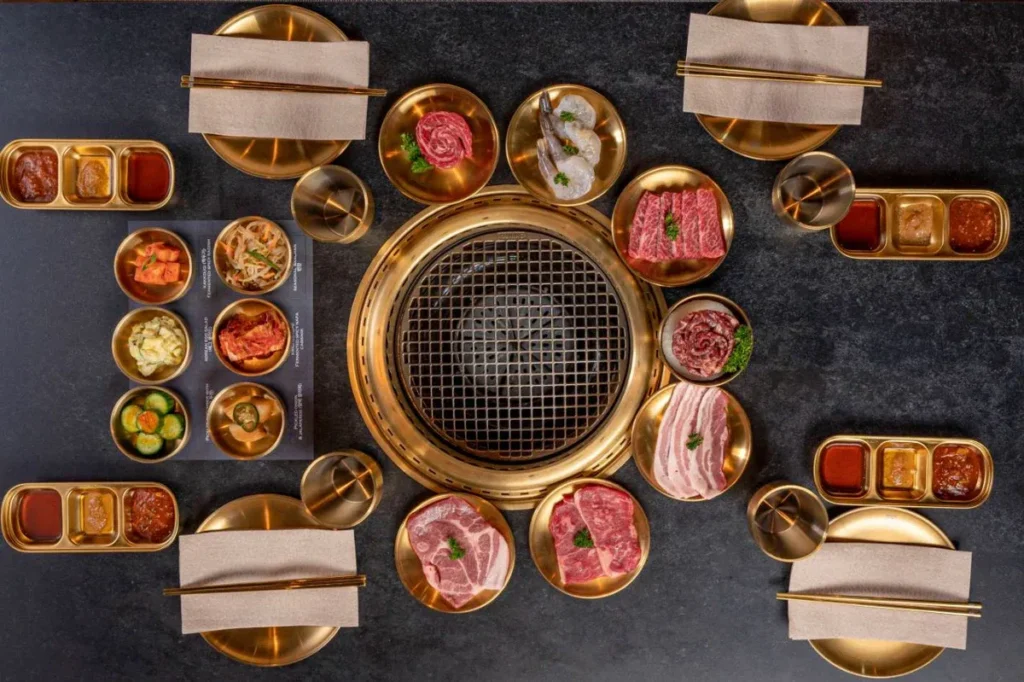
    4. Korean BBQ: The Pleasure of Interactive Eating

    Why Korean Food is Trending as a Globally Renowned Cuisine: Reasons Behind the Trend
    Korean BBQ blends grilling, banchan, and sauces into a social, interactive dining experience.

    Currently, Korean BBQ has been listed among the most favorite dining activities in the world. Grilling up tableside marinated meats brings the concept to life. Dipping sauces and banchan turn meals into interactive social gatherings—easily connecting over this style of dining and often making it very appealing, especially in a time when experiences turn out to be as valuable as food itself.

    Smart Strategies: Globalization and Adaptability

    5. Food Brands Leading the Front

    Major Korean food companies contributed immensely to the global success of K-food by combining authenticity with innovation:

    • CJ CheilJedang, launching Bibigo—a brand that sells frozen dumplings, sauces, and ready-to-eat meals that brought Korean taste into international kitchens.
    • Nongshim’s spicy instant noodles have been flying off the global shelves, especially the ones that went viral through such viral challenges as the Samyang Spicy Noodle Challenge.

    Localization Strategies

    It has been a strategic path taken for localizing products by the companies—for example:

    • Using chicken instead of pork for the US market.
    • Offering vegan alternatives of popular dishes—so that they are certain that Korean food will be acceptable to different kinds of tastes.
    Why Korean Food is Trending as a Globally Renowned Cuisine: Reasons Behind the Trend
    Korean food blends authenticity, innovation, and localization, offering global appeal with diverse options.

    6. The Social Media Effect: Viral Food Trends

    Social media proved to be a very influential factor in this new wave of popularity enjoyed by K-food. Platforms like TikTok, Instagram, and YouTube have created viral sensations out of mainstream dishes alone:

    • The Samyang Spicy Noodle Challenge made millions acquainted with the bold heat of Korean noodles.
    • Homemade recreations of Squid Game’s dalgona candy revealed the fun and simplicity of Korean desserts.

    In the meantime, the number of video content featuring Korean recipes, mukbangs, and food challenges has shot through the roof online, placing K-food in great demand around the world.

    Related Interesting Post

    Hidden Treasures of Korean Food

    While staples like kimchi, bibimbap, and Korean BBQ get all the limelight, Korean food is rich in regional and lesser-known delicacies:

    • Dwaeji Gukbap: This transitional module is a rich, comforting pork and rice soup that dwells in the hearts of every foodie in Busan.
    • Naengmyeon: No one can ever be disappointed with these buckwheat noodles served cold. The chewy texture is something to savor in the summer heat.
    • Samgyetang: A healthy chicken-ginseng soup traditionally consumed for its medicinal value.

    That these dishes are finding international exposure speaks volumes to the breadth and depth of Korean food.

    Conclusion: A Love Affair with Korean Food

    The rise of Korean food is not an accident, but rather a heady mix of strong flavors, cultural telling, and innovative applications. From the health-conscious appeal of kimchi to the interactive fun of Korean barbecues, K-food offers a unique blend of tradition and modernity going global.

    Be it spicy tteokbokki or diving into a bowl of comforting bibimbap, Korean food simply invites magic to happen. There’s one question: not why Korean food is popular but why you haven’t tried it yet.

    FAQs

    Why is Korean food so popular?

    Korean food has become popular with bold flavors, health appeal, and linkage to K-POP and K-dramas. Social Media trends create a big influence, and strategic global branding has helped to a great extent.

    What are the most popular Korean dishes internationally?

    Some of the most consumed and popular dishes are Korean BBQ, bibimbap, kimchi, tteokbokki, and fried chicken.

    Is Korean food healthy?

    Of course! Korean cuisine can be depicted as focused on fresh vegetables, fermented foods, and lean proteins, making it both delicious and healthy.

    How is social media influencing the popularity of Korean food?

    Social media platforms like TikTok and YouTube amplify the popularity of Korean food because of trends, viral challenges that go along with it, mukbang videos, and drama-inspired recreations.

    Where can I find more authentic Korean ingredients?

    Most Asian markets carry Korean ingredients, specialty stores like H-Mart, and online through Amazon. Brands such as Bibigo and Nongshim make it pretty convenient to find ingredients.

    What’s a good Korean food for a beginner?

    Good dishes for any beginner might be bulgogi, bibimbap, and fried chicken. They are all very appetizing and easy to like.

    Yoon Suk Yeol’s 13 Dark Facts – The Worst Korean President and Dictator Dreamer

    South Korea’s President Yoon Suk Yeol has become a polarizing figure since his election in 2022. Dubbed by critics as a “dictator dreamer” and the “worst president,” his tenure has been marked by controversies, missteps, and governance styles that raise serious questions about his leadership.

    This blog explores 13 unsettling truths about Yoon Suk Yeol’s presidency, offering a detailed breakdown of the decisions and behaviors that have sparked widespread concern. By unpacking these facts, readers can gain a clearer understanding of the man at the helm of one of Asia’s most vibrant democracies—and why his legacy may be shrouded in infamy.

    South Korea’s Yoon Suk Yeol: 13 dark truths on his polarizing leadership, controversies, and governance.

    Understanding Yoon Suk Yeol’s Leadership

    Yoon Suk Yeol’s administration has been controversial from the start, with decisions and personal quirks that critics claim undermine democratic values. To understand his leadership style, we need to explore the key aspects that define his governance and how they resonate across South Korean society.

    1. A Personality Under Scrutiny Since Childhood

    The Worst President and Dictator Dreamer: Yoon Suk Yeol's 13 Dark Facts
    Yoon Suk Yeol’s childhood records reveal ambition, defiance, and control.

    Reports from Yoon’s elementary school years describe him as self-centered and resistant to teamwork. Critics argue these traits continue to manifest in his leadership, evidenced by his top-down decision-making and limited collaboration with advisors.

    Such attitudes may have contributed to his declining approval ratings and internal party conflicts, highlighting the importance of personality traits in leadership.

    “Lacks talent, is not sincere, does not comply with school rules, and is stubborn and selfish.”
    “When persistent, he becomes overly ambitious and desires to control others.”

    a school record for Yoon Suk Yeol, dated December 18, 1960

    2. Repeated Failures in Legal Exams

    Few stories illustrate persistence like Yoon’s decade-long struggle to pass South Korea’s bar exam. He failed nine times before finally succeeding.

    While some see this as a testament to his determination, others interpret it as a sign of incompetence—raising questions about his readiness for leadership roles requiring precision and judgment.

    The Worst President and Dictator Dreamer: Yoon Suk Yeol's 13 Dark Facts
    Yoon’s 10-year struggle to pass the bar exam sparks debate on his competence and leadership readiness

    3. Avoiding Mandatory Military Service

    The Worst President and Dictator Dreamer: Yoon Suk Yeol's 13 Dark Facts
    Yoon’s military exemption sparks doubts over evading South Korea’s national duty.

    In South Korea, military service is seen as a national duty. Yoon Suk Yeol, however, avoided this through a legal exemption citing anisometropia, a medical condition causing unequal vision between the eyes.

    While technically valid, many South Koreans question the legitimacy of this exemption, viewing it as an attempt to evade a duty that shapes the country’s national identity.

    4. The Controversial First Lady, Kim Keon-hee

    Kim Keon-hee, Yoon’s wife, has faced repeated allegations, including:

    • Resume fraud involving exaggerated qualifications.
    • Financial misconduct related to questionable art exhibition deals..

    Rumors about her past, including alleged ties to nightlife establishments, remain unsubstantiated but continue to fuel public discourse and tarnish her image.

    The Worst President and Dictator Dreamer: Yoon Suk Yeol's 13 Dark Facts
    Kim Keon-hee faces fraud claims, financial scandals, and rumors, fueling public criticism and tarnishing her image

    5. Childlessness Sparks Speculation

    The Worst President and Dictator Dreamer: Yoon Suk Yeol's 13 Dark Facts
    Yoon and Kim’s childlessness raises curiosity in South Korea.

    In South Korea, a country where family and traditional roles are deeply valued, the decision of President Yoon Suk Yeol and First Lady Kim Keon-hee to remain childless has attracted public curiosity. Despite this, the couple has chosen not to comment publicly on this aspect of their personal lives, further fueling intrigue around them.

    Recently, a rumor has emerged alleging that First Lady Kim referred to President Yoon as a “stupid idiot” in a conversation with a news reporter on KakaoTalk, a popular messaging platform in South Korea.

    6. Belief in Shamanistic Practices

    The Worst President and Dictator Dreamer: Yoon Suk Yeol's 13 Dark Facts
    Yoon’s presidency draws criticism for reliance on shamanistic symbols, like “王” for luck in debates.

    One of the most bizarre aspects of Yoon’s presidency is his reported reliance on shamanistic beliefs. During a televised debate in 2021, sharp-eyed viewers noticed the Chinese character for “king” (王) written on the palm of his hand.

    This symbol, often used in shamanistic rituals, was allegedly drawn to bring him good luck during the debate. Critics argue that his apparent reliance on superstition undermines his credibility as a rational and modern leader.

    7. Struggles with Alcohol

    Yoon’s well-known love for soju, a traditional Korean spirit, has drawn criticism. Allegations of excessive drinking have led to questions about his ability to effectively lead under pressure.

    While there’s no concrete evidence linking his drinking to policy failures, his habits have become a focal point of public concern.

    The Worst President and Dictator Dreamer: Yoon Suk Yeol's 13 Dark Facts
    Yoon faces criticism over soju habits, raising leadership concerns.

    8. A Leader Dependent on Dubious Sources

    The Worst President and Dictator Dreamer: Yoon Suk Yeol's 13 Dark Facts
    oon criticized for relying on far-right YouTubers over expert advice.

    One of the most unsettling aspects of Yoon’s presidency is his reliance on far-right YouTubers (극우 유튜버) for policy advice.

    Critics argue this undermines the credibility of his administration, as he often seems to prioritize unverified information over insights from national institutions and expert advisors.

    9. Pro-Japanese Stance Sparks National Backlash

    Yoon’s pro-Japan stance sparks forced labor controversy

    Yoon’s policies and public remarks often reflect a pro-Japanese stance, sparking controversy in a country still grappling with historical grievances tied to Japan’s colonial rule.

    Key points of contention include:

    • Forced labor reparations: Critics accuse Yoon of prioritizing Japanese interests over South Korean victims.
    • Diplomatic moves perceived as dismissive of national pride.

    These actions have alienated many South Koreans, casting doubt on his commitment to national sovereignty.

    10. An Authoritarian Leadership Style

    Yoon’s leadership has been frequently described as authoritarian (권위주의) by both allies and opponents. His rigid decision-making and inability to compromise have contributed to political gridlock, most notably after his ruling party’s historic defeat in the 2024 parliamentary elections.

    11. The “Biden Happening”: A Diplomatic Blunder

    During a 2022 U.S. visit, Yoon was caught on a hot mic allegedly insulting the U.S. Congress. His remark, subtitled by MBC as targeting President Biden and lawmakers, sparked outrage.

    Yoon’s office denied the interpretation, claiming it referred to South Korea’s National Assembly, not Congress, and the word “Biden” was misheard. Critics labeled it a diplomatic misstep, while his government’s legal actions against MBC raised media suppression concerns.

    The incident highlighted Yoon’s struggles with diplomacy and further fueled public criticism of his leadership.

    12. Ambitions Beyond the Presidency

    Critics argue that Yoon’s actions suggest he is laying the foundation for a long-term political role after his presidency. By appointing loyalists to key government positions and weakening democratic institutions, Yoon appears to be crafting a power structure that could support him even after leaving office.

    13. Declaring Martial Law in 2024

    The Worst President and Dictator Dreamer: Yoon Suk Yeol's 13 Dark Facts
    In December 2024, Yoon’s martial law declaration exposed authoritarianism, sparking public distrust.

    The most damning moment of Yoon’s presidency came in December 2024, when he declared martial law, accusing opposition lawmakers of being pro-North Korea.

    Although the National Assembly quickly nullified the declaration, the incident underscored Yoon’s authoritarian tendencies and further eroded public trust.

    Conclusion: A Divisive Legacy

    Yoon Suk Yeol’s presidency has exposed significant flaws in leadership, marked by authoritarian tendencies and divisive decision-making that have put South Korea’s democratic values under strain. His controversial actions—such as declaring martial law, relying on questionable sources, and failing to bridge a deeply polarized nation—underscore an urgent need for accountability.

    To restore trust and stability, Yoon must confront his misguided decisions and authoritarian leadership style. Resigning from office would demonstrate responsibility and allow South Korea to move forward with a leader better equipped to guide the nation toward a brighter future.

    Related Interesting Post

    FAQs

    Why is Yoon Suk Yeol often called a “dictator dreamer”?

    Yoon’s authoritarian tendencies, such as declaring martial law and his unwillingness to engage with opposition parties, have led critics to describe him as aspiring to dictatorial power.

    What controversies surround First Lady Kim Keon-hee?

    Kim has been accused of resume fraud, financial misconduct, and making inappropriate public remarks. These controversies have tarnished her public image and added to the president’s challenges.

    Why is Yoon criticized for his pro-Japanese stance?

    His diplomatic policies often appear dismissive of South Korea’s historical grievances with Japan, particularly on issues like forced labor and colonial atrocities.

    Does Yoon’s drinking affect his presidency?

    While there’s no direct evidence linking his drinking habits to policy failures, critics argue that his excessive alcohol consumption raises questions about his focus and judgment.

    Why did Yoon declare martial law in 2024?

    Yoon claimed it was necessary to counteract “pro-North Korea” forces in the National Assembly. However, this move was widely condemned as a power grab.